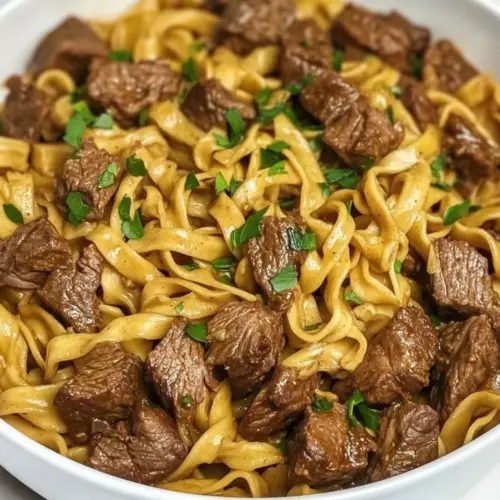
Beef Noodles
Beef Noodles is a rich, comforting dish featuring tender seared chuck roast and wide egg noodles in a glossy, buttery sauce. This easy weeknight dinner uses simple techniques like searing and slow simmering to build deeply savory flavor, producing a hearty, satisfying meal that reheats beautifully. Make it when you want a cozy, practical one pot style dinner that tastes like care and time.
Equipment
- Heavy duty skillet
- Tongs
- Small Bowl
- Whisk
Ingredients
- 2 tablespoons olive oil Use to sauté and brown meat, providing a high smoke point and a fruity, savory undertone that helps develop a rich crust on the beef during searing; also contributes to the pan fond that flavors the sauce when deglazed.
- 2 pound chuck roast (cut into 1 1/2 – 2 inch cubes, at room temperature and patted dry with a paper towel) Cut into large cubes to ensure even braising and slow-cooked tenderness; provide collagen and marbling that break down into gelatin for a silky, flavorful sauce and hearty texture in the noodle dish.
- 3 tablespoons unsalted butter (divided (1 tablespoon to cook the onions and 2 tablespoons to glaze the sauce)) Melt and divide for two purposes: one tablespoon to gently caramelize the onions without burning and two tablespoons to finish and glaze the sauce for a glossy, rounded mouthfeel and enriched flavor.
- 1 cup diced yellow onion Sauté until translucent and slightly caramelized to add natural sweetness, aromatic depth, and body to the braising liquid, forming a flavor base that balances the rich beef.
- 1 tablespoon minced garlic Add at the start of cooking to release pungent, savory aromas and enhance overall flavor; minced form disperses quickly through the sauce and complements the onions and beef.
- 2 1/2 cup beef stock Use as the cooking liquid and flavor base for braising, contributing concentrated beef flavor and sufficient volume to tenderize the meat; also forms the bulk of the sauce when reduced.
- 1 teaspoon salt Season during cooking to enhance and balance all flavors; helps to bring out the natural taste of the beef, aromatics, and stock while controlling the final seasoning level.
- 1/2 teaspoon black pepper Season and add subtle heat when cracked into the dish; contributes background spiciness and helps accentuate savory and umami components without overpowering them.
- 1/2 teaspoon dried thyme Add as a dried herb to impart an earthy, slightly minty and lemony note; helps support the savory profile and pairs well with beef and bay leaf during long cooking.
- 1 small bay leaf Tuck into the braising liquid to release a subtle, aromatic layer of woodsy, slightly floral flavor while simmering; remove before serving to avoid an overpowering bite.
- 2 tablespoons water Use to thin and dissolve the cornstarch slurry before adding to the hot sauce; prevents lumps and helps disperse the thickening agent evenly for a smooth finish.
- 1 tablespoon cornstarch Combine with water to create a slurry that thickens the braising liquid when heated; dissolves into the sauce to provide body and a glossy consistency without altering flavor.
- 6 ounces wide egg noodles (cooked and drained according to package directions (half a 12 ounce bag)) Serve cooked and drained to provide tender, wide noodles that soak up the flavorful beef sauce; chosen portion gives a balanced pasta-to-meat ratio for the final dish.
- 1 1/2 tablespoons chopped fresh parsley (for garnish) Garnish chopped over the finished dish to add a fresh, bright herbal note and color contrast that lifts the rich, savory flavors of the beef and sauce.
Instructions
- In a large heavy duty skillet (12 inches wide by 2-3 inches deep) over medium-high heat add the olive oil. Once the oil is hot, add the chuck roast cubes.: The first sensory cue is the oil shimmering and moving easily across the pan surface, followed by a pronounced sizzle as the beef hits the skillet. That initial hissing tells you the pan is hot enough to sear, which locks in juices and builds complex browned flavors. You want the cubes to sit without crowding so the pan temperature does not drop and steam the meat. If you smell bitter burnt notes, the pan is too hot or there was residual moisture on the beef . A frequent mistake is adding too many pieces at once, causing them to steam rather than sear, which prevents formation of the flavorful crust that gives the final sauce its depth.
- Brown the chuck roast cubes on all sides. This should take 10-12 minutes. You are not looking to cook the beef all the way through, only to get a beautiful deep sear to the outer edges.: Listen for an even sizzling and watch for deep mahogany edges forming on each cube. These browned bits, called fond, will dissolve into the braising liquid later and become a key flavor component. Rotate each piece with tongs so all sides develop color. Resist the urge to stir constantly, which prevents proper contact with the pan. Underbrowned meat will yield a flatter sauce, while overbrowned or burnt pieces will introduce acrid flavors.
- To the skillet add the unsalted butter, diced yellow onion and minced garlic. Cook for another 1-2 minutes or until the onions are softened and the garlic is fragrant.: When the butter melts and the onion starts to sweat, it releases sweet, savory aromatics that blend with the browned fond to create an inviting fragrance. The garlic should become fragrant but not brown; a nutty scent indicates it is too far along. Stir gently so the onion softens evenly. A common error is letting the garlic darken, which imparts bitterness; if it colors too much, remove from heat briefly to cool the pan.
- Add the beef stock, salt, black pepper, dried thyme and bay leaf to the skillet. Bring the liquids to a boil, cover with a tight fitting lid and reduce the heat to medium-low.: As the liquid hits the hot pan, you will hear a soft bubbling that deepens into a rolling boil before you lower the heat. The bubbling helps lift the browned bits off the pan so they dissolve into the stock. Once covered and reduced to a gentle simmer, the aromas will deepen into rich, meaty notes, and the kitchen fills with slow cooked comfort. Avoid a vigorous boil during the long cook, which can toughen the meat and evaporate liquid too fast.
- Allow the chuck roast pieces to cook, and get tender, for 1 1/2 – 2 hours or until the beef can easily be broken apart with a fork.: During the long simmer, the connective tissues break down and the meat becomes soft and shreddable, releasing gelatin that enriches the sauce. You want occasional tiny bubbles and a steady, low heat so flavors develop slowly. Check for fork tenderness at the 1 1/2 hour mark, and continue if needed. A common misstep is impatience, pulling the meat too early, which results in a tough texture rather than the melt in your mouth tenderness this method achieves.
- Remove the lid to the skillet then remove, and discard, the bay leaf from the liquids.: The aroma will shift slightly when you lift the lid, and you may notice a clearer view of the sauce color. Removing the bay leaf prevents any sharp, papery bits from ending up in the finished dish. Take care using tongs or a spoon so you do not disturb the softened beef too roughly. Forgetting to remove the bay leaf can result in an unpleasantly strong bite in a finished mouthful.
- In a small bowl whisk together the water and cornstarch to create a slurry to thicken the sauce for the beef and noodles. Pour the slurry mixture into the skillet with the hot liquids and stir until fully incorporated.: The slurry should look smooth and milky before it hits the hot pan. When it hits the simmering liquid, you will see the sauce quickly go from loose to slightly glossy as the starch swells and binds water. Stir continuously as you add it to prevent clumping. Adding cornstarch directly without making a slurry first commonly creates lumps that are difficult to break down.
- Turn the heat up to medium and allow the sauce to bubble and reduce as it thickens for 6-8 minutes. Remove from the heat and finish the sauce by stirring in the remaining 2 tablespoons of butter. This helps to give the sauce a beautiful glaze and smoothness.: As the sauce simmers, it will become visibly thicker and coat the back of a spoon, with a glossy sheen forming on the surface. The bubbling concentrates flavor and evaporates excess liquid. Off the heat, whisking in the final butter emulsifies the sauce, creating a silky mouthfeel and a luminous glaze. Watch for over reduction which can make the sauce too salty or pasty; stop when it lightly coats the spoon.
- Add the cooked and drained wide egg noodles to the skillet and toss to coat the noodles with the beef and sauce.: The noodles should glisten as the sauce clings to their broad edges, and you will hear a gentle stir as they move through the pan. Tossing lets the sauce marry with the pasta, allowing some noodles to finish cooking in the warm sauce and absorb flavor. If the noodles are too soft, they will break apart; if too firm, they will resist the sauce. A typical oversight is draining pasta too dry; reserve a splash of cooking water if you want to loosen the sauce later.
- Garnish with the chopped fresh parsley and serve.: The final bright, herbaceous scent of chopped fresh parsley lifts the dish and adds visual contrast to the deep brown sauce. Sprinkle just before plating so it stays vibrant. Serve immediately while the sauce is glossy and the noodles are warm. Leaving the dish to sit too long will dull the glaze and cause the noodles to absorb more liquid and lose textural balance.
Notes
- Pat the beef dry: Thoroughly dry the beef cubes with paper towels to ensure a strong sear and avoid excess steam in the pan.
- Heat the pan properly: Wait until the oil is shimmering before adding meat, so you get immediate contact and caramelization.
- Use a heavy skillet: A heavy duty skillet retains heat evenly, which helps sustain the high temperature needed for a consistent sear.
- Reserve noodle water: If the sauce reduces too much, add a splash of reserved pasta water to loosen consistency without watering down flavor.
- Check for fork tenderness: Test the beef with a fork at 1 1/2 hours and continue simmering until it pulls apart easily for ideal texture.
- Add parsley at the end: Sprinkle chopped fresh parsley right before serving to keep its aroma and color vibrant.
- Adjust seasoning at the end: Taste after reduction and butter finish, then adjust salt and pepper so the sauce is balanced and not overly salty.