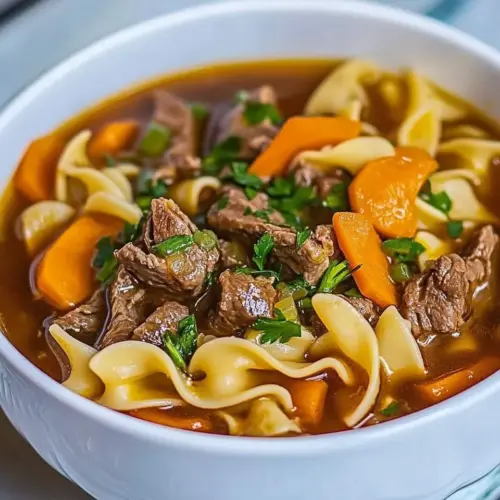
Beef Noodle Soup
Beef Noodle Soup delivers a savory, comforting bowl with tender beef, wide egg noodles, and earthy mushrooms. This easy weeknight dinner fills the kitchen with warm, rich aromas and yields a silky broth that is perfect for cold nights. Make it for family meals or to have satisfying leftovers that taste even better the next day.
Equipment
- Stock Pot
- Measuring Cups and Spoons
- Sharp Knife
- Cutting Board
- Ladle
Ingredients
- 2 tablespoons olive oil Heat and flavor the pan to prevent sticking and provide a fragrant base for browning meat; olive oil helps carry and meld other seasoning flavors while producing a glossy finish on vegetables and proteins.
- 1 1/2 pounds beef stew meat cubed Add hearty protein and texture that becomes tender with slow simmering; beef stew meat provides rich beefy flavor and collagen that enriches the broth when cooked until fork-tender.
- 1 small onion diced Soften and sweeten the soup base while building aromatic depth; diced onion releases natural sugars and umami that balance savory broth and vegetables during sautéing or simmering.
- 2 celery ribs chopped Contribute subtle savory crunch and aromatic notes that enhance overall mouthfeel; chopped celery offers light herbal bitterness and moisture that complements sweeter root vegetables.
- 3 large carrots peeled and chopped Bring natural sweetness, body, and color while thickening the broth slightly; peeled and chopped carrots add vitamin content and a tender contrast to meat and noodles when cooked through.
- 12 ounces mushrooms sliced/rinsed/dried Introduce earthy flavor and tender bite while absorbing broth seasonings; sliced and rinsed mushrooms deepen umami and contribute a meaty texture without overpowering other ingredients.
- 8 cups beef broth Provide the liquid foundation and deep savory backbone for the soup; beef broth supplies concentrated beef flavor, salts, and gelatin that carry aromatics, vegetables, and noodles.
- 1/4 teaspoon dried parsley Lend subtle herbaceous brightness and a faint green aroma that freshens the broth; dried parsley disperses easily and complements richer flavors without dominating the profile.
- 1/2 teaspoon ground black pepper Add mild heat and warming spice while enhancing savory notes and complexity; ground black pepper seasons the soup and brightens other flavors when adjusted to taste.
- 4 -6 cloves garlic minced Offer pungent aromatic heat and depth when minced and sautéed; garlic infuses the oil and broth with savory umami and a characteristic garlicky warmth throughout the soup.
- 2 tablespoons tomato paste Concentrate tomato flavor and add umami-rich acidity that balances richness; tomato paste thickens the liquid slightly and brings a pleasant tang that harmonizes with beef.
- 2 cups wide egg noodles Provide tender, satisfying starch and body that soaks up broth flavor; wide egg noodles cook to a chewy, comforting texture and make the dish heartier and more filling.
- 2 dried bay leaves Impart subtle herbal bitterness and aromatic complexity during simmering; dried bay leaves release layered, slightly floral notes that round out the soup until removed before serving.
Instructions
- Add oil to a large pot or dutch oven over high heat. Add beef and onions to the heated pot and sear beef on all sides.: The sizzling when the olive oil meets the hot pot should be immediate, and the sound will become a steady hiss as the meat browns. You want the surface of the beef to develop deep golden brown patches, not just a pale color, because those browned bits are full of caramelized flavor that will dissolve into the broth later. The aroma will shift from neutral to richly meaty, and the pan will smell toasted and appealing. If the pot seems to steam rather than sizzle, it usually means the pan is overcrowded or the meat was too wet; lift pieces out to give each cube room. A common mistake is stirring too frequently, which prevents a proper sear and leaves the meat pale and less flavorful.
- Stir in carrots, celery and mushrooms. Season with bouillon, parsley, and pepper.: As you add the chopped carrots , celery , and sliced mushrooms , you will notice the pan filling with a sweet, vegetal fragrance that brightens the earlier meaty notes. The mushrooms will release moisture and begin to brown at their edges, adding depth. Mixing in the dried parsley and cracked black pepper at this stage lets those flavors bloom into the vegetables, while bouillon, if used, starts layering concentrated savory saltiness. The texture contrast between the crisp vegetables and the softening mushrooms is important, so keep an eye on color changes. Avoid cooking on too high a flame here because the vegetables might char unevenly, and burnt bits will impart a bitter edge.
- Add beef broth, garlic, tomato paste, egg noodles and bay leaves.: Pouring the warm beef broth into the pot should loosen the fond, the brown bits on the bottom, so they dissolve and enrich the liquid into a glossy, savory pool. When you stir in the minced garlic and tomato paste , there will be a brief aromatic lift, tomato tang mixing with garlic perfume, signaling that the soup is coming together. Add the egg noodles and tuck in the dried bay leaves so they can infuse the broth. If the broth sputters or spits, reduce the heat slightly. A misstep here is adding cold broth to a hot pot which can temporarily halt simmering; temper the liquid if needed so the pot returns to a simmer quickly.
- Bring to a boil, reduce heat to medium-low and simmer for 30 minutes or until vegetables and noodles are cooked through.: Watch the surface for gentle rolling bubbles as the pot approaches a boil, then lower the heat to encourage a steady, quiet simmer. During these minutes, the broth will develop clarity and a concentrated mouthfeel, with aromas deepening into a warm, cohesive scent. The carrots should become tender when tested with a fork, the noodles will plump and become slightly pillowy, and the beef will tenderize and release collagen that gives the broth a silky weight. Stir occasionally to prevent sticking, and skim any foam if it forms to keep the broth clear. A common error is boiling too vigorously, which can break down the noodles and make the broth cloudy and starchy.
- Remove bay leaves and serve.: Before serving, fish out the dried bay leaves , you should not leave them in the bowl because their texture is sharp and unpleasant to bite. The final bowl should carry a rounded aroma of beef broth , with tender pieces of beef , slightly sweet carrots , and soft egg noodles nesting in the liquid. Ladle carefully so each serving has a balance of broth, meat, vegetables, and noodles. If your soup tastes flat, a small sprinkle of salt may be needed to wake the flavors, but avoid over-salting early in the process. A typical small mistake is leaving bay leaves in the pot while serving, which can distract from the soup’s smooth finish.
Notes
- Sear in batches. Searing the beef in small batches prevents crowding and steaming, giving you better browning and more concentrated flavor. It takes a few extra minutes but rewards you with a richer broth.
- Bloom the tomato paste. Cook the tomato paste briefly in the hot pot before adding broth to remove rawness and deepen its sweetness and umami contribution to the soup.
- Dry mushrooms well. After rinsing mushrooms, pat them dry so they brown instead of releasing excess water, which preserves a more intense flavor in the pot.
- Check noodle timing. Taste a noodle near the end of simmering rather than relying strictly on package times, because different brands and thicknesses absorb liquid at varying rates.
- Cool before freezing. Let the soup cool to room temperature before freezing portions to preserve texture and avoid ice crystals that dilute flavor upon reheating.