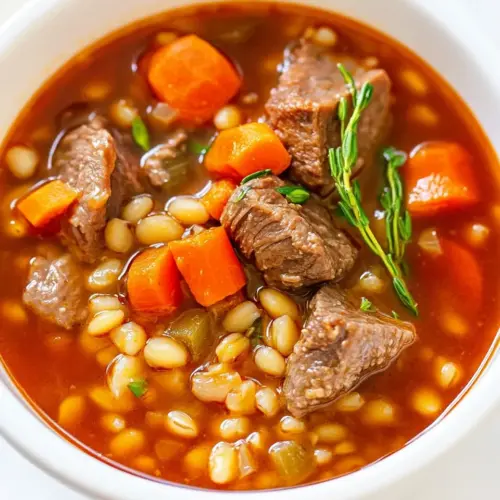
Beef Barley Soup
Beef Barley Soup is a hearty, savory bowl with tender beef, chewy barley, and a rich, comforting broth. This easy weeknight dinner fills the house with roasted aromatics and slow simmered flavor, perfect for winter evenings. It reheats beautifully, making it ideal for meal prep and cozy leftovers.
Equipment
- Large saucepot
- Knife
- Cutting Board
- Wooden Spoon
Ingredients
- 1 tablespoon olive oil Sauté to provide a healthy cooking fat and help brown meat for deeper flavor; use at the start to caramelize aromatics and develop the soup’s base. Adds subtle fruitiness and helps distribute heat for even cooking.
- 2 1/2 – 3 pounds beef chuck roast Braise as the primary protein and source of rich beef flavor; cut into cubes and brown before simmering to render connective tissue into gelatin for a silky broth. Supplies heartiness and umami that anchors the soup.
- 1 large sweet onion, peeled and chopped Sweat to add natural sweetness and aromatic depth; cook until translucent to release sugars that balance the savory components. Contributes texture and a mellow onion backbone to the broth.
- 2 cups sliced carrots Simmer to provide sweetness, color, and body; sliced carrots soften and release natural sugars into the stock during long cooking. Enhance visual appeal and nutritional value with beta-carotene and texture.
- 2 cups sliced celery Simmer to contribute aromatic freshness and subtle vegetal flavor; sliced celery softens and infuses the soup with classic mirepoix character. Adds slight crunch when cooked shorter or melts into the broth when fully tender.
- 4 cloves garlic, minced Sauté briefly to release pungent, savory aromatics; minced garlic should be added later in cooking to avoid bitterness while maximizing aroma. Boosts overall umami and layers of flavor in the finished soup.
- 12 cups beef broth Simmer as the liquid foundation that extracts flavors from meat, vegetables, and herbs; use a rich beef broth to ensure depth and body. Determines final saltiness and consistency, so adjust seasonings after simmering.
- 15 ounces fire-roasted diced tomatoes (1 can) Stir in to introduce bright, roasted tomato flavor and acidity; fire-roasted diced tomatoes add smoky depth and balanced tang. Contributes pieces of tomato and helps round out the soup’s flavor profile.
- 1 cup dried barley Simmer to provide chewy texture and nutty flavor while thickening the soup; dried barley absorbs liquid and releases starches that enrich the broth. Add early enough to fully plump and become tender during cooking.
- 1 tablespoon fresh thyme leaves (1 teaspoon dried) Add to infuse an aromatic, slightly lemony-herb flavor; fresh thyme leaves release essential oils during simmering and pair well with beef. Use more sparingly if substituting dried to avoid overpowering other herbs.
- 1 tablespoon fresh chopped rosemary leaves (1 teaspoon dried) Chop and add to impart piney, resinous notes that complement the beef; fresh rosemary should be finely chopped so needles distribute without creating tough strands. Balances richness and brightens the overall herb profile.
- 1/2 teaspoon crushed red pepper Sprinkle to introduce gentle heat and a touch of spice; crushed red pepper should be adjusted to taste to avoid overwhelming the soup. Enhances complexity and provides a warm background spiciness.
- Salt and pepper Season to taste to enhance and balance all flavors; salt brings out sweetness and umami while pepper adds mild heat and complexity. Add gradually and taste after simmering to achieve the desired seasoning level.
Instructions
- Place a large saucepot over medium heat and add the olive oil and onions. Saute the onions for 2-3 minutes. Then stir in the carrots, celery, and garlic. Cook for another 3-5 minutes.: The moment the oil shimmers and the onion hits the pot you should hear a soft sizzle, which signals the start of flavor building. As the onion softens and becomes translucent, it will release a sweet, roasted aroma and the pan will smell fragrant rather than sharp. This step matters because well softened onion creates a mellow base that prevents a raw bite in the finished soup. A common mistake is rushing with too high heat which browns unevenly and can leave burned edges, so keep the temperature steady and stir frequently to ensure even cooking.
- Meanwhile, cut the beef into small 1/2-inch chunks. Push the veggies to the side of the pot and add the meat. Brown for 5 minutes, stirring once or twice. Then add in the broth, tomatoes, barley, herbs, crushed red pepper, and 1/2 teaspoon salt. Stir well.: You will notice the onion lose its raw pungency and begin to turn glossy, a sign sugars are breaking down. The smell will shift from sharp to slightly sweet and comforting. This short cook sets the stage for the vegetables and prevents the garlic from burning when added. Stirring prevents hot spots and sticking, which people often overlook, leading to uneven caramelization.
- Cover the pot and bring to a boil. Lower the heat if needed and simmer until the barley is cooked and the beef is tender, stirring occasionally. About 30 minutes.: When the chopped carrots and celery hit the pot the sound changes to a gentle sputter as moisture releases; the color will brighten and the mixture will smell green and aromatic. Adding minced garlic at this point gives it a chance to bloom without scorching. This combination contributes the classic mirepoix backbone that supports the beef and broth. A common error is adding garlic too early which makes it bitter, so add it after the vegetables have started to soften.
- Taste. Then season with salt and pepper as needed.: During these minutes the vegetables should become tender but still hold some shape, and the kitchen will fill with a rounded vegetable aroma. This gentle cooking extracts natural sweetness and helps the vegetables meld into the broth later. This matters because undercooked vegetables can taste raw and disjointed in the final dish. Avoid overcooking to a mushy state which robs the soup of textural interest.
- Meanwhile, cut the beef into small 1/2 inch chunks: As you trim and cube the beef , you will feel that a good chuck has some spring and marbling, which is ideal for slow simmering. Smaller, uniform pieces ensure even browning and consistent tenderness. This step ensures the beef cooks through uniformly and releases collagen to enrich the broth. A common slip is leaving uneven pieces which result in overcooked shards and undercooked chewy bits.
- Push the veggies to the side of the pot and add the meat: When the beef hits the hot surface you should hear a satisfying sear, and the meat will quickly begin to color. Browning creates Maillard flavors that add depth to the soup, and those caramelized bits build up on the pot to flavor the broth later. If you overcrowd the pot the meat will steam rather than brown, so brown in batches if necessary to get a proper crust.
- Brown for 5 minutes, stirring once or twice: Proper browning will produce small golden brown crusts and an intense roasted aroma that hints at the richer broth to come. Those browned bits also make the broth more complex, so resist the urge to rush. Stirring only occasionally allows good contact with the pan. A frequent mistake is constant stirring which prevents good searing, yielding a paler, less flavorful result.
- Then add in the broth, tomatoes, barley, herbs, crushed red pepper, and 1/2 teaspoon salt: As the liquids meet the hot pot you will hear a soft simmer and see steam rise, lifting the bouquet of rosemary and thyme . The barley will begin to plump as it soaks up the broth, and the canned tomatoes dissolve into the base creating a gently tangy note. This combination is essential because it unites the components and sets the cooking environment for tender meat and softened grains. Make sure your broth is hot enough to return to a simmer quickly; adding cold liquid can stall cooking and prolong the time to tenderness.
- Stir well: As you stir the pot the ingredients will visually coalesce, and you will notice the broth become a homogenous, inviting color. This action distributes the seasonings and prevents the barley from settling and sticking to the bottom. Proper distribution ensures each spoonful is balanced. A common oversight is not scraping the pot to lift browned bits, which contain concentrated flavor.
- Cover the pot and bring to a boil: As the pot reaches a rolling bubble you will see vigorous steam and smell intensified aromas. Boiling briefly helps the soup reach a uniform temperature, but it is only a staging point before gentle simmering. This matters because an initial boil gets everything moving and assures even cooking. Be careful with a hard boil which can agitate and break down the barley and meat too aggressively.
- Lower the heat if needed and simmer until the barley is cooked and the beef is tender, stirring occasionally: During simmering the soup will emit a richer, concentrated scent and the broth will slightly thicken as starch from the barley releases. The beef should become fork tender and the barley chewy but not mushy, usually about 30 minutes. This slow finish melds flavors and is critical for the ideal texture. A common mistake is boiling too hard, which can turn the barley gummy and the beef dry.
- About 30 minutes: As time passes the soup will deepen in color and the aromas will shift from vegetal to savory and rounded, signaling that the ingredients are marrying. Monitor the texture of the barley and beef as they approach tenderness, tasting periodically. This observation prevents overcooking. Relying solely on time without tasting is a typical misstep.
- Taste: Sampling the broth will reveal if the balance needs correction, assessing salt, heat, and acidity. The flavors should be layered and harmonious, not flat or overly salty. Tasting allows you to make small adjustments for a polished final bowl. Neglecting to taste until the end can result in a one dimensional soup.
- Then season with salt and pepper as needed: Finishing seasoning sharpens and brightens the flavors, and adding pepper brings a final subtle heat that completes the profile. Do this gradually, tasting between additions to avoid overseasoning. This final step ties everything together. The common error is oversalting, especially if the broth already contains sodium, so add cautiously.
Notes
- Boost Umami Add a splash of low sodium soy sauce or a spoonful of miso to the broth for a deeper savory backbone, but add sparingly and taste as you go to avoid overpowering the other ingredients.
- Barley Texture For a chewier bite choose hulled barley, while pearled barley cooks faster and yields a softer texture, so select based on how you like the chew.
- Herb Timing Add fresh thyme and rosemary near the end of cooking to preserve brightness, while dried herbs do well early to release their flavor into the broth.
- Spice Control If you prefer less heat, reduce the crushed red pepper to a pinch, or boost it gradually if you want more warmth; always taste before adjusting.
- Make Ahead Soup flavors deepen overnight, so consider making it a day ahead and reheating gently, which often yields a tastier final bowl.
- Skimming Fat If the surface gets oily after chilling, refrigerate and remove the solidified fat for a cleaner finish when reheating.