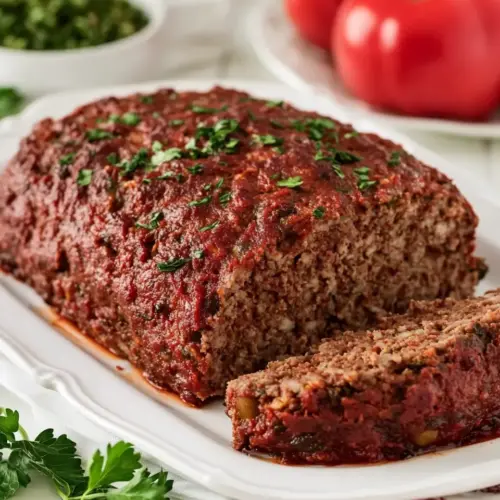
Beef and Sausage Italian Meatloaf
Beef and Sausage Italian Meatloaf is a savory, saucy, and comforting loaf that combines juicy beef and seasoned Italian sausage with tangy tomato basil sauce and nutty Parmesan for an easy weeknight dinner. The loaf stays moist thanks to flax seed meal and eggs, making it perfect for slicing, sandwiches, or freezing for later. Make it when you want a reliable family pleaser that reheats beautifully.
Equipment
- Oven
- Broiler Pan or Baking Sheet
- Mixing Bowl
- Magic Bullet or Food Processor
- Instant-read meat thermometer
Ingredients
- 2 lb s. ground beef (see notes) Provide rich, lean protein and structure for the meatloaf while absorbing seasonings; handle gently to avoid overworking and a dense texture. Brown slightly if preferred for added flavor before combining with other ingredients. Adjust fat content if needed based on personal preference or notes.
- 19 oz . pkg. hot or mild Italian Sausage links (see notes) Contribute bold, seasoned pork flavor and juiciness that complements the ground beef; remove casings and crumble into the mix for even distribution. Cook or brown slightly to render fat and enhance savory depth, following recipe notes for hot or mild preference.
- 2 cup s Rao's Tomato Basil Sauce, divided (see notes) Supply a concentrated tomato-herb base that adds moisture, acidity, and flavor; divide usage to both bind ingredients and glaze the top for a saucy finish. Choose a quality jarred sauce or homemade Rao's Tomato Basil as specified to maintain intended flavor profile.
- 2 T dried minced onion Impart a savory onion presence and convenient concentrated flavor without adding moisture; sprinkle evenly into the meat mixture to infuse background sweetness and aromatic depth. Use dried minced onion to maintain consistent texture and avoid adding raw onion chunks.
- 2 tsp . garlic powder Deliver a mellow garlic aroma and savory backbone without fresh garlic's moisture; distribute evenly to ensure consistent garlicky notes throughout the loaf. Adjust quantity to taste for stronger or subtler garlic presence.
- 2 tsp . dried basil Add warm, slightly sweet herbal character reminiscent of Italian cuisine; mix in to reinforce the tomato and sausage flavors. Use dried basil to maintain stability during baking and keep flavors consistent.
- 1 T dried parsley Introduce bright, slightly bitter herbaceous freshness to lift the richness of the meats; fold in with other seasonings to create layered Italian seasoning. Use dried parsley for shelf-stable green notes, with fresh parsley added later if desired.
- 2 tsp . ground fennel Provide subtle anise-like sweetness and traditional Italian sausage aroma that complements beef and pork; blend thoroughly so its flavor permeates the loaf. Measure carefully, as fennel can be potent and should support rather than dominate the mix.
- 1 tsp . Salt (more or less to taste) Season the loaf to taste, enhancing all other flavors and helping balance richness; dissolve evenly within the mix and adjust quantity based on dietary preference. Consider tasting a small cooked piece if unsure about the salt level.
- 3/4 cup Flax Seed Meal Act as a binder and moisture-retaining filler that helps the meatloaf hold its shape while providing a nutty texture; mix thoroughly with eggs and liquids for cohesion. Use flax seed meal for a gluten-free alternative to breadcrumbs and to add fiber and omega-3s.
- 1 cup coarsely-grated Parmesan Cheese Contribute salty, umami-rich savory depth and a slightly granular texture that complements the meats; fold into the mixture to distribute flavor evenly. Use freshly grated Parmesan for best melt-in-mouth flavor and avoid pre-shredded varieties with anti-caking agents when possible.
- 3 eggs, slightly beaten Bind the ingredients together and add richness while promoting a tender crumb; beat slightly before incorporating to ensure even distribution. Adjust the number of eggs if needed for desired firmness and moisture balance.
- 3 T chopped fresh parsley (optional) Provide fresh, bright herbal finish and visual color when sprinkled into the mixture or used as a garnish; chop just before using to maximize aroma. Marked optional, so include for freshness and contrast if preferred.
Instructions
- Preheat oven to 375 F/190 C.: As the oven warms you should notice a subtle dry heat that will help the loaf form a crust when it starts to roast, signaling the Maillard reaction that deepens flavor. A properly preheated oven ensures even cooking from edge to center. A frequent mistake is sliding the meatloaf into an oven that is still warming, which can cause uneven doneness and a soggy exterior.
- Spray roasting racks or loaf pan with non-stick spray.: The slight slickness prevents sticking and helps the bottom edges brown evenly, creating a pleasant textural contrast. Spraying also reduces the risk of tearing when you remove slices. Forgetting this step can result in pieces that stick and fall apart when lifted.
- Take ground beef and sausage out of the package, squeeze the sausage out of casings and put in mixing bowl with the ground beef so the meat can start to come to room temperature.: When meats warm slightly they mix more uniformly and bind better with the other ingredients, producing a cohesive loaf. The aroma of the sausage becomes more pronounced as it reaches room temperature. A common error is working with meat straight from the fridge, which can make mixing uneven and cause clumping.
- Spray Broiler Pan or baking sheet with non-stick spray.: Using a broiler pan lets the rendered fat drip away while still supporting the loaf, aiding browning on all sides. The sound of drips hitting the pan is a sign the fat is rendering properly, which concentrates flavor. If you skip using a proper pan, excess fat can pool and prevent the bottom from crisping.
- Beat the eggs in a small bowl and then stir in the Dried Onion, Garlic Powder, Dried Basil, Dried Parsley, Ground Fennel, and salt.: This step allows the dry seasonings to bloom slightly in the egg mixture, helping them disperse evenly when added to the meat, which creates consistent flavor throughout the loaf. The aroma will be herbal and savory when you stir everything together. One mistake is adding dry spices directly to cold meat without first mixing, which can lead to pockets of concentrated seasoning.
- Then measure out the Flaxseed Meal, Rao's Tomato Basil Sauce, and coarsely grated Parmesan Cheese. Add the egg mixture and those ingredients to the ground beef and sausage in the bowl.: Combining these components before mixing integrates moisture and binders with the meat, creating a uniform texture. You should see the mixture take on a slightly glossy sheen from the sauce and eggs, and the Parmesan Cheese will show as flecks. Overfilling the bowl can make mixing messy, so use a large bowl to avoid spills.
- Wash your hands before you mix the meatloaf. Try to mix the meat enough to get spices and eggs evenly distributed without over-mixing.: The tactile feedback here is invaluable you will feel the mix become cohesive and slightly tacky but not stiff. Mixing just enough prevents the proteins from compacting which would yield a dense loaf. A pitfall is vigorously kneading the meat, which tightens the texture and makes it dry after baking.
- Shape meat into two loaves and put on Broiler Pan. I like to make diagonal scores with a butter knife, which looks nice and gives a guide for cutting slices, but that's completely optional.: As you shape the loaf pay attention to its surface smoothness, patting it gently so there are no large air pockets. Scoring creates a decorative pattern and helps steam escape, improving sliceability. Avoid compressing the loaves too firmly as that can lead to a tough texture.
- Bake about 50 minutes, or until the meatloaf is starting to look done.: You will notice the loaf's edges pull away slightly from the pan and the top will begin to firm and lightly brown, releasing a deep savory aroma. These visual cues indicate that the interior is nearing proper doneness. A common misstep is opening the oven frequently which lowers the temperature and increases cooking time.
- While meatloaf cooks I like to buzz the other cup of Rao's Tomato Basil Sauce in the magic bullet or a food processor so it's more smooth; you can skip that step if you don't mind a sauce that looks a bit chunky when you brush it on.: Smoothing the sauce creates a glossy, even glaze that will cling to the loaf when you brush it on. You can hear the sauce become silky as it blends. If you skip smoothing, you may end up with a more rustic surface texture which is fine, but remember that chunkier sauce will not caramelize as evenly.
- When it looks nearly done, remove meatloaf from the oven and brush with the other cup of pasta sauce.: Brushing adds an acidic sweet layer that caramelizes under heat, creating flavor contrast and an attractive sheen. The brushing motion should be gentle to avoid tearing the surface. A frequent error is using too much sauce which can pool and make the top soggy rather than forming a thin glaze.
- Put it back in the oven and cook 10-15 minutes more, or until it shows 165 F/75 C on an Instant Read Meat Thermometer. If you don't have a meat thermometer cut one open and make sure the inside is completely done.: The final bake lets the glaze set and ensures food safety while preserving juiciness. The thermometer probe should enter the center easily and show steady numbers; a properly cooked loaf will register the target temperature while still feeling springy to the touch. Without a thermometer, cutting open too early can release juices and dry the slices.
- Let meatloaf cool a few minutes, then sprinkle with cut into slices, sprinkle with chopped parsley if desired and serve hot.: Resting allows juices to redistribute, yielding cleaner slices and a juicier mouthfeel. You will notice the loaf firm slightly and slice more neatly after a short rest. A mistake is slicing immediately, which can cause the loaf to crumble and lose internal moisture.
- Leftover meatloaf freezes very well and it will last in the freezer at least six months. I like to cut it into slices, wrap enough for one dinner in foil, and then reheat it in the toaster oven for a quick and easy dinner.: Freezing slices lets you enjoy the same texture later; when reheating, aim for gentle heat to avoid drying out the meat. Properly wrapped portions prevent freezer burn and protect flavor. Thawing at room temperature is risky because of food safety, so plan to thaw in the fridge overnight.
- If you want to freeze one of the whole meatloaves, I haven't tried freezing it raw and then thawing and baking later, but I'm guessing it will work fine if the beef and sausage were not frozen when you bought them. You can also cook the meatloaf you're going to freeze for about 40 minutes, let it cool, and wrap in foil to freeze. Then when you want to eat it later, thaw, bake in the foil until it's nearly done, then unwrap, brush with sauce, and finish cooking.: Partially cooking before freezing helps preserve texture and reduces thawing time later, and finishing with a fresh brush of sauce refreshes the loaf's surface. Freezing a whole loaf keeps it ready for a larger gathering, but ensure you label with dates. A common oversight is not letting it cool fully before wrapping which traps steam and creates ice crystals.
Notes
- Room temperature meats: Letting the beef and sausage come closer to room temperature helps them mix evenly and prevents the loaf from becoming tough when cooked.
- Large mixing bowl: Use a roomy bowl so you can combine ingredients without pressing and compacting the meat which maintains a lighter texture.
- Binder balance: Keep the Flax Seed Meal measurement exact, because too much binder can make the loaf gummy, while too little can leave it crumbly.
- Even glaze: Smooth the second cup of Rao's Tomato Basil Sauce if you prefer a glossy finish; a blender pulse takes seconds and creates an attractive glaze.
- Rest before slicing: Allow the loaf to cool briefly on the pan so juices redistribute and slices hold together, which improves presentation and mouthfeel.