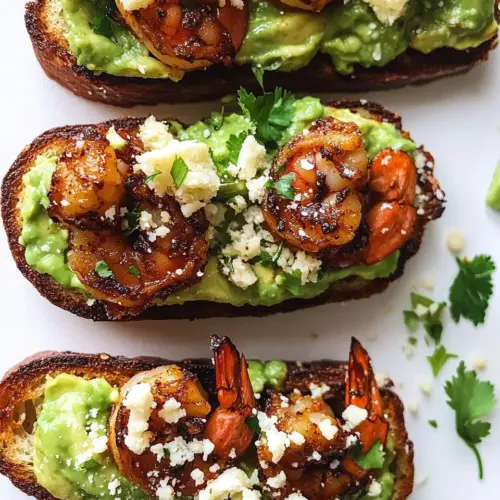
BBQ Shrimp and Lime Avocado Toast
BBQ Shrimp and Lime Avocado Toast is a creamy, crispy, easy to assemble dish that marries smoky, sweet shrimp with bright, citrusy avocado. Perfect for an easy weeknight dinner or casual brunch, the toasted bread provides satisfying crunch while queso fresco and fresh herbs finish each bite with brightness. Make it when you want flavor without fuss.
Equipment
- Skillet
- Mixing Bowl
- Paper towels
- Toaster
- Spatula
Ingredients
- 1/2 pound peeled and deveined raw shrimp Provide protein and a tender seafood base for the dish that cooks quickly; toss with seasonings to absorb flavor and become the centerpiece of the toast. Ensure shrimp are fully thawed and patted dry for even browning and optimal texture.
- 1 teaspoon brown sugar Add a touch of sweetness and help balance smoky and spicy notes; dissolve into marinades or sauces to create a glossy finish on the shrimp. Use sparingly to avoid overpowering savory components while enhancing caramelization during cooking.
- 1/2 teaspoons smoked paprika Contribute a deep, smoky flavor and warm color that complements barbecue elements; sprinkle into the spice mix to intensify savory notes. Pair with sweet and acidic components to create a well-rounded seasoning profile for the shrimp.
- 1/4 teaspoon chipotle chili powder Introduce smoky heat with a subtle fruity undertone that pairs well with BBQ flavors; incorporate into the spice blend for a gentle kick. Adjust quantity to control spiciness without masking other seasonings.
- 1/4 teaspoon onion powder Provide an aromatic mild onion flavor in powdered form for even distribution; blend into the seasoning mix to add savory depth. Use to enhance the umami character of the shrimp without adding moisture.
- 2 tablespoons unsalted butter Deliver richness and help create a silky sauce when melted with BBQ sauce and garlic; use to sauté shrimp for a flavorful, buttery finish. Control heat to brown butter slightly for nuttier notes without burning.
- 2 tablespoons BBQ sauce Bring concentrated sweet, tangy, and smoky flavors that define the BBQ profile; mix with butter and spices to coat the shrimp evenly. Use quality BBQ sauce to ensure a balanced glaze that complements the avocado toast.
- 2 garlic cloves, finely minced or pressed Offer pungent savory intensity that infuses the butter and barbecue glaze; mince finely so it disperses and melds into the sauce. Sauté briefly to mellow sharpness and release aromatic oils for maximum flavor.
- 2 avocados Provide creamy, rich texture and mild flavor that forms the base spread for the toast; mash with lime juice, salt, and pepper to create a bright, smooth topping. Choose ripe avocados for easy mashing and a silky mouthfeel that contrasts the shrimp.
- 1/4 teaspoons salt Enhance overall taste by bringing out natural flavors and seasoning the avocado and shrimp; sprinkle into the mash and onto cooked shrimp for balance. Start with a modest amount and adjust to taste to avoid oversalting.
- 1/4 teaspoon pepper Add subtle heat and aromatic depth to the avocado mixture and shrimp; grind fresh for best flavor and add gradually to achieve desired pepperiness. Combine with salt and lime to round out the creamy avocado and savory shrimp.
- 1/2 lime, juiced Provide bright acidity to the avocado mash and a counterpoint to rich butter and BBQ flavors; squeeze over avocado and shrimp to lift and balance the dish. Use fresh juice to avoid bitterness and to preserve a clean citrus aroma.
- 4 pieces of bread, toasted Serve as the sturdy, toasted base that provides crunch and structure for the avocado and shrimp toppings; choose bread that toasts well without becoming soggy. Toast slices until golden to create contrast with creamy avocado and tender shrimp.
- 2 ounces queso fresco cheese, crumbled Add a crumbly, salty, and slightly tangy finish that complements creamy avocado and smoky shrimp; sprinkle over assembled toasts for textural contrast. Crumble finely to distribute evenly without overwhelming other flavors.
- fresh oregano and cilantro for topping Provide aromatic, fresh herbal accents that finish the dish with bright, savory notes; chop and scatter over the assembled toasts for color and fragrance. Use both oregano and cilantro sparingly to enhance complexity without overpowering other components.
Instructions
- Heat a large skillet over medium heat. Pat the shrimp completely dry with paper towels. In a bowl, whisk together the sugar, paprika, chili powder and onion powder. Sprinkle it evenly over the shrimp. Add the butter to the skillet. Once it’s sizzling, add in the shrimp and cook on both sides until pink. You can do this in batches if needed – you don’t want to overcrowd the pan. The butter will brown as the shrimp cooks and you can whisk it occasionally to prevent it from burning. When the shrimp is finished, stir in the garlic and BBQ sauce. Turn off the heat.: The pan should feel evenly warm before you add butter , which ensures a controlled sear on the shrimp . You'll notice a faint shimmer over the surface of the skillet when it's ready, and the oil or butter will spread smoothly. An often overlooked mistake is adding the shrimp to a cold pan, which causes them to release moisture and steam instead of sear, resulting in a rubbery texture.
- In a bowl, mash the avocados with the salt, pepper and lime juice. Smash the avocado on the toast pieces evenly. Top the avocado with the shrimp. Sprinkle some of the queso fresco on the shrimp and cover with the herbs. Eat up!: Drying the shrimp is crucial because moisture blocks browning. When they hit the hot fat, dry surfaces will sizzle energetically and develop a golden edge, giving you sweet caramelized notes. If you skip this, the shrimp will steam and the surface will not form that appealing crust.
- In a bowl, whisk together the sugar, paprika, chili powder and onion powder: Mixing the spices evenly creates a consistent layer of flavor on every piece of shrimp . The aroma should be warm and smoky when you bring the bowl to your nose. A common error is dumping spices directly into the pan, which can burn unevenly; premixing avoids that.
- Sprinkle it evenly over the shrimp: Even seasoning guarantees each shrimp carries the intended sweet smoky profile. Gently toss so the dry rub adheres without clumping; you want a thin coating. Overloading on spice in any one area can create bitter spots where the sugar burns.
- Add the butter to the skillet: The butter should foam and begin to smell nutty as it warms, which signals it's ready. This melted fat is where the spice flavors bloom and form a glaze. If the butter smokes aggressively, remove the pan briefly to cool it; burnt butter ruins the subtle flavors.
- Once it’s sizzling, add in the shrimp and cook on both sides until pink: Listen for an audible sizzle that indicates the pan is hot enough to form a sear. The shrimp will start to turn opaque and pink at the edges, and you should flip once to develop color on both sides. Avoid flipping repeatedly, which prevents a proper crust from forming and can dry the shrimp .
- You can do this in batches if needed – you don’t want to overcrowd the pan: Crowding lowers the pan temperature and causes steaming rather than searing, so work in batches for even caramelization. When the shrimp are spaced, you will hear a lively sizzle and see a golden rim form. Trying to cook too many at once is the quickest way to end up with gray, limp shrimp .
- The butter will brown as the shrimp cooks and you can whisk it occasionally to prevent it from burning: Browning adds a toasty, nutty aroma that enriches the glaze, but you must watch closely because browned butter can quickly cross into burnt. Whisking keeps the solids suspended and creates an even sauce. If you smell acrid notes, lower the heat immediately to save the batch.
- When the shrimp is finished, stir in the garlic and BBQ sauce: Adding the minced garlic and BBQ sauce at the end preserves their bright flavors and prevents bitterness from overcooked garlic. You should hear a gentle hiss as the sauce hits the hot pan and see the mixture thicken into a glossy coating. If you leave them in the pan too long, the sauce can reduce too far and become sticky or bitter.
- Turn off the heat: Resting the pan off heat prevents the garlic from burning and allows the sauce to cling to the shrimp . The residual warmth keeps everything saucy without drying. Leaving it on high heat risks caramelizing the sauce into an unpleasantly thick glaze.
- In a bowl, mash the avocados with the salt, pepper and lime juice: The avocado should be mashed to a slightly chunky consistency so it holds on the bread . The lime juice brightens the fat and the seasoning pulls forward the avocado flavor. Overmashing leads to a pasty texture, while undermashing can make the spread uneven.
- Smash the avocado on the toast pieces evenly: Distribute the avocado so each slice has a consistent layer that supports the shrimp . The contrast between warm shrimp and cool, creamy avocado is key. If you pile the avocado too thick, the toast can become unstable and soggy quickly.
- Top the avocado with the shrimp: Arrange the warm shrimp thoughtfully so each bite gets protein and sauce. The residual heat will wake up the flavors without wilting the herbs. Avoid stacking too many shrimp in one area which can make bites overly saucy.
- Sprinkle some of the queso fresco on the shrimp and cover with the herbs: The crumbly cheese adds salt and a delicate texture, while the fresh oregano and cilantro add aromatic lift. Scatter them at the end so they stay bright and colorful. Adding herbs too early will dull their fresh character and can make them limp.
- Eat up: Savor the interplay of crunchy bread , creamy avocado , and smoky sweet shrimp . This final step is about enjoyment and timing, as the contrast of temperatures and textures is best right after assembly. Waiting too long risks the toast softening and the herbs losing their freshness.
Notes
- Swap the bread Try a hearty sourdough or a crusty baguette for more chew and structure, which helps hold the warm shrimp and creamy avocado without becoming soggy.
- Adjust the heat Reduce the chipotle by half for a milder profile, or add a pinch more if you like it smoky and spicy, but balance with the brown sugar so it does not become one note.
- Herb finishes If you prefer one herb over another, double up on cilantro for a citrusy green note or use more oregano for a slightly woodsy, floral lift on top of the shrimp.
- Cheese choices If queso fresco is not available, a light sprinkle of crumbled feta can provide a similar tangy contrast, though it will change the flavor profile subtly.
- Make it a shareable platter Serve the shrimp separately with bowls of smashed avocado, toasted slices, and toppings so guests can build their own toasts, which is great for gatherings.