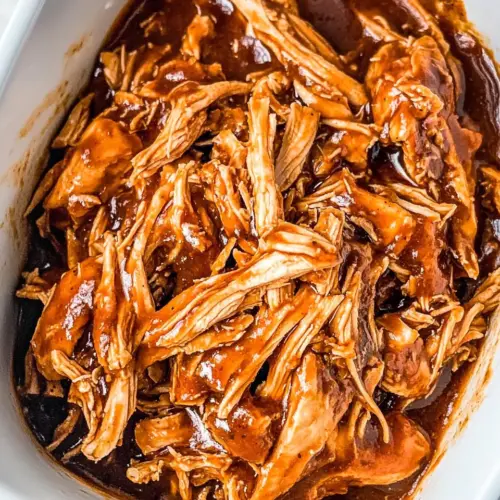
BBQ Crockpot Pulled Chicken
BBQ Crockpot Pulled Chicken is a tender, saucy, and easy weeknight dinner that yields creamy, smoky bites every time. This slow cooker favorite uses simple pantry spices and barbecue sauce to produce irresistible pulled chicken perfect for sandwiches, bowls, or meal prep, making it a foolproof choice when you want comforting food with minimal effort.
Equipment
- Slow Cooker
- Cutting Board
- Two forks or shredding claws
Ingredients
- 2 pounds (900 g) boneless, skinless chicken breasts Use boneless, skinless chicken breasts as the main protein, providing lean meat that shreds easily after slow cooking. Cook slowly in the crockpot to absorb flavors and remain moist; slice or shred for sandwiches or salads. Ensure even-sized pieces for uniform cooking and toss with sauce before serving.
- 1 1/4 cups (300 ml) barbecue sauce Add barbecue sauce to infuse tangy, sweet, and smoky flavors throughout the dish while keeping the chicken moist. Pour evenly over the meat in the crockpot so the sauce breaks down and coats the shredded chicken. Adjust quantity to control sauciness and serve extra on the side if desired.
- 1 tablespoon light brown sugar Sprinkle light brown sugar to boost caramelized sweetness and deepen the sauce’s flavor profile during slow cooking. Dissolve into the barbecue sauce to balance acidity and enhance color, helping create a rich glaze on the pulled chicken. Use as written to avoid overpowering the savory elements.
- 1/2 teaspoon smoked paprika Season with smoked paprika to introduce a warm, smoky aroma without adding heat, complementing the barbecue sauce. Stir into the sauce mixture so the spice evenly permeates the chicken during cooking. Use measured amount to maintain subtle smokiness rather than dominance.
- 1/2 teaspoon garlic powder Season with garlic powder to contribute savory, aromatic depth that melds into the sauce during long cooking times. Blend into the barbecue sauce for consistent distribution and to enhance overall umami notes. Use as specified for a gentle garlic presence without overpowering.
- 1/2 teaspoon onion powder Season with onion powder to provide sweet, savory undertones that dissolve into the sauce and support the overall flavor balance. Mix into the sauce so the seasoning infuses the chicken uniformly while slow cooking. Measure carefully to keep the onion flavor complementary rather than sharp.
Instructions
- Place the chicken breasts in the bottom of a slow cooker. Sprinkle with brown sugar, smoked paprika, garlic powder, and onion powder.: You will notice a cool, slightly glossy surface when you first set the chicken down, and arranging the pieces in a single layer helps even cooking. The goal is for each breast to have contact with the cooker surface so heat transfers consistently. If the pieces are piled, some portions will lag behind and remain undercooked, so spread them out. A common mistake is crowding the pot which increases cooking time and yields uneven tenderness.
- Pour the barbecue sauce over the top, then toss everything together until the chicken is evenly coated.: As you dust the spices over the meat you should smell the sweet caramel note from the light brown sugar and the warm, smoky whisper of the smoked paprika . These dry seasonings help build flavor in layers and slightly season the outer surface so the sauce can adhere better. Avoid dumping seasonings in one spot; distribute evenly to prevent pockets of intense flavor.
- Cover and cook on high for 2 to 3 hours or on low for 5 to 6 hours, or until the chicken is cooked through and tender.: When you pour in the barbecue sauce you will hear a gentle splash and see the sauce pool and then cascade across the meat, glossing each piece. Tossing ensures the sauce touches all surfaces so the final shredded chicken is uniformly flavored. If you skip tossing, some strands will be bland while others are intensely sauced. Use tongs or a spoon to gently turn the pieces, being careful not to tear the raw meat.
- Shred the chicken using two forks directly in the crockpot, or remove to a cutting board, shred, and return to the sauce.: During cooking the kitchen fills with a sweet smoky perfume, and you may notice the sauce begin to bubble faintly around the edges. Cooking on high will deliver tenderness sooner, but low yields slightly more even breakdown and often juicier results. The primary sign of readiness is that the meat pulls apart easily with little resistance. A mistake here is checking too often, which lets heat escape and can lengthen time to tenderness.
- Stir to fully coat the shredded chicken in the sauce.: When you probe the meat it should yield without much force, and shredding releases a fragrant steam that smells like caramel and smoke. Shredding in the pot lets the juices mix immediately, but removing to a cutting board can be cleaner and faster if you prefer. Avoid shredding when the meat is still too firm, it will be stringy and dry. If you find dry bits, stir in a splash of reserved sauce or a tablespoon of warm water.
- Serve warm on brioche buns with coleslaw, or use in wraps, baked potatoes, or bowls.: As you stir the shredded chicken , watch the sauce cling to the strands, turning glossy and slightly thicker from the sugars and meat juices. The tactile cue is a sticky, cohesive coating rather than a thin, watery pool. This step is important because it ensures every bite has balanced flavor. A common oversight is not letting the sauce warm through with the shredded meat, which leaves cold pockets of flavor and an uneven mouthfeel.
- Serve warm on brioche buns with coleslaw, or use in wraps, baked potatoes, or bowls: The final presentation should be warm, saucy, and inviting, with the shredded chicken piled generously so the sauce can mingle with any toppings. The contrast of creamy slaw and soft roll enhances texture and brightness. Serving it cold or waiting too long can cause the sauce to congeal, so aim to plate shortly after stirring. If you need to hold the dish, keep it on warm setting and stir occasionally to prevent drying around the edges.
Notes
- Swap cooking time by preference If you need dinner faster, cook on high for 2 to 3 hours, but if you want the most tender, shreddable texture, cook on low for 5 to 6 hours.
- Adjust sauce intensity Stir in extra barbecue sauce after shredding for a bolder finish, or thin with a splash of water if the sauce becomes too concentrated.
- Make ahead and freeze Cool completely, portion into airtight containers, and freeze for up to 2 months; thaw overnight in the fridge before reheating gently.
- Control sweetness Reduce the light brown sugar slightly if you prefer less sweet barbecue, tasting the sauce before cooking to ensure balance.
- Shredding method Use two forks for rustic strands, or shredding claws for speed and uniformity, especially when cooking larger batches.
- Keep it moist If leftovers seem dry when reheated, stir in a tablespoon of warm water or reserved sauce to refresh the texture without diluting flavor.