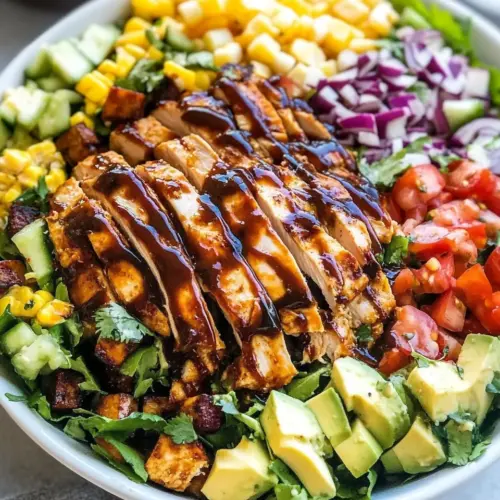
BBQ Chicken Salad
BBQ Chicken Salad delivers smoky grilled chicken, crispy tortilla strips, creamy avocado, and bright veggies for an easy weeknight dinner or lunch. This refreshing bowl balances textures and bold flavors, making it a family friendly and quick meal that travels well. Try it when you want a satisfying, colorful salad that still feels indulgent.
Equipment
- Grill or Indoor Grill Pan
Ingredients
- 1 pound boneless, skinless chicken breasts Cooked and sliced to provide a lean, protein-packed base that adds substance and savory flavor to the salad; season and grill or pan-sear until fully cooked and juicy for best texture.
- 1 tablespoon olive oil Used to sauté or coat the chicken before seasoning, contributing smooth richness and preventing sticking while adding subtle fruitiness and depth to the cooked meat.
- 1 tablespoon BBQ rub (or all-purpose seasoning) Sprinkled onto the chicken to impart smoky, savory, and slightly spicy notes; enhances overall flavor profile and creates a seasoned crust when cooked.
- 6 -7 cups Romaine lettuce (chopped) Chopped to form the fresh, crisp leafy base that adds bulk, crunch, and a mild, slightly bitter contrast to richer salad components; provides freshness and structure to every bite.
- 15 ounces black beans (1 can, drained and rinsed) Drained and rinsed to add creamy texture, protein, and fiber while contributing an earthy, slightly sweet taste that balances other toppings; ensures excess sodium and canning liquid are removed.
- 2 Roma tomatoes (diced) Diced to contribute juicy acidity and bright, fresh flavor that lightens richer elements; adds color, moisture, and a sweet-tart balance in each forkful.
- 1 cup corn (fresh, frozen, or canned) Added for sweet, juicy kernels that lend pop and natural sweetness; can be charred or warmed for a smoky note or used straight from the can for convenience.
- 1/4 cup red onion (chopped) Chopped to provide sharp, pungent bite and crunchy texture in small amounts; adds contrast and enhances savory and sweet components with aromatic depth.
- 1 cup shredded mozzarella cheese (or Monterrey Jack) Shredded to impart creamy, melty richness and mild, milky flavor that binds other ingredients and adds indulgent mouthfeel when combined with warm chicken or dressing.
- 1 avocado (sliced) Sliced to contribute buttery creaminess, cool texture, and subtle nutty flavor while balancing acidity and spice; also enhances the salad’s visual appeal and richness.
- 1 cup tortilla strips Added for crunchy, salty texture that introduces a tortilla-chip-like element and enhances contrast with softer ingredients; provides a pleasant crisp topping.
- BBQ sauce (to taste) Used to add concentrated sweet, smoky, and tangy flavor that complements the seasoned chicken and ties multiple components together; applied to taste for desired intensity.
- ranch dressing (to taste) Drizzled to provide creamy, herby, and tangy richness that complements the BBQ flavors and balances spice and sweetness; added to taste for preferred creaminess.
- chopped cilantro (optional, for garnish) Sprinkled as an optional herb garnish to add fresh, citrusy brightness and aromatic lift that enhances overall flavor complexity and visual appeal.
Instructions
- Rub the olive oil and BBQ seasoning over the chicken.: The aroma of the rub blooming in the oil is the first sign flavor is building, you should smell the paprika and spices become fragrant as they meet the warm oil. This step helps the seasoning adhere to the chicken , allowing a caramelized crust when it hits the heat, which adds texture and concentrated flavor. One common mistake is using too much oil, which can cause splatter and prevent the rub from crisping, so use just enough to coat. Allow the seasoned breasts to rest for five to ten minutes if you have time, this lets the flavors begin to penetrate. If the meat feels sticky or clumped with rub, gently pat off excess to ensure even browning. The surface should glisten, not pool with oil, before it goes into the pan or onto the grill. Be mindful of cross contamination, wash hands and utensils that touch raw chicken .
- Cook the chicken in a skillet on the stove (or on the grill), about 4 minutes per side until cooked through.: Listen for a steady sizzle as the chicken hits the hot surface, that sound signals a proper sear forming. The outer surface should turn a deep golden brown with faint char marks on a grill, adding that smoky note. Use a medium high heat so the exterior browns before the interior dries out, and watch the edges for color change as an indicator to flip. A reliable test is a slight resistance when pressed and clear juices running, or use an instant read thermometer to reach 165°F in the thickest part. A frequent error is flipping too often, which prevents a proper crust from developing, so flip only once if possible. If the breasts are very thick, consider a brief lower heat finish to cook through without burning the exterior. Once cooked, transfer the chicken to a resting plate for five minutes so juices redistribute, keeping the meat juicy when sliced.
- Place the lettuce in a large bowl. Arrange the chicken, black beans, tomato, corn, red onion, cheese, avocado, and tortilla strips on top.: The sound here is crisp, a clean rustle as the chopped Romaine lettuce shifts into the bowl, giving you a fresh, sturdy base that holds up to toppings. Start with evenly chopped leaves so every forkful gets balance, and spread them out to create pockets for the other ingredients. This step sets the stage, so avoid overdressing early which can make the leaves limp. If your lettuce has excess moisture, pat dry with paper towels to preserve crunch. Distributing the greens first helps prevent heavy ingredients from weighing down one side of the bowl, ensuring an even assembly.
- Drizzle the BBQ sauce and ranch dressing over the top. Top with chopped cilantro if desired. Enjoy!: The visual payoff arrives now as you layer warm sliced chicken and colorful toppings, the contrast of colors and textures is inviting. Aim for even placement so each portion has a bit of everything, creating a chorus of flavors when you dig in. The warm chicken next to cool avocado creates a pleasing temperature contrast, and the beans and cheese add heft while tortilla strips add crunch. A common slip is piling ingredients in one area, which leads to uneven bites, so take a moment to scatter them thoughtfully. If your cheese clumps, fluff it with a fork before sprinkling, and add the tortilla strips last to keep them crisp. Try to slice the chicken against the grain for tender bites, and tuck softer items like avocado into pockets to prevent squishing.
- Drizzle the BBQ sauce and ranch dressing over the top: When you add the sauces you create that final bridge between smoky and creamy, and the aroma of the BBQ sauce will lift the bowl with sweet tang. Drizzle lightly at first, then let guests adjust so the dressing does not overwhelm the fresh ingredients. The sound is minimal, but you will notice the shine as sauces coat elements, and the visual change is immediate. A common error is drowning the salad, which causes limp lettuce and soggy tortilla strips, so keep the initial drizzle conservative. If you prefer, serve the sauces on the side for control. Mix gently to combine, and taste for salt or acidity before serving to ensure balance.
- Top with chopped cilantro if desired Enjoy: The final sprinkle of chopped cilantro adds a bright herbal lift that finishes the salad, and the small pop of color makes the dish feel complete. This garnish is about freshness, so add it at the end to preserve its aroma and vibrant green color. If you do not like cilantro, skip it and rely on a simple squeeze of citrus for brightness. A typical mistake is chopping herbs too far ahead, which causes them to lose vitality, so chop just before garnishing. Serve immediately so textures remain distinct and the warm chicken contrasts with cool greens for the best eating experience.
Notes
- Season with intention Start with a balanced tablespoon of BBQ rub so the chicken has depth without overwhelming the other ingredients, and adjust next time based on your taste.
- Pat dry before searing Make sure the chicken surface is dry after oil and rub application to get a proper sear and avoid steaming, which can prevent caramelization.
- Rest the meat Allow the cooked chicken to rest five minutes before slicing to keep juices locked in, yielding tender, flavorful slices rather than dry shreds.
- Keep crunchy items separate Add the tortilla strips and avocado right before serving to maintain texture and avoid limpness or browning.
- Rinse canned items Thoroughly rinse the black beans and canned corn to remove extra sodium and packing liquid that could water down the salad.
- Serve dressings on the side Offer the BBQ sauce and ranch dressing separately so guests can customize intensity and prevent overdressing.
- Adjust cheese quantity Start with one cup of shredded mozzarella cheese and add more sparingly, since cheese can dominate the bowl if overused.