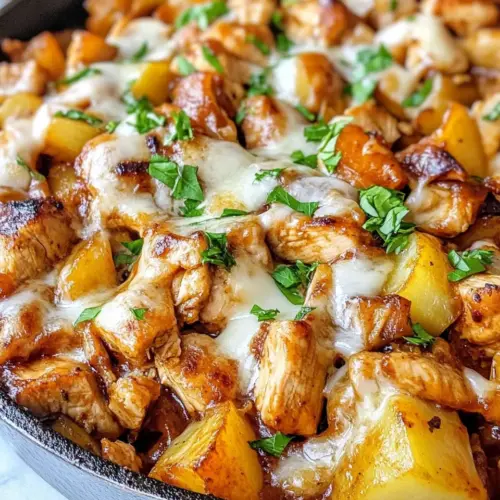
BBQ Chicken and Potato Skillet
BBQ Chicken and Potato Skillet marries crispy Yukon gold potatoes with smoky, sticky chicken and gooey mozzarella cheese. This easy weeknight dinner delivers crispy textures, saucy comfort, and crowd pleasing flavors in one pan, perfect for feeding families or friends. Try it for a simple, satisfying meal that comes together quickly and invites people to dig in.
Equipment
- Skillet
- Air Fryer
- Oven Broiler
Ingredients
- 2 tablespoons olive oil (divided) Coat the skillet and potatoes lightly while adding richness and helping other seasonings adhere during cooking; divided use allows browning then finishing without burning.
- 2 pounds Yukon gold potatoes (cut into 1/2-inch cubes) Provide a creamy, tender base with a waxy texture that holds shape when cubed; cooks until golden and absorbs flavors from sauces and spices.
- salt and pepper (to taste) Season to taste and enhance the natural flavors of the potatoes and chicken; balances sweetness and richness while controlling overall flavor profile.
- 1 1/2 pounds boneless skinless chicken breasts (or thighs, cut into bite-sized pieces) Provide lean protein and substantial texture when cut into bite-sized pieces; cooks quickly and soaks up the BBQ sauce and seasonings for hearty bites.
- 1 teaspoon smoked paprika Impart a smoky, warm flavor that complements the BBQ profile; use to season the chicken and potatoes for added depth and color.
- 1 teaspoon garlic powder Deliver a concentrated garlic flavor without fresh slicing; blends into rubs and helps build savory undertones throughout the skillet.
- 1 teaspoon onion powder Add a mild, sweet onion flavor in powdered form for even distribution; helps round out the seasoning blend without adding moisture.
- 1/2 cup BBQ sauce (plus more if you like it extra saucy) Bring sweet, tangy, and savory elements that glaze the chicken and potatoes; melds with spices and sugars to create a cohesive BBQ coating.
- 1 tablespoon Worcestershire sauce (optional, for depth) Enhance umami and deepen savory complexity when desired; optional splash adds a subtle tang that lifts the overall sauce.
- 1 tablespoon brown sugar (optional, for extra sticky-sweet glaze) Contribute caramelized sweetness and sticky texture when cooked; optional addition creates a richer, more lacquered BBQ finish on the meat.
- 2 cups mozzarella cheese (shredded) Melt into a gooey, stretchy topping that binds the dish together and adds creamy, mild flavor; sprinkle over the skillet near the end to create a golden crust.
- fresh parsley (chopped, for garnish) Brighten and freshen the finished dish with a clean herbal note and a pop of color; garnish just before serving to preserve freshness.
Instructions
- Toss the cubed potatoes with 1 tablespoon olive oil, salt, and pepper. Air fry at 400°F for 15–18 minutes, shaking halfway, until golden and crispy.: The aroma of hot oil hitting the surface of the potatoes produces an immediate sizzle and a toasty smell, signaling that the exterior is crisping. You should hear a steady, light crackle as moisture escapes and edges brown, and visually the cubes will shift from pale to golden brown with slightly blistered skin. This texture contrast is what gives the dish excitement, because creamy interiors are preserved while exteriors become crunchy. The why is simple, crisp exteriors mean each bite has both mouthfeel and structure, so the potatoes stand up to the saucy chicken later. A common mistake is overcrowding the air fryer basket, which traps steam and prevents browning; if pieces are crowded, cook in batches for even crisping. Keep an eye on the color around 12 minutes to avoid over darkening.
- Heat the remaining olive oil in a large oven-safe skillet over medium-high heat. Season the chicken with paprika, garlic powder, onion powder, salt, and pepper. Sear 6–8 minutes until cooked through.: When the oil shimmers in the skillet, you will smell a faint nuttiness, and the surface will glisten, which means it is hot enough for a good sear. As you add the seasoned chicken , listen for a confident sizzle, that sound indicates the Maillard reaction is happening and savory notes are developing. Visually, the edges of the chicken will take on golden brown patches and firm up, while the centers remain slightly opaque until fully cooked. This sear locks flavor and juices inside, which is crucial for tender results once sauce is added. Avoid moving the pieces constantly; give them a few minutes to form a crust, otherwise they will tear and you lose that caramelized flavor.
- Reduce the heat to medium-low. Stir in the BBQ sauce, Worcestershire, and brown sugar (if using). Simmer for 2–3 minutes until the chicken is coated and saucy.: The moment the sauce hits the warm skillet you will notice a sweet and tangy steam rise, and the BBQ sauce will begin to reduce slightly, concentrating flavors. Stirring gently helps the sauce cling to the seared surfaces, creating glossy, caramelized pockets where sugar meets heat. This step is important because it marries seasoning to protein and builds a sticky coating that elevates texture. A common pitfall is simmering on too high a flame, which can scorch the sugars in the sauce and leave a bitter taste, so keep the heat modest and watch the sauce closely.
- Add the crispy potatoes into the skillet, tossing everything together so the sauce coats both chicken and potatoes.: When you fold the warm, golden potatoes back into the skillet, the sauce will hiss gently as it rehydrates the crusted surfaces, and you will see shiny ribbons of sauce cling to both the potatoes and chicken . This is the point where textures meet; the crispness may soften slightly but should retain enough bite to contrast with the tender chicken . The purpose of tossing is to ensure even distribution of sauce so each bite has balance. Be careful not to overmix, because extra handling can break apart the potatoes and make the mixture mushy.
- Sprinkle mozzarella evenly on top. Place the skillet under the broiler for 2–3 minutes, until the cheese is melted, bubbly, and golden in spots.: As the skillet moves under the broiler you will notice the heat transform the shredded mozzarella cheese into a bubbling, stretchy layer that browns in small pockets. The sound shifts to gentle bubbling, and the scent becomes rich and toasty, signaling readiness. This quick blast of top heat creates a pleasing visual contrast and adds a gooey binding element to the dish. It is important to broil briefly and watch carefully, because cheese can go from perfectly golden to burnt in seconds; keep the oven door slightly open if your broiler is intense, and pull it out once small brown spots appear.
- Garnish with parsley, add extra BBQ sauce if desired, and serve hot straight from the skillet.: The final sprinkle of chopped parsley introduces a fresh, herbaceous aroma and a bright green contrast to the rich, caramelized surface. Serving the skillet hot preserves the textures and keeps the cheese stretchy, while extra BBQ sauce on the side gives guests control over sauciness. The reason this plating works is it encourages communal eating and a casual, satisfying presentation. A common mistake is letting the skillet rest too long before serving, which allows the cheese to congeal and the crisp edges to soften; serve promptly for best experience.
Notes
- Potato swap: Yukon golds are ideal, but you can use red or russet potatoes if cut evenly; russets will be fluffier inside, while reds hold shape better.
- Chicken choices: Thighs provide more forgiving, juicy bites; breasts are leaner and cook slightly faster, so watch timing to avoid dryness.
- Cheese options: While mozzarella cheese melts beautifully, cheddar, Monterey Jack, or pepper jack will change the flavor profile and add sharper notes if you prefer.
- BBQ sauce variations: Pick a sweeter sauce for a sticky glaze or a tangier one for brightness; stirring in Worcestershire deepens umami without overpowering the sauce.
- Air fryer alternative: If you do not have an air fryer, roast the potatoes at 425°F for 20 to 25 minutes, flipping once, until golden and crisp.
- Make ahead: Cook the components earlier in the day, then assemble and broil with mozzarella cheese just before serving to save time while preserving texture.