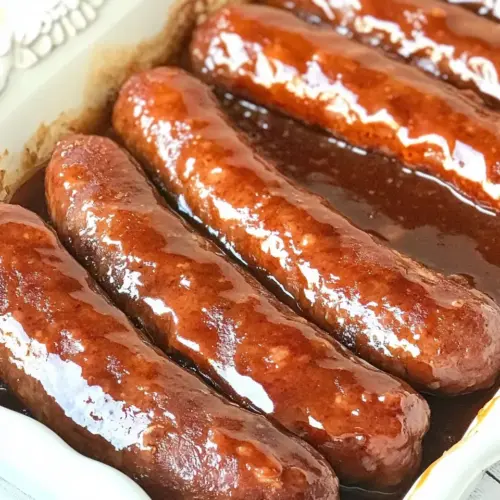
BBQ Brown Sugar Sausage
BBQ Brown Sugar Sausage is a sticky, smoky crowd pleaser with caramelized edges and juicy centers. This easy weeknight dinner or appetizer combines sweet brown sugar and tangy BBQ sauce with hearty smoked sausage for a comforting, finger friendly dish you will want to make again and again.
Equipment
- 9 X 13 baking dish
Ingredients
- 28 oz . smoked sausage such as Conecuh, Johnsonville, or Hillshire Farm Provide smoky, savory foundation and deliver hearty texture; slice into rounds for even cooking and caramelization when baked or grilled. Add rich pork flavor and substantial mouthfeel that pairs well with sweet glaze, helping balance the brown sugar and barbecue sauce.
- 1 cup brown sugar light or dark Add deep molasses sweetness and help create a sticky, caramelized coating when heated; pack firmly into measuring cup for accurate sweetness level. Contribute moisture and a dark, robust flavor that contrasts with savory sausage and complements the tangy barbecue sauce.
- 1/2 cup BBQ sauce Sweet Baby Ray’s or preferred Bring tangy, savory, and slightly sweet flavor while creating a saucy glaze that helps ingredients adhere and caramelize; choose preferred variety for heat or smokiness level. Provide acidic notes and umami components that brighten the overall dish and balance the richness of the sausage and brown sugar.
Instructions
- Preheat oven to 350°F.: As the oven comes up to temperature you should notice a faint warm smell from the heating elements, and the consistent heat is what allows the sauce to bubble gently rather than scorch. Getting the oven to exactly 350 6F ensures the sausage cooks evenly while the glaze has time to thicken, producing those glossy, slightly sticky edges. If you skip proper preheating the cooking time will be uneven, and the sugar may not caramelize correctly. A common mistake is putting the dish in too early, which leads to sloppy, underbrowned results. Use an oven thermometer if your oven runs hot or cool to be precise.
- Slice sausage into 1/2-inch rounds and arrange cut side down in a single layer in a baking dish.: You will hear a soft thud as the knife meets the casing, and the rounds should sit flat so each one browns against the dish. Arranging the sausage cut side down helps develop that caramelized contact point and prevents pieces from steaming each other. This single layer approach creates uniformity in texture, so every piece finishes at the same moment. Avoid overcrowding the dish, which traps steam and prevents browning, leaving the edges soft rather than crisp. If slices are uneven, some will overcook while others stay underdone.
- In a bowl, mix brown sugar and barbecue sauce until smooth.: As you stir the brown sugar into the BBQ sauce you should see the granules dissolve and the mixture transform into a glossy, pourable glaze. The aroma will shift toward deep molasses and tangy tomato notes. Achieving a smooth mixture ensures the sugar melts evenly during baking, creating a uniform coating that will bubble rather than separate. Lumpiness means pockets of undissolved sugar that can burn or leave gritty spots. If the sugar seems stubborn, stir until the texture is homogeneous and scrape the bowl sides to incorporate everything.
- Pour sauce over the sausage and use a spoon to coat evenly.: When you pour the glaze it should cascade over the sausage , pooling slightly in the dish. Use a spoon to nudge the sauce so it clings to each round, ensuring full coverage for even caramelization. The visual cue is a shiny, wet surface that soon turns satiny as it bakes. Uneven coating results in some bites that are bland and others overly sweet, so take a little extra time to distribute. A mistake people make is dumping the sauce and walking away, which yields patchy glazing. Spoon under the edges to catch pieces that might otherwise stay dry.
- Bake uncovered for 45 minutes, or until sauce is bubbling and sausage edges are browned. Remove from oven and let rest for 5 minutes.: As it bakes you will hear occasional gentle bubbling, and the edges of the sausage should turn a deep golden brown with darker caramelized spots. That bubbling signals moisture reduction and sugar concentration, key to building the proper glaze. Baking uncovered allows steam to escape so the sauce thickens rather than remaining runny. Watch for the sauce to go from glossy to slightly tacky, and if edges darken too quickly, rotate the dish for even browning. A frequent error is covering the dish, which traps steam and prevents thickening, leading to a soggy finish.
- Serve warm with toothpicks.: After pulling the dish from the heat you will notice the bubbling slow and the surface settle into a glossy coating. Resting lets the glaze cool slightly and thicken so slices hold the sauce instead of shedding it. This brief pause also allows the flavors to meld, smoothing out any sharp edges from the BBQ sauce. Serve too quickly and the sauce will be runny and messy; wait too long and it firms up too much. Five minutes is the sweet spot for a balance of stickiness and manageability.
- Serve warm with toothpicks.: The final sensory moment is the first bite, with the warm, sticky glaze and savory sausage combining into an immediately gratifying mouthful. Presenting them with toothpicks makes them easy to grab and keeps the experience casual. If you serve them cold the texture and flavor will be muted, so maintain warmth as long as possible. A common serving mistake is refrigerating and reheating improperly; instead, reheat gently to preserve the glaze and texture.
Notes
- Add warmth with cayenne 1/2 teaspoon cayenne pepper mixed into the glaze amps up the heat for those who like a kick, creating a balance between sweet and spicy that livens the bite.
- Garlic powder boost 1/2 teaspoon garlic powder blended into the sauce adds savory depth and rounds out the sweetness, giving the glaze a more complex, savory backbone.
- Pineapple variation 1/2 cup canned pineapple chunks drained and stirred into the dish introduces a bright tropical note that contrasts the smoky sausage, making the flavor profile fruit forward and festive.
- Use dark brown sugar swapping light for dark brown sugar deepens the molasses note, yielding a richer, almost toffee like glaze that stands up to bold BBQ sauces.
- Try a smoky BBQ sauce choose a hickory or mesquite flavored sauce to accentuate the sausage smoke, which layers smokiness rather than relying solely on the meat.