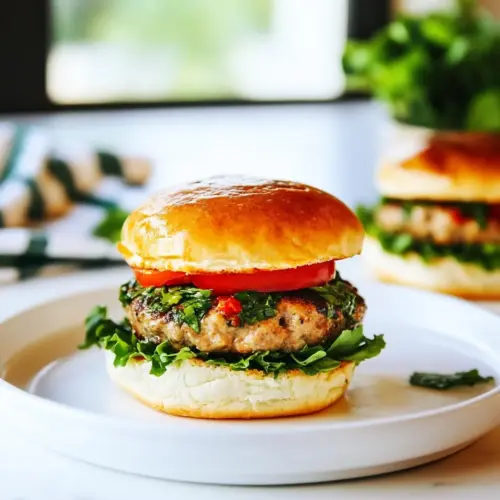
Basil Turkey Burger
Basil Turkey Burger is a fresh and savory twist on the classic burger, combining herbaceous basil, umami fish sauce, and lean ground turkey for an easy weeknight dinner. The patties grill quickly to a juicy finish, offering bright flavors and grill kissed texture. Perfect for summer cookouts or a quick family meal, this recipe is worth making for its speedy prep and impressive taste.
Equipment
- Grill
- Mixing Bowl
- Instant read thermometer
- Tongs
Ingredients
- 2 pounds ground turkey (preferably freshly ground turkey thigh with some fat) Provide lean protein and structure for the patties while keeping moisture; ground turkey thigh offers juiciness and a tender texture when mixed gently and not overworked. Season and bind with other ingredients to form cohesive burgers that cook evenly without drying out.
- 1/4 cup (+ 2 tablespoons) finely chopped fresh basil Add bright herbal aroma and fresh flavor that lifts the savory turkey; finely chopped basil disperses evenly through the mixture to impart a fragrant, slightly sweet, peppery note. Use the measured amount to balance other seasonings without overpowering the meat.
- 2 tablespoons fish sauce Contribute savory umami and depth while helping to season the meat internally; fish sauce enhances meatiness and rounds out flavors with salty complexity. Add gradually and taste to avoid over-salting, since it intensifies when combined with salt.
- 2 teaspoons sugar Introduce a touch of sweetness to balance savory and salty elements and to enhance caramelization during cooking; sugar can also help harmonize the fish sauce and basil flavors. Use the small amount specified to provide subtle contrast without making the patties noticeably sweet.
- Kosher salt Control overall seasoning level and enhance the natural flavors of turkey and aromatics; kosher salt dissolves easily and distributes evenly when mixed into the meat. Adjust quantity to taste and account for the saltiness of fish sauce to avoid oversalting.
- Freshly ground black pepper Provide piquant background heat and aromatic complexity when freshly ground onto the patties; black pepper complements basil and adds depth without overwhelming the other flavors. Grind freshly for best flavor and add sparingly to maintain balance.
- Vegetable oil, for brushing Prevent sticking and promote even browning on the grill or skillet by lightly brushing the cooking surface or patties with oil; vegetable oil has a neutral flavor and a suitable smoke point for high-heat cooking. Use sparingly to achieve a golden crust without making the burgers greasy.
- Toasted buns, for serving Serve as the vehicle for the cooked patties and add texture contrast while holding toppings; toasted buns contribute warmth, slight crispness, and a complementary base for juicier burgers. Choose buns sturdy enough to contain the patties without falling apart.
Instructions
- To a large mixing bowl, add ground turkey, basil, fish sauce, sugar and several turns of freshly ground black pepper. Season with 2 – 3 pinches of salt. Using your hands or a set of forks, gently mix the meat until everything is evenly incorporated. Do not overmix here as that will result in tough burgers. If you are unsure how much salt to add, fry up a tiny taste burger to check the seasoning. Add more salt if needed. Form the turkey meat mixture into 4 patties (1/2 pound each).: You will notice a fresh herbal scent right away as the chopped basil meets the cool ground turkey . The oily aroma from the herb and the faintly savory, almost caramel scent from the fish sauce create a layered perfume that promises depth. Use your hands or a fork to feel the texture, and keep everything cold so the mixture stays tacky rather than greasy. If you overwork the meat here, it will become dense, so stop as soon as the ingredients look evenly distributed. A common mistake is oversalting at this stage, so start with the recommended pinches and adjust after you test a tiny fried piece.
- Preheat a gas or charcoal grill over medium-high heat. Brush the burgers lightly with vegetable oil. Also brush the grill grates with vegetable oil to keep the patties from sticking. Grill the patties directly over the heat for about 4 minutes a side or until cooked through. Let rest for a few minutes before building the burger. I like to cook the burgers to 155°F, and the temp goes up to 160°F as they rest.: As you mix, you should feel the ingredients coming together into a uniform mass, but it should still feel loose and soft. Gently folding prevents the proteins from tightening, which keeps the finished burger tender. The scent will deepen as the basil and fish sauce integrate. Watch out for overmixing, which creates a chewy texture, and avoid compacting the patties too firmly when shaping.
- Stack up the burger as follows: bottom bun, mayo, burger patty, tomato slice, lettuce, ketchup, top bun. Enjoy immediately!: Sensory cues are key, you want the mixture to hold when formed but not spring back like a meatball. If the meat feels sticky and gummy, you have probably overworked it. The goal is a delicate cohesion so the patties stay intact on the grill yet remain soft inside. A frequent error is squeezing too tightly when forming patties, which increases density and shortens the time before dryness sets in during cooking.
- If you are unsure how much salt to add, fry up a tiny taste burger to check the seasoning.: Cooking a small test disk in a hot pan gives you an immediate flavor snapshot and lets you correct the seasoning before committing to all patties. The aroma as the edges brown will show whether the sugar and fish sauce are balanced. People sometimes skip this step and end up with under seasoned burgers, so I recommend it especially when using a new batch of ground turkey .
- Add more salt if needed.: After tasting, you may find a little extra kosher salt brings the flavors forward. Sprinkle and gently fold it in, then let the mixture rest briefly so the salt dissolves and distributes. You will notice the overall flavors becoming brighter and more cohesive. Avoid adding too much at once, because you cannot remove excess salt without diluting the mix.
- Form the turkey meat mixture into 4 patties (1/2 pound each).: When shaping, aim for uniform thickness so the patties cook evenly. Press a shallow indentation in the center of each patty to prevent doming as they cook. The raw mixture should feel cool and supple. A common mistake is making patties too thick, which can result in a dry exterior before the center cooks through, so keep them moderately sized.
- Preheat a gas or charcoal grill over medium high heat.: You will hear the grill hiss as it reaches temperature and smell the dry heat. Medium high gives enough searing power to create flavorful browning without burning the exterior before the center is done. If the heat is too high, the outside will char and the inside will remain undercooked; too low and you will miss the Maillard reaction that creates those nutty, toasty notes.
- Brush the burgers lightly with vegetable oil.: Brushing the patties with a little vegetable oil helps produce an evenly browned crust and prevents sticking. You will see the surface sheen and hear a quick sizzle when they hit the grate. Without oil, lean turkey can cling and tear, so do not skip this. Avoid using too much oil, which can cause flare ups on a grill.
- Also brush the grill grates with vegetable oil to keep the patties from sticking.: An oiled grate prevents the patties from bonding to the metal and preserves those pretty grill marks. Use tongs and a paper towel to carefully oil the grates when they are hot. If the grates are dry, the meat will stick and may fall apart when you try to flip it, so take this small preventative step.
- Grill the patties directly over the heat for about 4 minutes a side or until cooked through.: As the patties cook you will hear a steady sear and see edges firm up and a golden crust develop. Flip once when the underside releases easily. Cooking roughly 4 minutes per side typically yields a final temperature near the range I prefer, and you will notice juices starting to bead on the top before flipping. Avoid constant flipping, which interrupts browning and can dry the meat out.
- Let rest for a few minutes before building the burger.: Resting allows carryover heat to finish the cook and lets the juices redistribute, so the interior stays moist. The patties will continue to rise in temperature slightly, which is why I aim for 155°F before resting to reach about 160°F. Cutting in too soon will release those juices onto the plate instead of into the bite, leaving the burger drier than intended.
- I like to cook the burgers to 155°F, and the temp goes up to 160°F as they rest.: Use an instant read thermometer to verify doneness, inserting it into the side for the most accurate read. The smell should be savory with a faint herb note, and when you press the center gently it should spring back slightly. A common oversight is relying solely on time rather than temperature, which can lead to undercooked or overcooked results.
- Stack up the burger as follows: bottom bun, mayo, burger patty, tomato slice, lettuce, ketchup, top bun. : Building the burger in this order creates a structural flow where the mayo on the bottom bun acts as a barrier against sogginess, the patty sits centered, and the tomato and lettuce add fresh coolness and crisp texture. The contrast of warm patty and cool toppings is part of the pleasure. Don t overload with wet toppings because they can make the bun soggy quickly.
- Enjoy immediately!: The best sensory cue here is the initial contrast: warm, herb scented meat with crisp, cool lettuce and tender tomato. Bite through the toasted bun and you will get a satisfying mix of textures and balanced flavors. Serve right away for peak juiciness, as letting assembled burgers sit can cause the buns to soften and the structural integrity to decline.
Notes
- Choose the right grind Use ground turkey that has some fat content, ideally thigh or a blend, so the finished burger remains juicy rather than dry.
- Keep everything chilled Cold meat binds better and prevents the fat from smearing, which helps form tender patties and improves searing on the grill.
- Test before you commit Fry a tiny sample patty to evaluate salt and seasoning, this avoids ending up with a batch that needs rescue after cooking.
- Fine chop the basil Chopping the basil very small disperses the flavor throughout and prevents large leaf pieces from falling out of the burger during grilling.
- Mind the heat Grill over medium high so you get a good sear without burning the exterior while the interior catches up, this preserves juiciness and flavor.
- Rest the patties Rest for a few minutes after grilling so carryover heat finishes cooking and the juices redistribute for a juicier bite.