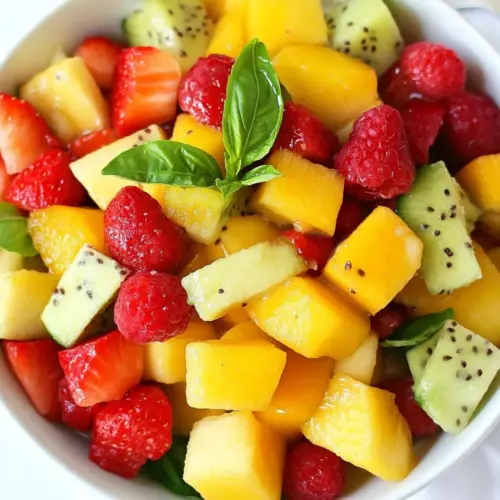
Basil Lime Fruit Salad
Basil Lime Fruit Salad is a bright, refreshing bowl of tropical and berry flavors coated in a fragrant basil lime syrup. Juicy pineapple, sweet strawberries, tender mango or cantaloupe, and tangy kiwi combine for a colorful, easy summer side or light dessert, perfect for casual gatherings and warm weather menus. Make it for vibrant flavor and simple elegance.
Equipment
- Small Saucepan
- Fine sieve
- Large Bowl
- Measuring Cups
- Spoon or spatula
Ingredients
- 1/2 cup granulated white sugar Provide sweetness and dissolve into a simple syrup that balances the tartness of fruit; stir with water over heat until clear and slightly thickened to perk up the salad. Enhance mouthfeel and help the basil infusion cling to fruit pieces for even flavor distribution.
- 1/2 cup water Create a thin syrup base when heated with sugar; simmer briefly to extract basil oils and meld lime zest aromas into a glossy coating. Cool completely before tossing so the liquid soaks into fruit without wilting delicate berries.
- 1/2 cup packed fresh basil leaves Add an herbaceous, slightly peppery note when bruised or chiffonaded; mix into the warm syrup to release essential oils that brighten tropical flavors. Use fresh leaves for the cleanest, most vibrant aroma and to contrast the salad's sweetness.
- 1 tablespoon freshly grated lime zest Contribute intense citrus aroma and a bright, zesty bite when finely grated; fold into the syrup so its oils disperse and lift the overall flavor profile. Reserve a pinch for finishing to add a fragrant pop on serving.
- 4 cups cubed pineapple Supply juicy tropical sweetness and a firm texture when cubed; offer a sturdy base that soaks up the basil-lime syrup without becoming mushy. Provide a sweet-tart backbone that balances softer berries and kiwi.
- 3 cups quartered strawberries Bring vibrant color, tart-sweet juiciness, and tender bite when quartered; contrast textures and add a slightly acidic brightness that keeps the salad lively. Pair well with the syrup and herbs to distribute flavor throughout each piece.
- 2 cups peeled and cubed mango or cantaloupe Offer smooth, fragrant tropical flesh when peeled and cubed; contribute versatile sweetness and a soft yet substantial texture that blends with pineapple and strawberries. Choose ripe fruit for maximum aroma and easy chewing.
- 5 large kiwi (peeled, halved and sliced) Introduce tangy-sweet, slightly granular texture and striking green color when peeled and sliced; add visual interest and a bright acidic counterpoint to the sweeter fruits. Arrange near the top so the delicate slices retain shape and absorb dressing evenly.
Instructions
- In a small saucepan, combine the sugar and water; bring to a boil. Cook 1 minute or until the sugar dissolves. Remove from heat; stir in the basil and lime zest. Cool. Strain the sugar mixture through a fine sieve into a bowl; discard the solids and keep the syrup (chill until ready to use).: The syrup will begin as a clear, glossy liquid, and as the granulated white sugar dissolves into the water you will hear a gentle rising simmer and see tiny bubbles form. The aroma at this stage is lightly sweet, and the goal is simply to dissolve the sugar so the syrup is smooth. This technique matters because undissolved sugar can crystallize later, making the dressing grainy. A common mistake is leaving the heat too high, which can caramelize the sugar rather than dissolve it; keep an eye on the pan and stir gently until everything is clear.
- When ready to serve, combine the fruit in a large bowl. Drizzle with the chilled syrup and toss gently.: You will notice the liquid turn fully transparent and slightly thinner as the sugar disappears, with no gritty texture when stirred. The brief cooking time concentrates the heat just enough to extract sweetness without altering the syrup color. This matters because overcooking will deepen the color and flavor, changing the intended bright profile. If you see darkening or a syrupy thickness beyond simple dissolution, remove it from heat immediately to prevent burnt notes.
- Remove from heat, stir in the basil and lime zest: When the saucepan comes off the stove, add the packed basil leaves and lime zest so the residual heat can gently extract volatile oils. You should sense an immediate fragrant lift as the basil releases herbaceous notes and the lime sends out citrusy sparks. This step is important because hot infusion captures delicate aromatics without boiling them off. One pitfall is leaving the basil in too long before straining, which can make the syrup overly herbaceous or slightly bitter; follow the timing below to maintain balance.
- Cool: As the syrup cools, its aroma will mellow into a rounded, fragrant sweetness with green, citrus highlights. Cooling preserves the fresh character of the basil and prevents the fruit from wilting when you toss them later. Let it come down to room temperature and then chill; pouring warm syrup over fragile fruit causes them to break down quickly. A common oversight is rushing this step, which risks a soupy salad rather than a lively one.
- Strain the sugar mixture through a fine sieve into a bowl, discard the solids and keep the syrup: Straining yields a clear syrup that looks glossy and smooth, free of leaves and zest bits, and the fragrance should remain vivid. This clarity enhances presentation and ensures the syrup coats fruit evenly. The why here is visual and textural control; solids left behind can introduce bitterness or texture you may not want. Be sure to press gently to extract liquid without forcing through herb fragments, which can cloud the syrup.
- Chill until ready to use: Cooling in the refrigerator tightens the syrup and concentrates flavors so it adheres nicely to fruit. You will notice the aroma becomes more integrated and the syrup slightly thickens as it cools, which helps it cling to fruit surfaces. Chilling is crucial because warm syrup accelerates fruit break down and can make the salad watery. Avoid tossing the fruit with syrup that is not fully cold to preserve texture.
- When ready to serve, combine the fruit in a large bowl: The fruits should be prepared and kept separately until service, then combined in a roomy bowl so each piece gets coated without bruising. Listen for the gentle clink of fruit against glass or ceramic and appreciate the burst of color as they come together. This matters because overcrowding a bowl can lead to smashed pieces and uneven dressing distribution. A common mistake is overfilling the bowl, which makes tossing messy and risks losing the salad s visual appeal.
- Drizzle with the chilled syrup and toss gently: Pour the cool syrup across the surface so it settles evenly, then fold the fruit gently using a large spoon or spatula until lightly coated. You should see a glossy sheen without pooling, and the aroma of basil and lime will float up with each turn. Gentle tossing preserves texture and ensures each bite is balanced. Avoid vigorous stirring which can mush softer fruits like strawberries , and be careful not to add too much syrup which would weigh the fruit down.
Notes
- Swap fruit for seasonality Try substituting the mango for ripe peaches in late summer to add a juicy, aromatic twist that still pairs beautifully with the basil lime syrup.
- Make it more tart Add a touch more lime zest if you prefer brighter acidity that cuts through extra-sweet fruit, enhancing overall balance.
- Keep fruit firm for travel Choose slightly underripe mango or cantaloupe when you need the salad to hold up during transport to picnics or potlucks.
- Change presentation Serve the salad in hollowed fruit shells, like a pineapple bowl, for an impressive centerpiece that also locks in aroma.
- Infuse longer for stronger herb notes If you love basil, steep the leaves a little longer in the warm syrup before straining, but monitor closely to avoid bitterness.
- Prep strategy Cut all fruit and store in separate airtight containers, then keep the syrup chilled; toss at the last minute to maintain optimal texture.