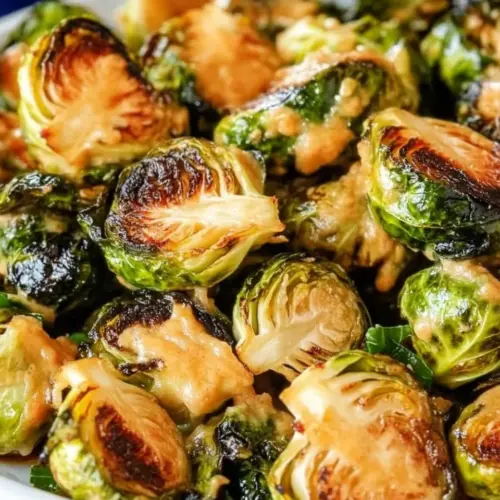
Bang Bang Brussels Sprouts
Bang Bang Brussels Sprouts are crispy roasted Brussels sprouts tossed in a creamy, spicy sauce made with mayonnaise, sweet chili sauce, and sriracha sauce. This easy, flavor forward side is great for an easy weeknight dinner or a party appetizer, delivering crunchy, caramelized edges and a bold, addictive glaze. Make it to add instant excitement to any meal.
Equipment
- Rimmed Baking Sheet
- Parchment Paper
Ingredients
- 2 pounds Brussels sprouts, trimmed and halved Trimmed and halved to ensure even roasting and maximize caramelization for a crisp exterior and tender interior. Provide the main vegetable bulk and earthy flavor that pairs with the spicy-sweet sauce. Offer bite-sized pieces that soak up dressing while maintaining a satisfying texture.
- 2 tablespoons olive oil Coat the sprouts to promote even browning and prevent sticking during roasting. Contribute a subtle fruity flavor and help crisp the outer leaves for a better mouthfeel. Allow seasonings to adhere and create a golden finish.
- 1/2 teaspoon garlic powder Season lightly to build savory depth and complement the sweet and spicy components. Impart a mellow garlic note without overpowering the dish when sprinkled before roasting. Help round out flavors and enhance overall aroma.
- salt and pepper Season to taste for balanced savoriness and bright contrast against the sauce's sweetness and heat. Provide necessary seasoning that draws out natural flavors and lifts the finished dish. Adjust quantities for personal preference and table seasoning.
- 1/2 cup mayonnaise Bind and enrich the sauce with a creamy, tangy base that mellows heat and adds richness. Provide a smooth texture that clings to the roasted sprouts and harmonizes the sweet chili and sriracha. Help create a luscious coating for each bite.
- 1/4 cup sweet chili sauce Sweeten and glaze the sprouts while adding a gentle chili flavor and sticky sheen. Provide fruity heat and a syrupy consistency that balances the mayonnaise's richness. Contribute the characteristic sweet-spicy profile of bang bang sauces.
- 1 tablespoon sriracha sauce Spice up the sauce with concentrated heat and a tangy chili flavor to deliver a sharp, spicy kick. Provide control over the overall heat level when mixed into the mayonnaise and sweet chili base. Enhance complexity with a fermented chili pepper note.
Instructions
- Preheat oven to 425 degrees and line a large rimmed baking sheet with parchment paper. Note: Use 2 baking sheets if necessary. You want the brussels sprouts spread out so they get crispy and don't steam.: As the oven warms, you should notice a faint electrical hum and the kitchen air starting to feel warmer, which primes the baking sheet for instant searing when the sprouts hit the surface. The parchment prevents sticking and makes cleanup easy, while a rimmed sheet catches any caramelized bits. A common mistake is crowding the pan. If the sprouts sit too close, moisture will trap and lead to steaming rather than crisping. If you hear little pops or see edges quickly turning deeply brown, pull the pan sooner to prevent burning.
- In a large bowl toss brussels sprouts with olive oil and garlic powder. Season with salt and pepper. Spread out on baking sheet.: The oil should glisten on each half, and the garlic powder will stick to the slightly tacky surface, releasing aroma as the sprouts warm. Tossing ensures every surface is coated so the flavor and browning are uniform. If the garlic powder looks clumpy, separate gently with your fingers so it spreads. One pitfall is uneven coating which results in some sprouts browning while others remain dull. Stir thoroughly until you feel the weight of coated pieces shift, indicating full coverage.
- Roast for 20 minutes. Meanwhile, stir together all bang bang sauce ingredients in a small bowl.: You will see specks of black pepper and faint crystals of salt on the sprouts, which will help draw out moisture and intensify browning. Sprinkle evenly and toss once more so each piece gets a hit of seasoning. An all too common oversight is over salting early; remember you can adjust at the end but cannot remove excess salt. Go light, taste a roasted piece later, and add more if needed.
- After 20 minutes, drizzle 1/4 cup of Bang Bang sauce over Brussels sprouts. Stir sprouts and return to oven for 10 to 15 minutes or until browned.: Arrange each halved Brussels sprout cut side down when possible, creating maximum contact with the hot sheet which encourages a golden crust. You should hear a faint sizzle as they hit the tray if the oven is fully preheated. If pieces overlap, they will steam, so space them into a single layer. A typical error is piling too many on one tray; use a second sheet if necessary to keep breathing room between pieces.
- Serve with remaining sauce for dipping.: During this time the kitchen will start to smell nutty and slightly sweet as the sprouts caramelize; the edges will darken and the centers will become tender when pierced with a fork. This step concentrates flavor and creates those desirable browned bits. Avoid opening the oven repeatedly which causes temperature drops. If you notice little blackened bits forming quickly, reduce time by a few minutes to avoid bitterness.
- Meanwhile, stir together all bang bang sauce ingredients in a small bowl: As you whisk the mayonnaise , sweet chili sauce , and sriracha sauce , the mixture should emulsify into a glossy, pale orange sauce that smells tangy and slightly spicy. Preparing the sauce while the sprouts roast keeps momentum and ensures it is ready to coat warm vegetables. A mistake is making the sauce too far in advance without refrigeration which may alter texture; keep it chilled if prepared much earlier.
- After 20 minutes, drizzle 1/4 cup of Bang Bang sauce over Brussels sprouts: When you add the sauce, expect a burst of aroma from the chili and sriracha melding with the roasted notes. The sauce will immediately start to cling and sizzle slightly as the heat from the pan activates the flavors. Pour evenly so all pieces get a kiss of sauce without pooling. Avoid drenching the tray, which leads to soggy sprouts instead of crisp coated morsels.
- Stir sprouts and return to oven for 10 to 15 minutes or until browned: Stirring redistributes sauce so the sugars caramelize and form a shiny glaze. You should see edges deepen to a golden to deep brown and hear subtle crackles as the surface crisps. This secondary roast builds complexity, creating a contrast between a creamy sauce and crispy edges. A common error is leaving them too long which can cause the sauce to blacken and taste bitter, so watch closely in the final minutes.
- Serve with remaining sauce for dipping: The final dish should glint with a lacquered finish and give a satisfying snap when bitten, with warm, creamy sauce available for added richness. Serving with extra sauce lets guests control heat and creaminess. One troubleshooting tip is to reserve some sauce before tossing so you can offer a fresh, cool contrast; if you toss everything on, the reserved sauce won’t be available for those who prefer an extra dip.
Notes
- Add a citrus finish Add a squeeze of fresh lemon or lime over the finished sprouts to brighten the sauce and cut through richness, making the dish feel lighter and more vibrant.
- Turn up the heat Increase the amount of sriracha sauce slightly for a bolder kick, or stir in a pinch of cayenne for a sharper, more immediate spice sensation.
- Make it extra crunchy Toss the finished sprouts with toasted panko or chopped roasted nuts for an added textural contrast that plays nicely with the creamy sauce.
- Serve as finger food Keep the sprouts bite sized and provide small skewers for easy dipping so they work perfectly at parties as a sharable appetizer.
- Adjust sweetness If you prefer less sweet, reduce the sweet chili sauce by a tablespoon and replace it with a touch more mayonnaise to maintain creaminess while dialing back sugar.