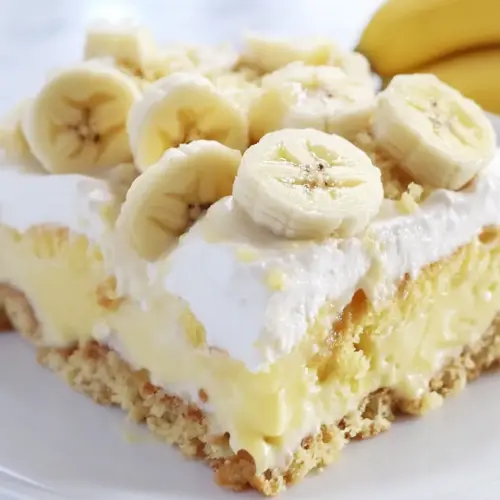
Banana Pudding Poke Cake
Banana Pudding Poke Cake blends creamy instant pudding with tender cake and ripe bananas for a nostalgic, crowd pleasing dessert. This easy make ahead treat is creamy, slightly crunchy from crushed vanilla wafers, and perfect for potlucks or family dinners. It delivers big flavor without fuss, making it a top pick when you want an impressive sweet that is simple to assemble.
Equipment
- 9×13-inch Cake Pan
- Mixing Bowl
- Electric Mixer
- Whisk
- Rolling Pin
Ingredients
- 1 (15.25-ounce) box yellow cake mix Provides a pre-mixed base of flour, sugar, and leavening to form the cake structure; follow package directions to combine and bake evenly for proper texture. Enhances convenience while contributing sweetness and crumb that soaks up pudding for the poke effect.
- 3/4 teaspoon baking soda Leavens and reacts with acidic components to create additional lift in the cake batter; use measured amount to avoid an overly alkaline flavor. Supports a lighter crumb when combined with baking powder and beaten eggs.
- 1 teaspoon baking powder Adds extra lift and stability to the cake by producing carbon dioxide during baking; include to ensure an airy, tender texture. Balances the overall leavening system for consistent rise and crumb.
- 3 overripe bananas, mashed Imparts concentrated natural banana flavor and moisture when mashed into the batter; overripe bananas contribute sweetness and help keep the cake tender. Incorporate thoroughly to distribute fruit fibers and enhance the banana profile.
- 3/4 cup water Hydrates the dry cake mix and dissolves other ingredients to create proper batter consistency; adjust slightly if batter seems too thick. Uses water as a neutral liquid to control batter texture without altering flavor profile.
- 1/4 cup vegetable oil Contributes fat to the batter for tenderness, moisture, and richer mouthfeel; choose neutral oil to let banana and vanilla flavors shine. Combine with other wet ingredients to emulsify and create a smooth batter.
- 3 eggs Provides structure, richness, and emulsification to the batter; beat into wet ingredients for uniform incorporation. Eggs also contribute to leavening and help set the cake as it bakes.
- 1 (5.1-ounce) box vanilla or banana instant pudding mix Creates a creamy, pudding layer that soaks into the cake when prepared with milk; instant mix sets quickly to provide a thick, flavorful filling. Select vanilla or banana flavor to reinforce the dessert’s banana profile.
- 2 cups milk Reconstitutes the instant pudding mix into a smooth, creamy filling; chill after mixing to thicken before pouring over the cake. Also adds dairy richness and helps the poke holes hold moisture.
- 1 cup vanilla wafers, crushed Adds crunchy, vanilla-cakey texture and classic banana-pudding flavor when crushed and sprinkled between layers; helps contrast creamy elements with a slightly firm bite. Use crushed wafers to maintain authentic dessert character.
- 3 ripe bananas, sliced Provides fresh banana flavor and a soft, pleasant texture when sliced and layered on top of the pudding; choose ripe but firm bananas for best appearance. Adds a bright, fruity garnish that complements the sweet, creamy layers.
- 2 cups heavy whipping cream Whips into a stable, airy whipped cream to top the cake and create a light finishing layer; chill bowl and beaters for best volume. Heavy cream adds richness and helps balance the sweetness of the pudding and cake.
- 1/2 cup powdered sugar Sweetens and stabilizes whipped cream while adding a smooth mouthfeel; sift before adding to avoid lumps and measure to taste. Powdered sugar dissolves quickly and helps the whipped cream hold its shape.
- 1/2 teaspoon vanilla extract Enhances the whipped cream and pudding with concentrated sweet aromatic notes; add gradually and taste to avoid overpowering vanilla nuances. Serves to unify the dessert flavors and elevate overall aroma.
Instructions
- Combine all cake ingredients in a mixing bowl. Beat at medium speed for 2 minutes.: The room will fill with a soft, cakey aroma as the batter comes together, and you will notice the mashed bananas integrating into a smooth, slightly flecked mixture. I like to scrape the bowl once mid way to ensure no dry pockets remain, which helps the cake bake evenly. If you smell a faint egginess, that is normal, it mellows in the oven. A common mistake is overbeating at this stage which can make the cake tough, so stop as soon as the batter looks homogenous and slightly airy.
- Pour batter into a greased 9×13-inch cake pan.: As you pour, the batter should flow slowly and settle into the corners, leaving a few air bubbles on the surface. I gently tap the pan once on the counter to release trapped air; this gives a smoother top for even baking. If the batter seems stiff, it may need a touch more liquid, but only a tablespoon at a time. Avoid vigorously shaking the pan which can create an uneven rise.
- Bake cake in a preheated oven at 350°F for 30-35 minutes or until a toothpick inserted in the middle comes out clean.: The kitchen will begin to smell warmly sweet, and the top should turn a golden shade, slightly springy to the touch. I rotate the pan halfway through if my oven runs hot on one side to promote even browning. Poking the center with a toothpick should yield only a few moist crumbs, not raw batter; if you see wet batter, give it five more minutes. Opening the oven frequently can cause the cake to sink, so check near the end of bake time only.
- Cool the cake completely, then use a round spoon handle to poke holes all over the cake about an inch apart.: When the cake is fully cool, I run my hand gently over the surface to ensure it has set; it should feel springy yet stable. Poking holes creates the little channels where the pudding will nestle, so spacing of about an inch ensures even distribution. You will hear a soft, hollow sound when the handle passes through the crumb, and the holes should reach close to the bottom without tearing the pan. A frequent error is poking while the cake is still warm, which causes the holes to close as the cake settles, limiting pudding absorption.
- Combine the pudding mix and milk and whisk for 2 minutes. Quickly pour over the cake. Get as much pudding into the holes as you can while spreading the pudding into an even layer over the top of the cake. Cover the cake and chill for at least 30 minutes.: The instant pudding thickens as you whisk, transforming from liquid to glossy custard; its vanilla scent will become pronounced. Pour it immediately and use the back of a spoon to push pudding into each hole, watching it disappear into the crumb, and then smooth a thin layer across the top to seal those pockets. Chilling lets the pudding set and the flavors meld, producing a silky mouthfeel when served. If you pour slowly, the pudding may set in the bowl so work efficiently. Avoid using non instant pudding mixes which will not set properly.
- Place vanilla wafers in a bag and crush them with a rolling pin. Set aside.: Crushing the wafers releases a warm, baked vanilla aroma and creates a crunchy topping that brightens each bite. I leave some pieces larger for textural contrast and some fine crumbs to sprinkle decoratively. If you crush too finely, the topping can become dusty rather than crunchy, so aim for a mix of sizes. Store any unused crushed wafers tightly sealed to keep them crisp.
- Whip cream till soft peaks form. Add powdered sugar and vanilla and beat till well mixed.: Your chilled bowl will shorten whipping time, and you will see the cream transform from liquid to soft ribbons that hold shape briefly when the whisk lifts. Once the powdered sugar and vanilla are incorporated, beat just until medium peaks form so the topping is stable yet airy. The whipped cream should smell like fresh cream with a hint of vanilla. Over whipping will make it grainy and eventually turn it to butter, so watch closely and stop at the right moment.
- To serve, cut the cake into slices. Top with sliced bananas, whipped cream, and crushed vanilla wafers. Refrigerate any leftovers.: Each slice should present visible layers of cake and pudding, crowned by pillowy whipped cream, fresh sliced bananas , and a scattering of crushed wafers for crunch. The contrasts of cool cream, soft fruit, and slightly dense cake are delightful together, and you will hear a gentle fork against the wafer bits as you eat. Leftovers keep well chilled; however, the banana slices on top may darken, so add fresh slices if serving later. A common misstep is serving too soon before the pudding sets, which results in a runny texture, so plan to chill adequately.
Notes
- Box mix method Use the box cake mix but follow the ingredient list in this recipe rather than the directions on the box, this ensures the batter has the right balance of moisture and banana flavor for the poke technique.
- Instant pudding requirement Be sure to use INSTANT banana or vanilla pudding mix as specified, because it sets quickly with cold milk and creates the creamy filling that the cake soaks up.
- Optional sauces Consider a drizzle of chocolate or caramel sauce for serving if you want extra indulgence, adding visual contrast and a new flavor layer to each slice.
- Nut additions Add chopped pecans, walnuts, or sliced almonds on top for crunch if you enjoy nuts, sprinkling them with the crushed wafers for texture and a toasty note.
- Alternate pan sizes You can divide the batter between two 8 or 9 inch round pans and bake at 350°F for 25 to 30 minutes; adjust the chilling time once layered so the pudding sets evenly in each layer.
- Cupcake option Use foil liners and bake at 350°F for 18 to 22 minutes, then poke a few holes in each cooled cupcake and spoon in pudding, chilling to set for an individual sized treat.