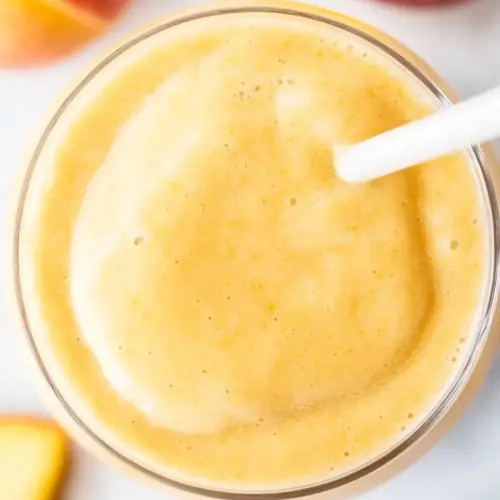
Banana Peach Smoothie
Banana Peach Smoothie is a creamy, fruity blended drink that marries ripe banana with bright frozen peaches and tangy yogurt. This easy, refreshing smoothie is perfect for summer mornings or an on the go breakfast, delivering silky texture and natural sweetness. Make it to enjoy a quick, nutritious treat that tastes like a sunny day in a glass.
Equipment
- Blender
- Knife
- Cutting Board
- Measuring Cup
Ingredients
- 2 fresh bananas Provide natural sweetness and creamy body to the smoothie, helping create a thick, smooth texture when blended. Ripeness influences sugar level and flavor intensity, so choose ripe bananas for optimal sweetness. Also contributes potassium and natural nutrients that enhance the drink's nutritional profile.
- 2 cups frozen peaches Deliver icy fruit flavor and chill to the smoothie, forming the frozen fruit base that sets temperature and texture. Using frozen peaches concentrates peach flavor and helps thicken the blend without extra ice. Also supplies vitamins and a pleasant fruity aroma that pairs well with banana.
- 1 cup yogurt (plain or flavored) Add a creamy, tangy backbone that balances sweetness while improving mouthfeel and protein content. Plain yogurt will keep flavors clean and slightly tart; flavored yogurt can introduce additional sweetness and complexity. Also helps stabilize the emulsion and yields a silkier smoothie.
- 1 cup ice cubes Provide extra chill and slurry texture for a frosty consistency when blended, helping achieve a thicker, colder result. Adjust amount to control dilution and thickness; more ice yields a slushier drink while less preserves fruit intensity. Works together with frozen fruit to maintain low serving temperature.
- 1 tablespoon honey (optional) Introduce optional floral sweetness and depth, allowing gentle flavor adjustment without overpowering the fruit. Start with a small amount and taste before adding more to avoid excessive sweetness. Also helps balance acidity if using plain yogurt or tart fruit.
- whipped cream Top the finished smoothie with airy sweetness and decorative appeal, creating a creamy contrast to the blended base. Apply sparingly for visual impact and a richer first sip, noting it increases caloric content. Use as a finishing touch to elevate presentation for guests or special occasions.
- fresh peach slices Garnish the glass with fresh peach slices to reinforce fruit flavor and add attractive color and texture. Place slices on the rim or float on top for immediate visual appeal and a hint of fresh fruit with each sip. Also signals the smoothie flavor to guests and complements the blended peach.
- banana slices Garnish with banana slices to echo the smoothie’s banana component and provide a pleasant visual cue. Scatter on top or skewer for an attractive presentation and occasional fresh fruit bites. Also adds immediate recognizable flavor and texture contrast to the creamy drink.
Instructions
- Peel the bananas and cut them into chunks.: From the moment you cut into the fruit you will notice a sweet, tropical aroma that signals sugar and ripeness. The texture of the pieces should be soft and yielding, making them easy to mash between your fingers, which helps the blender break them down quickly. The reason we chunk them is to ensure even blending and to avoid large banana strings. A common mistake is leaving bananas whole, which can create a dense mass that the blender struggles to process, so cutting into uniform pieces helps achieve a smooth mouthfeel.
- Place the fresh banana chunks, frozen peaches, yogurt, ice cubes, and honey (if desired) into the blender.: As you layer the ingredients you will see contrasts in color and temperature, the chilled peaches providing a frosty sheen against the softer bananas. I like to put liquids or softer items near the blade so the blender can create a vortex and pull the frozen pieces in. The why here is important: arranging ingredients properly prevents air pockets and ensures even blending. Avoid overfilling the blender jug because that can lead to uneven processing or a messy eruption when you pulse.
- Blend all the ingredients together until smooth and creamy.: When the blender starts, listen for a steady, even whir rather than harsh grinding, which indicates it is handling the ice and fruit well. You will watch color blend into a uniform pale peach and see the surface go velvety. Stop and scrape down the sides once or twice if you notice streaks of unblended fruit. The texture should be thick but pourable; if it is too thin, add more frozen peaches or reduce liquid. A common issue is running the blender too fast without pausing, which overheats the motor or leaves chunks; pulse and then blend for best results.
- Taste the smoothie and adjust the sweetness by adding more honey if needed.: The first sip will reveal the true balance of acidity and sugar, and this is where you fine tune the drink. If the peaches are particularly sweet you may not need honey at all, while under ripe bananas may call for a touch more. The sensory cue to aim for is a clean sweetness that supports fruit flavors rather than masks them. Over sweetening is the primary mistake here, so add small amounts, mix, and taste again.
- Pour the smoothie into glasses for serving.: As you pour, notice the way the liquid flows, silky and thick without chunks, forming a soft meniscus at the top of the glass. If it separates quickly, that indicates too much liquid or not enough emulsifying yogurt . Serve immediately for the best temperature and texture because smoothies tend to thin as they sit. Preparing glasses ahead can be helpful, but do not pour and leave for long, as separation and dilution will occur.
- Add optional toppings such as a dollop of whipped cream, fresh peach slices, and banana slices.: The final adornments add contrasting textures and a visual cue that this drink is special. Whipped cream brings a billowy richness, while fresh slices add bite and aroma. Place toppings gently so they float rather than sink, and avoid overdecorating which can make sipping awkward. A typical slip up is piling too much garnish, which interferes with drinking from the glass rim.
- Serve immediately and enjoy!: The initial sip should be cold, creamy, and layered with peach brightness and banana sweetness. Serving right away preserves the texture and temperature, and it ensures your guests get the optimal experience. If you wait, ice melt and separation will dull the flavors and watery texture will develop, so prioritize speed between blending and sipping.
Notes
- Freeze bananas for a thicker texture by chopping and freezing them for a couple of hours, which yields a creamier, almost ice cream like smoothie.
- Use flavored yogurt to boost sweetness when you want a dessert like profile without adding extra sugar, but remember this will change the fruit balance.
- Make it colder without diluting by freezing yogurt in an ice cube tray and blending those cubes instead of regular ice cubes.
- Adjust fruit ratio for a brighter taste by increasing frozen peaches for more tart fruit notes or more banana for creamier sweetness.
- Top with fresh slices for texture contrast such as thin peach slices and banana rounds to add a juicy bite that contrasts the smooth base.