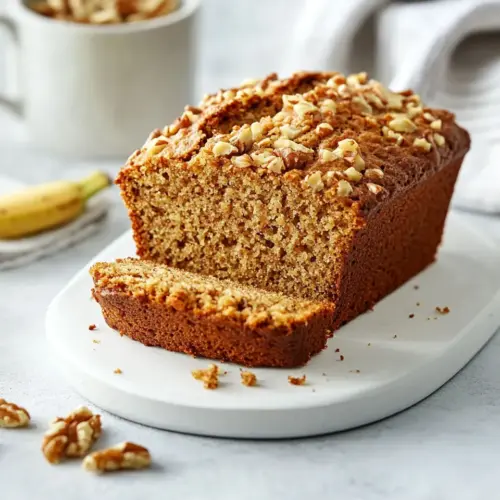
Banana Nut Bread
Banana Nut Bread is a moist, slightly sweet loaf with a hearty whole wheat crumb and crunchy walnuts. The natural sweetness of ripe bananas blends with coconut sugar and a touch of vanilla for an easy, comforting treat perfect for breakfast or snack time. Make it when you have ripe bananas, and enjoy a simple, nourishing loaf that travels well and pleases a crowd.
Equipment
- Oven
- 8×4 inch Loaf Pans
- Mixing Bowls
- Whisk
- Wire Rack
Ingredients
- 2 cups whole-wheat flour Provide structure and whole-grain fiber to the loaf; contributes a nutty flavor and denser crumb that pairs well with ripe bananas. Sifts or measures accurately for consistent texture and avoids overmixing to prevent toughness. Works as the primary dry base that absorbs wet ingredients and binds the batter.
- 1 1/2 teaspoons baking powder aluminum-free Leaven the bread gently to provide lift and a light crumb without an aluminum aftertaste; activates with moisture and beaten eggs to create air pockets. Use fresh leavening to ensure reliable rise, especially important with denser whole-wheat flour. Balances tenderness while maintaining the loaf’s shape.
- 1/4 teaspoons ea salt Enhance overall flavor balance and heighten other ingredients by providing a subtle saline lift that controls sweetness and strengthens gluten slightly. Dissolve evenly into the wet ingredients to ensure uniform seasoning throughout the batter. Small quantity is critical to avoid salty dominance.
- 3/4 cup coconut sugar Sweeten naturally while contributing a mild caramel note and moistness to the crumb; reduces the need for refined sugar and complements banana sweetness. Measure carefully as sweetness level affects browning and overall flavor profile. Incorporates easily when creamed with applesauce or beaten with eggs.
- 1/2 cup unsweetened applesauce Replace oil or butter to maintain moistness with fewer calories and add a mild fruit sweetness that complements bananas; helps bind wet ingredients for a cohesive batter. Use at room temperature to blend smoothly and prevent lumps, contributing to a tender crumb. Particularly useful for health-conscious baking without sacrificing moisture.
- 2 large eggs Provide structure, richness, and emulsification to the batter while trapping air for lift when beaten; add protein that helps set the crumb during baking. Beat to combine thoroughly with sugars and wet ingredients to ensure uniform texture. Large eggs also contribute color and a richer mouthfeel.
- 1 teaspoon pure vanilla extract Add aromatic depth and enhance perceived sweetness without more sugar; accentuate banana and walnut flavors with warm vanilla notes. Use pure extract for a clean, concentrated flavor that blends quickly into the batter. Small amount goes a long way in rounding out the loaf’s profile.
- 4 medium ripe bananas mashed Contribute natural sweetness, moisture, and pronounced banana flavor while acting as a tenderizing agent due to their moisture content. Mash thoroughly to integrate into the batter and release sugars that aid browning and flavor development. Provide characteristic banana aroma and help create a soft, moist crumb.
- 1 cup raw walnuts chopped Provide crunch, rich nutty flavor, and healthy fats that contrast the soft crumb; chopped texture distributes through the loaf for pleasant bites. Toast lightly beforehand to deepen flavor and remove excess moisture, then fold in near the end to preserve texture. Also contributes visual appeal and nutritional value.
Instructions
- Preheat your oven to 350°F. Lightly grease two 8×4-inch loaf pans with a dab of coconut oil or line with parchment paper.: When the oven heat begins to spread, you will smell a faint warmth and the air will feel like it is ready to cradle the loaves. This temperature encourages a steady rise and a nicely browned crust without drying the interior. If you skip preheating, the loaf may bake unevenly, leaving a dense center, so always allow the oven to reach temperature first.
- In a bowl, whisk together the whole-wheat flour, baking powder, and sea salt.: The light sheen of oil will catch the light on the pan and the parchment should sit flat in the bottom. Greasing or lining prevents sticking while making removal simple, preserving the loaf's sides. A common mistake is over greasing which can cause the crust to fry slightly and become greasy; use a thin layer only.
- In a larger bowl, beat together the coconut sugar and applesauce until well combined. Whisk in the eggs one at a time, then stir in the vanilla extract. Blend in the mashed bananas until just mixed, keeping it lumpy for texture.: As you whisk, the dry ingredients will look uniform, the flour clouding the air slightly with fine dust. Whisking distributes the leavening and salt so the loaf rises evenly and flavors are balanced. Forgetting this step can lead to pockets of baking powder or uneven salt, producing inconsistent texture and taste.
- Gently fold the dry ingredients into the wet ingredients. Stir until just combined to keep the loaf tender. Fold in the walnuts.: When you beat them, the sugar will start to dissolve into the applesauce, creating a glossy, slightly grainy mixture with a soft, molasses scent. This stage helps the sweetness to disperse evenly in the batter. If you under-mix, you'll end up with gritty spots of sugar; over-mixing is less risky here, but you still want a cohesive blend.
- Pour the batter into the two prepared pans, dividing it equally, and smoothing the tops. Bake for 45-55 minutes, or until a toothpick inserted in the center comes out clean. If the top is browning too quickly, tent with foil.: Adding the eggs gradually creates an emulsion, making the mixture silkier and more cohesive, and the aroma will lift into a fragrant note from the vanilla. Proper incorporation ensures the loaf sets with the right crumb and structure. A frequent misstep is adding cold eggs which can cool the batter too much and cause the mixture to split.
- Let the loaves cool in the pans for about 10 minutes, then transfer them to a wire rack to cool completely.: The batter will become thicker and take on streaks of banana. Those little lumps give bursts of pronounced banana flavor and moist pockets. Over-mashing removes those textural pleasures and can make the loaf uniformly dense, so stop when you still see small pieces.
- Gently fold the dry ingredients into the wet ingredients: As you fold, you will see the batter lighten and the flour streaks disappear, revealing a unified texture. Folding preserves air in the batter, which keeps the crumb tender and avoids a tough loaf. A common error is vigorous stirring, which develops gluten and produces a heavy, rubbery texture.
- Stir until just combined to keep the loaf tender: At this point the batter should look cohesive but not overworked, with a slightly thick ribbon when lifted. This restraint ensures the final loaf stays soft rather than chewy. Mixing beyond this will tighten the crumb and reduce tenderness.
- Fold in the walnuts: When the chopped walnuts disappear into the batter, they add flecks of texture and a nutty aroma that lifts when the loaves bake. The nuts contribute a gratifying crunch against the soft crumb. Be careful not to over-fold, which can again lead to a dense loaf, and ensure nuts are evenly distributed so every slice gets some crunch.
- Pour the batter into the two prepared pans, dividing it equally, and smoothing the tops: The batter will flow slowly into the pans, and smoothing the top gives a uniform rise and appearance. Even distribution prevents one loaf from baking much faster than the other. If you fill unevenly, one loaf may overflow while the other remains underfilled, so use a scale or visual measure for parity.
- Bake for 45 to 55 minutes, or until a toothpick inserted in the center comes out clean: During baking, you will notice the kitchen filling with warm banana and nut aromas, and the tops turning a deep golden brown. The toothpick test is the best cue for doneness, ensuring the center is set without drying out. If the top browns too quickly, tent with foil to avoid a burnt crust; underbaking will leave a gummy center.
- If the top is browning too quickly, tent with foil: When you tent with foil, the surface stops darkening while the interior continues to cook, keeping the crust pleasantly golden rather than bitter. This technique preserves moisture and prevents overcooking the exterior. A misstep is sealing too tightly which can trap steam and make the crust soggy, so tent loosely.
- Let the loaves cool in the pans for about 10 minutes, then transfer them to a wire rack to cool completely: The loaves will continue to set as they cool, and the aroma will mellow into a toasty sweetness. Cooling on a rack prevents the bottoms from becoming soggy from trapped steam. Cutting too soon can cause the crumb to crumble or appear wet and underdone, so be patient for best slices.
Notes
- Room temperature eggs: Letting the eggs sit at room temperature for 15 to 30 minutes helps them incorporate more smoothly into the batter, creating a better emulsion and a lighter crumb.
- Banana texture matters: Leave small lumps when mashing the bananas, those pieces create flavor pockets and varied texture that make the loaf more interesting to eat.
- Even loaf filling: Use a scale or eyeball to divide batter evenly between pans, so both loaves bake the same and you avoid one being over or under baked.
- Toasting nuts: Heat the chopped walnuts in a dry skillet for one to two minutes until fragrant, then cool before folding to intensify their aroma and crunch.
- Cooling patience: Cool the loaves in their pans for about 10 minutes before unmolding, this short rest helps them set and reduces the chance of breaking when you transfer to a rack.