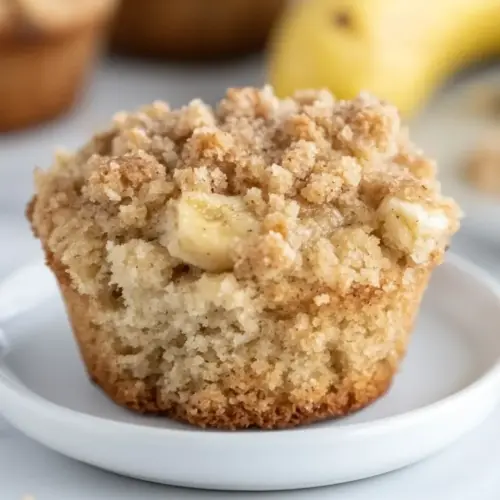
Banana Crumb Muffins
Banana Crumb Muffins deliver moist, spiced banana flavor with a crunchy, caramelized crumb topping. These easy, crowd pleasing muffins come together quickly using pantry staples and ripe bananas, perfect for breakfasts, brunches, or snack times. Make them mini for parties or standard size for a warming breakfast treat that everyone will request again.
Equipment
- Muffin Pan
- Mixing Bowls
- Measuring Cups
- Spoon or spatula
Ingredients
- 1 1/2 cups all-purpose flour Measure and sift to provide structure and bulk for the muffins; all-purpose flour creates the crumb and helps trap gases for rise. Use accurately to maintain proper texture and avoid a dense or gummy loaf. Combine gently with wet ingredients to prevent overworking gluten and ensure tender muffins.
- 1 teaspoon baking soda Leaven the batter by producing carbon dioxide when reacting with acidic components; baking soda helps the muffins rise and brown. Use the specified amount to balance lift without leaving an aftertaste. Dissolve or mix evenly to ensure uniform rising throughout the batter.
- 1 teaspoon baking powder Provide additional lift and stability alongside baking soda; baking powder adds a controlled, double-acting rise during mixing and baking. Contribute subtle lightness to crumb structure so muffins are airy but still moist. Measure carefully to avoid metallic or chemical flavors.
- 1/2 teaspoons salt Enhance and balance flavors while controlling gluten development; salt brightens sweetness and rounds other ingredients. Use the small quantity to prevent flat-tasting muffins and to strengthen the dough slightly. Distribute evenly so all bites have consistent seasoning.
- 1/2 teaspoon nutmeg Add warm, aromatic notes that complement bananas and cinnamon; nutmeg contributes subtle complexity and depth. Use sparingly to avoid overpowering the muffin’s delicate banana flavor. Pair with other spices to create a cozy, balanced profile.
- 3 over-riped bananas, mashed Provide natural sweetness, moisture, and banana flavor when mashed; over-ripened bananas are sweeter and mash more easily. Act as a binder and contribute to the tender texture of the crumb. Mash thoroughly to incorporate evenly and avoid large chunks unless desired.
- 3/4 cups sugar Sweeten the batter and aid in browning during baking; granulated sugar helps create a pleasant crust and tender crumb. Adjust proportion carefully to maintain balance with bananas and brown sugar. Dissolve or cream with fats and eggs for even distribution.
- 1 egg, lightly beaten Bind ingredients and add richness when lightly beaten; egg contributes structure, moisture, and helps emulsify fats and liquids. Use the specified preparation to ensure even mixing and consistent texture. Incorporate gently to avoid overmixing which can toughen muffins.
- 1/2 teaspoon cinnamon Provide warm, sweet spice that complements nutmeg and bananas; cinnamon adds familiar bakery flavor and aroma. Use the quantity to give a noticeable but balanced spice presence throughout. Mix evenly so cinnamon is not concentrated in pockets.
- 1 teaspoon vanilla extract Contribute floral, sweet aroma and enhance overall flavor depth; vanilla extract rounds and amplifies other ingredients. Add to wet mixture to distribute its flavor evenly through the batter. Use quality extract for best aromatic results.
- 1/3 cup butter, melted Add richness, moisture, and tenderness when melted; butter contributes to mouthfeel and flavor while aiding browning. Melt and cool slightly before mixing to blend smoothly with other wet ingredients. Controls the muffin’s crumb and helps carry flavor.
- 1/3 cup brown sugar, packed Provide deeper, caramel-like sweetness and moisture to the crumb topping or filling; packed brown sugar adds molasses notes and stickiness. Use for a crumb or streusel to create contrast in texture and flavor atop muffins. Press together with butter and flour to form crumbly clusters.
- 2 tablespoons all-purpose flour Help bind the crumb topping and create a sandy texture; additional all-purpose flour in the streusel provides structure. Combine with brown sugar and butter to form coarse crumbs that crisp during baking. Use measured amount to avoid a floury or dry topping.
- dash cinnamon Supply an extra hint of warm spice in the streusel or batter; a dash of cinnamon enhances aroma and complements brown sugar. Sprinkle lightly to avoid overpowering other spices and maintain harmony with banana flavor. Distribute across the topping for balanced flavor bursts.
- 1 tablespoon butter, cold Create flaky, buttery pockets in the streusel when cold and cut in; cold butter helps produce coarse crumbs and crisp texture. Keep chilled until combining to prevent melting and ensure a crisp topping after baking. Incorporate by cutting or rubbing into dry streusel ingredients until pea-sized bits form.
Instructions
- Preheat oven to 375°F. Line 10 muffin pan slots with liners, or grease them well.: When you first start you will smell a faint warm metal scent as the oven climbs, which means heat is building for even baking. Preheating ensures the muffins get an immediate lift when they go in, creating that desirable domed top. A common mistake is skipping preheat, which leads to uneven rise and denser centers. If using liners, press them into the wells gently so batter sits evenly; if greasing, the shiny film should glisten slightly but not puddle.
- Mix flour, baking soda, baking powder, salt, nutmeg, and cinnamon in a bowl.: As you whisk the dry ingredients together you will notice the powdery aroma of the all purpose flour and warm spices mixing, signaling balanced distribution. Sifting or whisking helps prevent lumps and evenly spreads leaveners so they act uniformly in the oven. The reason for this step is consistency, it avoids pockets of baking soda or powder that can make some muffins overexplode while others remain flat. Avoid overworking the mixture; once combined, the dry mix should look homogenous and pale beige with specks of spice.
- In a separate mixing bowl, beat bananas, sugar, egg, vanilla, and melted butter.: The wet bowl will begin to smell sweet and buttery, with banana fragrance becoming pronounced as you mash and beat. Combining the sugars and butter first helps dissolution, and the egg adds silkiness and emulsification so the batter holds together. This step matters because a well mixed wet base results in a uniform texture in the finished muffin. A frequent error is using barely ripe bananas, which yields less sweetness and moisture, so opt for very ripe ones for best flavor.
- Add flour mixture to the banana mixture and stir until just moistened. Spoon the batter into muffin liners in the muffin pan.: At this stage the batter should look lumpy and slightly glossy, with streaks of flour disappearing as you fold. You will hear quiet scraping sounds as the batter moves, and when you lift the spoon it should fall slowly in a thick ribbon. The reason to stop when just moistened is to prevent tough muffins caused by overdeveloped gluten. A common pitfall is vigorous stirring which creates elastic batter, so use gentle folding motions and stop when you no longer see dry flour. Divide the batter evenly among the 10 wells so each muffin bakes uniformly; an ice cream scoop helps with consistent portions.
- Crumb topping: In another small bowl, mix brown sugar, flour, and cinnamon. Cut in butter and mix until crumbs form.: In another small bowl, mix brown sugar, flour, and cinnamon. Cut in butter and mix until crumbs form. : As you work the cold butter into the dry topping ingredients, you will feel the texture change from sandy to clumpy, with pebbly bits that promise crunch. The aroma of brown sugar will become more pronounced as the fats coat the particles, creating a richer scent than granulated sugar alone. Forming crumbs matters because those small pockets melt slightly in the oven and then crisp, providing the signature topping. A mistake here is warming the butter too much, which will produce a paste rather than crumbs; keep the butter cold and use a pastry cutter or fingers quickly.
- Sprinkle crumbs over the muffin batter and bake for 15-18 minutes or until a toothpick comes out clean.: When you top the batter, the visual contrast is rewarding the pale batter dotted with brown crumb clusters. In the oven you will hear gentle bubbling and smell caramelizing sugars as the crumb toasts. This step is crucial for texture, because the oven heat sets the crumb and creates a crisp top while the interiors steam to tender doneness. Avoid opening the oven repeatedly, which can drop the temperature and hinder rise. Test doneness at about 15 minutes by inserting a toothpick into the center, it should come out with a few moist crumbs but no wet batter.
Notes
- Add a handful of chopped nuts, such as walnuts or pecans, folded into the batter for crunch and an earthy contrast to the sweet bananas.
- Make them mini by using a mini muffin tin and shortening bake time to about 11 to 12 minutes, which creates delightful bite sized treats perfect for parties.
- Swap half the granulated sugar for honey or maple syrup in the batter for a different layer of sweetness, adjusting wet ingredients slightly if needed to preserve texture.
- Use silicone liners to prevent sticking and make removal effortless, they also allow the bottoms to brown evenly without excess grease.
- Toast the crumbs briefly in a skillet before sprinkling for an extra nutty aroma, this amplifies depth and gives the topping a toasted note.
- Chill the batter briefly before scooping if your kitchen is very warm, it can help the muffins maintain better shape and rise more predictably.