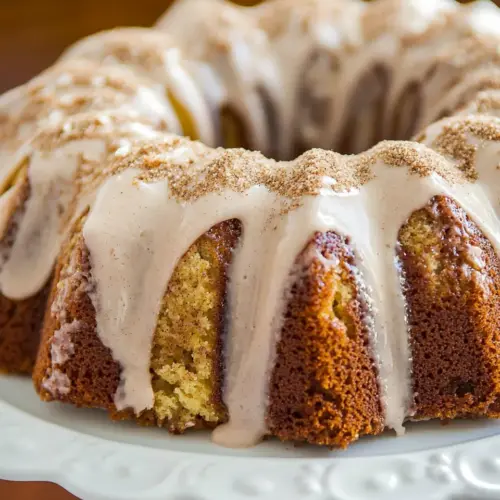
Banana Bundt Cake with Cinnamon Cream Cheese Icing
Banana Bundt Cake with Cinnamon Cream Cheese Icing is a moist, tender bundt with creamy, tangy icing and warm cinnamon notes. The recipe yields a soft crumb thanks to mashed bananas and sour cream, while a silky cream cheese glaze adds balance. Perfect for brunch or gatherings, this easy to slice cake doubles as an impressive yet simple dessert you will want to make again and again.
Equipment
- Stand mixer
- Paddle attachment
- 10 to 12 cup bundt pan
- Wire Rack
- Spatula
Ingredients
- 2 cup s(10 oz) all-purpose flour Measure precisely to provide the cake's structure and bulk; contributes gluten for crumb and texture while balancing moisture from wet ingredients.
- 1 tsp baking powder Leaven gently to help the cake rise by releasing carbon dioxide when heated, creating a tender, airy crumb and light texture in the bundt.
- 1 tsp baking soda React with acidic components to produce additional lift and tenderize the cake, ensuring even rise and reducing density in the final crumb.
- 1/2 tsp salt Season sparingly to enhance overall flavor balance and control fermentation reactions; helps intensify sweetness and round out other flavors.
- 1/3 cup (2.6 oz) unsalted butter, softened Cream thoroughly to incorporate air and distribute fat, contributing richness, moistness, and a tender crumb while aiding browning during baking.
- 1 1/4 cup s(9.2 oz) granulated sugar Sweeten and tenderize by dissolving into batter; assists with creaming to trap air for lift and adds caramelized depth to flavor when baked.
- 2 large eggs Beat in to provide structure and emulsification; eggs bind ingredients, add moisture, and help leaven and brown the cake for cohesive texture.
- 1/2 tsp vanilla extract Flavor subtly to round out sweetness and enhance other aromatic notes; adds depth and complements banana and cinnamon flavors in the cake and icing.
- 1 1/4 cup s(10.8 oz) mashed overripe bananas (about 3 medium) Mash well to add natural sweetness, moisture, and banana flavor; contributes to tender crumb, density, and aromatic profile throughout the cake.
- 1 cup (8 oz) sour cream Fold in to add tanginess and moisture while providing acidity that reacts with baking soda for lift; also contributes a creamy, tender texture.
- 1/2 cup chopped pecans(optional) Toast if desired and fold gently to add crunchy texture and toasty, nutty flavor contrasts that complement the sweet, creamy cake.
- 3 oz cream cheese, softened Soften completely and blend until smooth to create a tangy, rich base for the icing; helps achieve creamy consistency and balances sweetness.
- 1 1/2 cup s(6.6 oz) powdered sugar Sift and whisk in to sweeten and thicken the icing quickly; contributes smoothness and body while dissolving to create a glossy finish.
- 1/2 tsp vanilla extract Infuse gently to brighten and enhance the cream cheese icing's flavor; provides a warm vanilla note that complements cinnamon and banana.
- 1/4 - 1/2 tsp ground cinnamon, to taste Sprinkle sparingly to season the icing with warm spice; adjust to taste to add aromatic complexity and a subtle warming finish.
- 4 tsp milk Thin slightly to adjust icing consistency for drizzle or piping; helps achieve desired pourable texture and smooth sheen on the finished cake.
Instructions
- Preheat oven to 350 degrees. In a mixing bowl whisk together flour, baking powder, baking soda and salt for 20 seconds, set aside.: The room should smell faintly of flour as you measure, and the oven warmth readies the metal for even browning. Preheating ensures the batter begins rising immediately when it hits the pan, which helps form a correct dome and interior crumb. A common mistake is underheating the oven, which causes the cake to bake unevenly and results in a dense center. If your oven runs cool, allow a few extra minutes so the exterior sets while the inside continues to rise.
- In the bowl of an electric stand mixer fitted with the paddle attachment whip butter until slightly pale and fluffy. Add sugar and mix until pale and fluffy. Mix in eggs one at a time, adding in vanilla with second egg. Blend in mashed banana. Mix in half of the flour mixture, then mix in sour cream. Stir in remaining 1/2 of the flour mixture just until combined. Scrape down sides and bottom of bowl to ensure batter is properly combined.: You will hear a faint rustle as the dry ingredients combine, and the mixture should look uniform with no lumps of baking powder or soda. Sifting or whisking distributes the leaveners so the 2 cup s (10 oz) all-purpose flour performs predictably. If you skip this step, you risk uneven pockets of leavening, which create holes or irregular rise; to avoid that, always whisk thoroughly.
- Spray a 10 to 12-cup bundt pan with non-stick spray then dust with flour, shaking out excess. Pour batter into bundt pan, spread into an even layer. Bake in preheated oven until toothpick inserted near center comes out clean, about 40 - 55 minutes (12 cup pan will be more near lesser time). Cool in pan 5 minutes then invert onto a wire rack to cool completely. Once cool spread icing over top and sprinkle with chopped pecans. Store in an airtight container.: As you whip the softened 1/3 cup (2.6 oz) unsalted butter , you should notice it lighten in color and gain a billowy texture that holds small peaks. This trapped air contributes to a lighter cake. A common error is using butter that is too cold or too soft; aim for a texture like softened clay. Overbeating can make it greasy, so stop when you see pale ribbons.
- In the bowl of an electric stand mixer fitted with the paddle attachment, whip together cream cheese, powdered sugar, vanilla and cinnamon. Add in enough milk, 1 tsp at a time, to reach desired consistency.: When you add the 1 1/4 cup s (9.2 oz) granulated sugar , the mixture will become even lighter and emit a gentle sugary aroma. This creaming step dissolves some sugar and helps create structure through tiny air pockets. If the sugar remains grainy, beat a bit longer, but avoid overheating the bowl which can melt the fat and reduce lift.
- Mix in eggs one at a time, adding in vanilla with second egg: You will notice the batter smooth and slightly glossy as each 2 large eggs incorporates. Adding them slowly keeps the emulsion intact and prevents curdling. When you add the 1/2 tsp vanilla extract with the second egg, the scent will bloom, adding depth. If you add eggs too quickly, the batter may split; pause and scrape the bowl between additions.
- Blend in mashed banana: Stirring in the 1 1/4 cup s (10.8 oz) mashed overripe bananas brings a fruity perfume and a thicker, slightly pulpy texture. The batter will smell noticeably of banana and look more custardy. Overmixing now will develop gluten and make the cake chewy, so fold gently until mostly incorporated.
- Mix in half of the flour mixture, then mix in sour cream: Adding half of the dry mix first reduces the chance of lumps and keeps the batter smooth. When you incorporate the 1 cup (8 oz) sour cream , the batter will loosen and feel silkier in the bowl. The acidity of the sour cream interacts with the baking soda for lift. A mistake here is adding all dry ingredients at once, which can lead to overmixing as you try to combine them.
- Stir in remaining 1/2 of the flour mixture just until combined: At this point, the batter should be cohesive and slightly thick, with no streaks of flour. Stop mixing as soon as the last traces disappear to maintain a tender crumb. Overworking is the most common error in this step, producing a denser cake, so use a gentle fold until uniform.
- Scrape down sides and bottom of bowl to ensure batter is properly combined: Use a spatula to gather any batter clinging to the bowl; this ensures an even crumb and prevents pockets of unmixed flour. You will feel the batter become smooth under the spatula. Missing this can leave streaks of flour or fat that bake unevenly, so be thorough but gentle.
- Spray a 10 to 12-cup bundt pan with non-stick spray then dust with flour, shaking out excess: The pan should feel lightly coated and the flour should cling in a thin, even layer. This step helps the cake release cleanly and develop a delicate crust. If you skip flouring, the cake may stick and tear; too much flour creates a rough surface, so shake out the excess for the best finish.
- Pour batter into bundt pan, spread into an even layer: As you pour, listen for a slight thud of batter landing in the pan and use a spatula to level the top. An even layer bakes uniformly, preventing thin edges and a dense middle. Overfilling can cause overflow, while underfilling may make the pan look sparse, so aim for a smooth surface near the top rim.
- Bake in preheated oven until toothpick inserted near center comes out clean, about 40 to 55 minutes (12 cup pan will be more near lesser time): Expect a gentle crackle of the crust forming and a golden color developing on the surface. The aroma will grow richer and make the kitchen cozy. The toothpick test tells you when the interior is cooked through; if it comes out with wet batter, continue baking in five minute increments. A common issue is opening the oven door too often, which drops temperature and can cause the cake to sink.
- Cool in pan 5 minutes then invert onto a wire rack to cool completely: The cake will slowly release steam and settle; you may hear a soft sigh as it rests. Cooling briefly in the pan firms the exterior so it unmolds cleanly, and flipping onto a wire rack prevents the bottom from becoming soggy. If you try to unmold too soon, it may break; wait the recommended minutes and use a gentle shake to test release.
- Once cool spread icing over top and sprinkle with chopped pecans: The 3 oz cream cheese based icing should be smooth and glossy as you spoon it over the cake, pooling in the bundt flutes. The contrast of creamy icing and toasty 1/2 cup chopped pecans (optional) adds texture and flavor balance. If the cake is warm, the icing will melt excessively, so be patient and wait until it is fully cool to get clean, ribboned frosting.
- Store in an airtight container: After the icing sets, you will notice the aroma mellows and the crumb keeps its moistness. Storing the cake properly prevents it from drying out and protects the glaze. A common mistake is leaving it uncovered, which leads to stale edges, so use an airtight container at room temperature for a day or refrigerate for longer storage.
- In the bowl of an electric stand mixer fitted with the paddle attachment, whip together cream cheese, powdered sugar, vanilla and cinnamon: The 3 oz cream cheese should become silky and combine smoothly with the 1 1/2 cup s (6.6 oz) powdered sugar . Whipping releases a light tang and creates the base for a glossy icing. If the cream cheese is cold, the mixture will be lumpy; soften it first for a smooth result.
- Add in enough milk, 1 tsp at a time, to reach desired consistency: As you add the 4 tsp milk slowly, the icing will loosen to a pourable ribbon that drapes over the cake. I add it in small increments to avoid a glaze that is too thin. If you add too much, rescue it with a bit more powdered sugar, but that can change sweetness, so proceed cautiously.
Notes
- Nut Swap: Replace the 1/2 cup chopped pecans (optional) with toasted walnuts for a slightly bitter, earthy note that pairs well with the bananas.
- Spice Boost: Add a pinch of ground nutmeg to the batter along with the ground cinnamon in the icing to deepen the warm spice profile for autumn gatherings.
- Reduced Sugar: Lower the 1 1/4 cup s (9.2 oz) granulated sugar by up to 1/4 cup for a less sweet cake, keeping in mind this will affect browning and texture slightly.
- Sour Cream Substitute: If you prefer a lighter tang, try plain full fat yogurt in place of the 1 cup (8 oz) sour cream, noting that texture will be marginally different.
- Toasted Nuts on Top: Toast the 1/2 cup chopped pecans (optional) in a dry skillet until fragrant before sprinkling for a deeper, nuttier crunch that contrasts with the creamy icing.