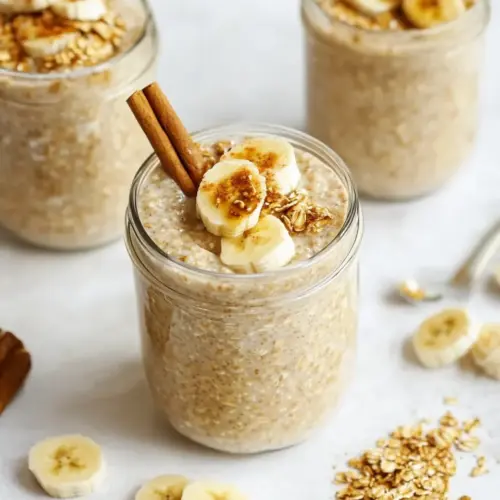
Banana Bread Overnight Oats
Banana Bread Overnight Oats is a creamy, cinnamon scented breakfast that tastes like banana bread in a jar. These easy, make ahead oats combine mashed banana, rolled oats, milk, and chopped nuts for a balanced, hearty morning meal that is perfect for busy weekdays. It is simple to assemble and offers comforting flavor with minimal effort, making it a recipe worth repeating.
Equipment
- Bowl
- Sealable jar
- Measuring Cup
- Spoon
Ingredients
- 1/2 mashed ripe banana Mashed to provide natural sweetness and moisture, lending banana bread flavor and a creamy texture that softens the oats. Adds banana nutrients and helps bind the mixture for overnight setting, enhancing overall richness and aroma.
- 1/2 cup rolled oats Rolled for hearty texture and proper absorption, offering a chewy base that soaks up milk and flavors overnight. Contributes whole-grain fiber and structure, creating the classic overnight oats consistency without becoming overly mushy.
- 1/2 cup milk any variety Used to hydrate the oats and dissolve flavorings, supplying creaminess and mouthfeel that can be adjusted by variety for dairy-free or richer results. Balances thickness and liquidity so the mixture sets properly while retaining spoonable softness.
- 2 tablespoons chopped pecans or walnuts Chopped to provide crunch and nutty flavor, introducing contrasting texture and healthy fats that complement the banana bread profile. Adds visual appeal and a toasty aroma when stirred in, as well as protein and micronutrients.
- 1 teaspoon vanilla extract Added to enhance baked-good aromatics and deepen flavor complexity with sweet, floral notes that marry well with banana and cinnamon. Acts as a small but impactful flavor booster that brightens the overall taste.
- 1/2 teaspoon cinnamon Sprinkled to impart warm, aromatic spice and highlight the banana flavor, contributing subtle sweetness without added sugar. Helps recreate the classic banana bread spice profile while adding antioxidant benefits.
- Dash of sea salt Included as a seasoning to balance sweetness and amplify flavors, helping to round out the profile and accentuate other ingredients. A minimal amount heightens depth and prevents the mixture from tasting flat.
- 1 tablespoon ground flaxseed optional Stirred in as an optional nutritional booster, offering omega-3s, fiber, and extra thickness to improve mouthfeel and satiety. Helps bind liquids and absorb moisture so the oats set more firmly while adding a mild nutty taste.
- 2 teaspoons pure maple syrup Drizzled to add gentle sweetness and a delicate maple aroma, allowing for controlled sugar levels and natural flavor enhancement. Complements the banana and cinnamon while providing a smooth, liquid sweetener that blends easily into the overnight mixture.
Instructions
- In a bowl or a sealable jar, mash the banana thoroughly.: As you mash, notice the banana giving way into a soft, almost creamy paste, with little streaks of brighter yellow remaining. This texture helps the banana distribute throughout the mixture so you get bites that taste fruity rather than chunks that sink or separate. The aroma will be sweet and fragrant, and the mash should feel smooth to the touch with no large lumps. Why this matters: a well mashed banana integrates with the oats and milk, creating a cohesive texture instead of pockets of fruit. Troubleshooting: if your banana is too underripe and resists mashing, let it soften at room temperature for a few hours or microwave it for 10 seconds to soften slightly. Avoid over mash that turns completely watery, which can make the final oats too thin.
- Add the oats, milk, nuts, vanilla extract, cinnamon, sea salt, flaxseed (if using), and maple syrup to the mashed banana. Stir until all ingredients are well combined.: When you add each ingredient, observe their colors and textures joining; the oats start to look studded in the banana mash, the milk pools and creates lighter swirls, and the cinnamon speckles bring warm brown flecks. Stirring at this stage creates a glossy mixture where the liquid coats each oat flake. Why this matters: even distribution of rolled oats and milk ensures uniform soak and flavor in every spoonful. Troubleshooting: if the mixture looks too thick, add a splash more milk to reach the consistency you prefer, but remember it will thicken further overnight. Do not over stir to the point where nuts lose their crunch; fold them gently to retain texture.
- Seal the container and refrigerate for 8 hours or overnight, allowing the oats to soak up the milk.: As you stir, listen for the quiet shift from separate pieces to a unified batter like mixture; the scent of vanilla extract will bloom and the cinnamon will scent the kitchen. The mixture should be cohesive, with oats visibly softened by the milk and banana. Why this matters: thorough combining prevents dry pockets and ensures the cinnamon and maple syrup flavor every bite. Troubleshooting: if you notice any dry clumps of oats, press them down into the liquid to hydrate; leaving them dry will create uneven texture in the final dish. Avoid vigorous beating which can break down oats too much and create a mushy mouthfeel.
- Serve the overnight oats cold, or heat them up if preferred. Garnish with additional banana slices or nuts before serving.: Place the jar or bowl in the fridge and let the cold environment do its work. Overnight the oats will absorb the milk , swell, and transform into a creamy, pudding like consistency. You will smell a quiet sweetness coming from the jar as the flavors meld. Why this matters: cold soaking preserves freshness and texture without cooking, keeping the banana flavor bright. Troubleshooting: if you skip enough time and eat earlier than 8 hours, the oats may be chewier and less integrated, so allow enough soak time for best results. Avoid leaving it out at room temperature for long, especially in warm weather, which can accelerate spoilage.
- Serve the overnight oats cold, or heat them up if preferred: When you open the jar, you should see a thick, creamy mixture with little pockets where the chopped nuts shine, and the aroma of cinnamon and vanilla extract will be front and center. If you like it warm, transfer to a bowl and microwave for 30 to 60 seconds, stirring halfway until steamy and silky. Why this matters: serving temperature changes the eating experience, cold emphasizes freshness, while warm increases comfort and scent. Troubleshooting: if the oats are too thick after refrigeration, stir in a splash more milk to loosen them; if too thin, add a teaspoon of ground flaxseed or let them sit a bit longer to thicken. Avoid reheating too long which can dry the oats and make them gummy.
Notes
- Choose ripe bananas for the best natural sweetness and creamy integration with the oats.
- Measure the oats properly using a flat topped spoon or measuring cup to keep the texture consistent.
- Toast the nuts lightly for deeper flavor and a more pronounced crunch that mimics freshly baked banana bread.
- Adjust liquid to preference by adding small amounts of milk after soaking if you want a looser porridge like bowl.
- Keep extras separate such as sliced bananas or extra nuts, and add them right before serving to maintain texture contrast.