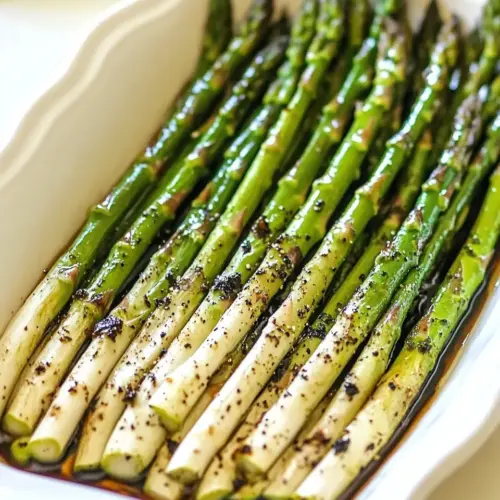
Balsamic Asparagus
Balsamic Asparagus is a quick, elegant side that pairs roasted tender stalks with a nutty brown butter and a bright splash of balsamic vinegar. The result is a slightly crispy, savory vegetable dish perfect for easy weeknight dinners or spring entertaining, and the caramelized nuts add a delightful crunch that keeps everyone coming back for more.
Equipment
- Baking Sheet
- Small skillet
- Tongs
Ingredients
- 50 asparagus spears, ends trimmed (1 large bunch) Trimmed and bundled, provides the main vegetable body and texture for the dish; cooks quickly when spears are trimmed to even thickness. Adds fresh, slightly grassy flavor and a tender-crisp bite when roasted or sautéed, making it the star of the recipe.
- olive oil Fragrant and fluid, coats the asparagus to promote even cooking and prevent sticking; helps carry flavors from other seasonings across the spears. Contributes subtle fruity or peppery notes depending on variety, enhancing overall mouthfeel without overpowering.
- 2 tablespoons butter Rich and creamy, enriches the pan by adding silky mouthfeel and a toasty flavor during quick sautéing; helps brown the asparagus ends for caramelization. Balances acidity and salt while lending a luxurious finish to each bite.
- 2 teaspoons low sodium soy sauce Salty and umami-packed, provides depth and savory complexity while seasoning the asparagus during cooking; enhances other flavors without overwhelming them. Low sodium choice keeps saltiness controlled so natural asparagus flavor remains prominent.
- 1 teaspoon balsamic vinegar Tangy and slightly sweet, offers bright acidic contrast that lifts the dish and balances butter and soy flavors when added at the end. Concentrated balsamic notes create a subtle glaze and add pleasant complexity to each spear.
- Freshly cracked salt and pepper Cracked and adjustable, seasons to taste and highlights natural flavors while controlling overall saltiness; fresh grinding adds texture and bursts of aroma. Balances richer elements and helps tailor the final seasoning profile for the finished dish.
- 1/4 Recipe 5 Minute Perfect Caramelized Nuts (optional) Crunchy and sweet, provides an optional contrasting texture and caramelized nuttiness when used as a topping; enhances flavor complexity and visual appeal. Adds richness and a touch of sweetness that pairs well with balsamic glaze and buttery asparagus.
Instructions
- Preheat oven to 400 F degrees.: When the oven reaches temperature you will notice a consistent dry heat that crisps edges and concentrates flavor, which is crucial for getting roasted notes on asparagus . Preheating ensures the spears begin cooking immediately on the hot sheet, creating a slight char and sealing in juices. A common mistake is placing spears into an oven that is not fully preheated, this leads to limp results rather than crisp, caramelized tips. If your oven runs hot or cool, use an oven thermometer to confirm the actual temperature before baking.
- Add asparagus to a large baking sheet and lightly drizzle with olive oil. Toss to evenly coat and arrange asparagus in a single layer. Season with freshly cracked salt and pepper. Bake at 400 F degrees for 8-10 minutes or until tender but still crisp.: As the spears roast you should hear a gentle sizzle and see the tips darken and the stalks gain a glossy finish, those are signs of proper caramelization. Tossing in olive oil ensures even heat transfer and prevents sticking, which helps the asparagus develop those concentrated flavors. Avoid crowding the pan because overlapping spears steam rather than roast, yielding a softer texture. If your spears are particularly thick they may need a minute or two extra; thinner spears can finish quicker, so check visually for tenderness when a paring knife slides through easily.
- The last few minutes of cooking, melt butter in a small skillet over medium heat. Once melted, cook approximately 3 minutes or until lightly browned, stirring constantly. Remove from heat and stir in soy sauce and balsamic vinegar. Drizzle over asparagus to taste, tossing well to coat. You may not use all of the Balsamic Brown Butter.: You will see the butter foam and then turn a light amber color while releasing a warm, nutty aroma, that indicates it's beginning to brown and develop deeper flavor compounds. Browning intensifies the richness and complements the roasted asparagus . A frequent error is leaving the butter unattended, causing it to burn and taste bitter; once it reaches amber, remove from heat promptly. Medium heat helps you control the process, and stirring constantly keeps solids from sticking to the skillet.
- Garnish with orange zest (optional) and caramelized almonds, pecans or walnuts (optional).: During this stage you should smell a toasted, slightly sweet note and see tiny brown flecks at the bottom of the pan, those are milk solids caramelizing and they are the basis for the glaze's depth. The movement and constant stirring ensure even browning and prevent hotspots that burn. If you notice an acrid smell, the butter has gone too far, so discard and start over with fresh butter to avoid bitterness. Keeping the skillet at medium rather than medium high gives you time to control the color without overshooting.
- Remove from heat and stir in soy sauce and balsamic vinegar.: Off the heat, adding the soy sauce and balsamic vinegar preserves their bright flavors while allowing them to meld with the warm butter, creating a silky, glossy glaze. You will hear a gentle hiss as the cooler liquid meets the hot butter, and the aroma will shift to a more complex savory tang. Avoid returning the pan to high heat because the vinegar can reduce too aggressively and become overpowering. Taste cautiously, since the sauce concentrates as it cools and you can always add more if needed.
- Drizzle over asparagus to taste, tossing well to coat. You may not use all of the Balsamic Brown Butter.: As you toss the asparagus, notice the glaze clinging to the spears, adding shine and a layer of flavor. Use tongs so you can lift and turn each spear, ensuring an even coating without breaking the delicate tips. A common slip up is over saucing, which can mask the asparagus's natural sweetness; add gradually and stop when the balance feels right. If any glaze pools on the pan, spoon it over individual spears for targeted flavor.
- Garnish with orange zest (optional) and caramelized almonds, pecans or walnuts (optional).: Fresh citrus zest adds a bright perfume that lifts the dish, while the caramelized nuts provide contrast in texture and a nutty sweetness that echoes the browned butter. Scatter the nuts just before serving to keep them crisp and add a lively crunch with every bite. A mistake is adding nuts too early, they can soften from steam and lose their snap. If you prefer a cleaner finish, skip the zest, but I recommend trying it once for the extra lift it provides.
Notes
- Swap the nuts for different textures such as pecans, walnuts, or almonds, each giving a distinct crunch and flavor profile.
- Adjust the glaze by increasing or decreasing the balsamic vinegar to fine tune acidity and sweetness to your taste.
- Omit the soy if you prefer a cleaner, less umami forward glaze, and rely on butter and balsamic for richness.
- Make it citrus forward by adding more orange zest or a tiny squeeze of fresh orange juice to brighten flavors.
- Serve warm or room temperature depending on the occasion, both present beautifully and retain texture when plated correctly.