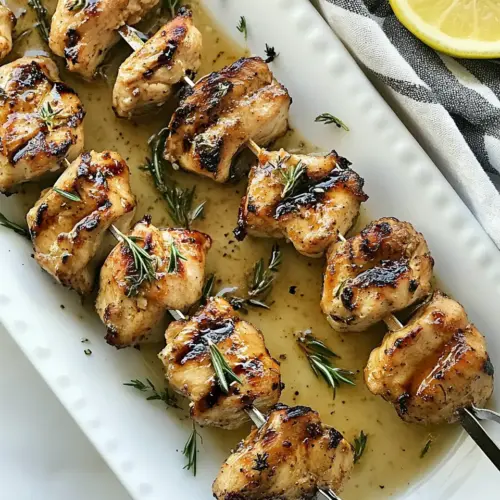
Balsamic and Honey Chicken Skewers
Balsamic and Honey Chicken Skewers offer a glossy, sweet tang with herbaceous notes and tender grilled chicken. This easy weeknight dinner is perfect for summer grilling, delivering caramelized edges and juicy interiors that everyone will love, making it an ideal choice when you want quick, impressive results.
Equipment
- Grill
- Mixing Bowl
- Wooden skewers or metal skewers
- Tongs
Ingredients
- 1 pound boneless skinless chicken breasts, about 2 breasts Provide tender, lean protein and the main bulk of the dish, slicing into even pieces for skewering and quick grilling. Absorb marinade flavors well and remain juicy when not overcooked, making it ideal for skewers and family meals.
- 2 tablespoons balsamic vinegar Add bright acidity to balance sweetness and fat, helping to tenderize the chicken slightly during marination. Concentrated flavor brings a tangy backbone that complements honey and rosemary in the glaze.
- 1 tablespoon extra virgin olive oil Introduce rich, fruity fat that helps carry and meld flavors in the marinade, promoting even browning during cooking. Lightly coats the chicken to prevent sticking and contributes a subtle Mediterranean aroma.
- 1 clove garlic minced Deliver pungent, aromatic depth when minced and added to the marinade or glaze; it flavors the meat throughout and aids in savory balance. Releases essential oils that pair particularly well with rosemary and honey.
- 3 tablespoons honey divided Provide concentrated natural sweetness and glaze-forming sugars that caramelize nicely on the grill; dividing allows some for marinade and some for brushing during cooking. Enhance flavor complexity while creating attractive, sticky coating on the finished skewers.
- 1 teaspoon fresh rosemary minced, plus more for garnish Bring fresh, piney herbal notes that lift the overall flavor profile; minced rosemary disperses evenly in the marinade and clings to the chicken. Garnishing with a little extra adds visual appeal and reinforces the herbaceous finish.
- kosher salt and freshly ground black pepper Season to taste and enhance all other flavors while controlling saltiness; use kosher salt for even distribution and texture. Add freshly ground black pepper for mild heat and a bright, peppery counterpoint to the sweet glaze.
Instructions
- Gather 3-5 wooden skewers and place in a shallow plate with water for 30 minutes.: The air is often filled with a faint woody scent as the skewers soak, and you will notice the wood darken slightly when saturated, which reduces the chance of burning on the grill. This step matters because dry skewers can char quickly and even ignite, which ruins presentation and flavor. A mistake people make is skipping the soak to save time, but that often leads to scorched skewers and a hint of bitterness in the final dish. If you are short on time, use metal skewers to avoid soaking entirely.
- Trim the chicken breasts of any extra fat. Cut into 1 inch chunks and set aside.: As you trim and cut the chicken , the surface should look clean and uniform, with pale pink flesh and minimal white fat. Cutting into approximately 1 inch pieces creates even cooking and tender bites that absorb more marinade. The reason to trim is to prevent puckering or uneven charring where fat left on the meat might render unpredictably. A common error is cutting wildly sized pieces which leads to overcooked edges and underdone centers, so use a sharp knife and steady hand for consistent cubes.
- In a medium size mixing bowl, whisk the balsamic vinegar, extra virgin olive oil, garlic, 1 tablespoon honey and 1 teaspoon rosemary plus a generous pinch of kosher salt and freshly ground black pepper. Add the chunks of chicken breast and refrigerate for 1-2 hours.: You will smell the mingling of tangy balsamic , aromatic garlic , and fresh rosemary as you whisk, with a glossy sheen forming from the olive oil and honey . Marinating allows the flavors to penetrate, softening fibers and building taste. The technique matters because overly long marinating in acid can toughen surface proteins, so stick to the suggested timeframe. A typical misstep is skimping on seasoning in the bowl, which produces bland results, so be generous with that pinch of kosher salt .
- Preheat the grill to high. Thread the chunks of chicken onto the wooden skewers.: As the grill heats, it should radiate a steady, intense heat and the grates may begin to smoke faintly, signaling they are ready. Threading the chicken evenly gives a uniform presentation and ensures each piece receives similar exposure to heat. The why is practical: evenly spaced pieces cook at the same rate, avoiding raw centers or overdone edges. A frequent oversight is crowding too many pieces on a skewer, which prevents adequate air flow and stalls browning; leave a small gap between pieces for best results.
- Spray the grill with non-stick cooking spray or olive oil. Reduce the heat to medium-high. Cook the chicken for 3-5 minutes on each side, basting the chicken with the remaining honey. Continue turning until chicken is cooked through, about 10 minutes or until chicken is opaque.: When the chicken hits the grates you will hear a pleasing sizzle and see the surface begin to caramelize within moments. Basting with the remaining honey during the last minute or two creates a glossy, slightly sticky finish that glints in the light. This method is important because quick, high heat seals juices while periodic turning prevents burning and builds an attractive char. A common mistake is applying the honey too early, which causes excessive charring; reserve most of it for the end so the sugars do not burn prematurely.
- Let sit for 2-3 minutes and serve. Drizzle with more honey and fresh rosemary if you'd like.: After removing the skewers, they should rest briefly so the juices redistribute, leaving the meat moist and tender, while the glaze sets slightly. The aroma of warm honey and roasted chicken will lift as you let them sit, and a final sprinkle of minced rosemary refreshes the palate with a green note. Resting matters because cutting too soon causes juices to run out, producing drier bites. Many rush this step, which can make the chicken seem tougher than it is, so give those few quiet minutes for optimal texture.
Notes
- Marinade timing Try marinating for only 30 minutes if you are short on time, the surface will still pick up flavor and the chicken will remain tender.
- Skewer swap Use metal skewers instead of wooden ones to skip the soaking step and get even heat transfer for quicker cooking.
- Garnish boost Finish with a sprinkle of minced rosemary and a light drizzle of reserved honey for an eye catching presentation and aromatic lift.
- Broiler method If you do not have a grill, broil on high and watch closely for caramelization, turning once to develop even color.
- Oil control Brush the grates lightly with the measured olive oil instead of spraying to reduce flare ups and maintain control over browning.