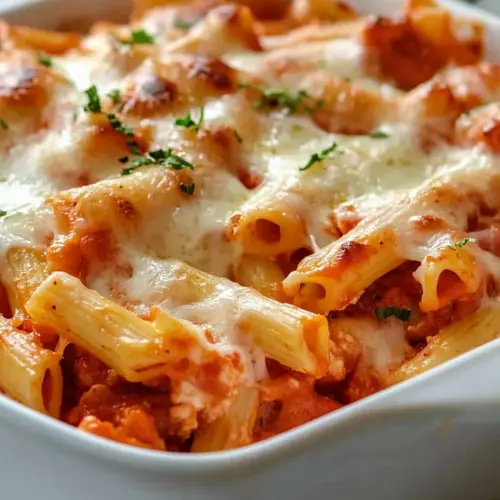
Baked Ziti without Ricotta
Baked Ziti without Ricotta is a creamy, cheesy, easy weeknight dinner that turns pantry staples into a bubbling, golden casserole. With velvety cream cheese, stringy mozzarella, and savory marinara, each serving feels indulgent yet effortless. Perfect for family meals or casual gatherings, this dish delivers comfort and crowd pleasing texture that makes it worth making again and again.
Equipment
- Saucepan
- Oven
- 11x9 casserole dish
- Colander
Ingredients
- 1 pound dry ziti pasta (1 box) Cook thoroughly until al dente to provide the pasta base and structure for the baked casserole, absorbing sauce and flavors without becoming mushy. Drain well to prevent excess water from thinning the sauce and ensure proper texture during baking.
- 32 ounces marinara sauce (1 jar) Pour evenly to coat the pasta and bind the components together, delivering the primary tomato flavor and moisture for the casserole. Simmer briefly if desired to deepen flavor and reduce excess acidity before combining with pasta.
- 8 ounces cream cheese room temperature (1 brick) Soften and blend until smooth to create a creamy, tangy layer that replaces ricotta while adding richness and body to the casserole. Beat at room temperature to prevent lumps and help it incorporate evenly with sauce and cheeses.
- 16 ounces freshly shredded mozzarella cheese divided Melt and brown on top to provide gooey, stretchy texture and a golden, bubbly finish when baked; reserve part for mixing with the pasta for creaminess. Shred fresh for best melting characteristics and even distribution throughout the dish.
- 1/2 cup freshly grated Parmesan cheese divided Sprinkle for savory umami and a slightly nutty finish, enhancing overall depth and complementing the cheeses and tomato sauce. Divide to mix some into the filling for flavor and sprinkle more on top for a crisp, flavorful crust.
- 1/4 cup chopped fresh basil divided Chop finely to add bright, aromatic herb notes that lift the richness of the cheese and tomato sauce; use divided to infuse flavor throughout. Stir some into the pasta mixture and reserve a portion to garnish the finished bake for freshness.
Instructions
- Preheat oven to 375°F and spray an 11×9-inch casserole dish with nonstick cooking spray.: As the oven warms, you'll smell that warm, dry heat that signals the right environment for a crisp, bubbling top. Preheating ensures even baking so the interior reaches temperature at the same pace as the surface browns. Lightly spraying the dish prevents sticking and helps lift servings cleanly, avoid using too much oil which can pool and create grease spots on the top.
- In a large saucepan, boil the pasta according to package instructions (al dente/no salt), and drain.: The water will come to a lively boil, and as the ziti pasta cooks you can hear it shifting in the pot. Cook to al dente so the tubes hold their shape during baking and remain slightly firm to the bite. Rinsing after draining is a common pitfall that washes away starches that help the sauce cling; avoid rinsing unless you need to stop cooking immediately.
- In the same large saucepan set over medium heat, cook the marinara sauce and cream cheese together until the cheese melts. Stir often.: As you stir, the cream cheese will soften and blend into the marinara sauce , releasing steam and a rich, tangy aroma. The mixture should be smooth and slightly glossy, signaling full incorporation. Keep the heat moderate, because too high a temperature can cause the dairy to separate and become grainy, which will affect the sauce texture.
- Add the pasta to the marinara/cheese sauce and mix well.: The ziti pasta will soak up the sauce slightly, and you should see each tube well coated with glossy sauce. Mixing thoroughly ensures even seasoning and prevents dry pockets in the casserole. A mistake here is folding too roughly, which can break the pasta; be gentle but thorough.
- Pour half the marinara/cheese/ziti sauce in the prepared baking dish and sprinkle with half the mozzarella and half the Parmesan cheeses.: As the first layer settles, the cheeses will create a melty contrast when baked, and you may hear a faint sizzle as residual heat meets the cheese. This layering builds pockets of melty cheese and flavor; skipping layers can lead to an uneven bake where some areas lack cheese coverage.
- Sprinkle the cheeses with 2 tablespoons chopped fresh basil.: The fresh basil adds an aromatic lift between layers, releasing a green, herbaceous perfume when warmed. This middle sprinkle keeps the herb flavor consistent through the dish instead of only on the top. Avoid chopping basil too far in advance since it wilts and loses fragrance quickly.
- Layer the remaining marinara/cheese/ziti sauce over the cheese and top with the remaining mozzarella and Parmesan.: The top layer of cheeses is what will form the browned, bubbly surface, so distribute them evenly for consistent browning and melt. You should see an even blanket of cheese that will blister and brown in the oven. Piling cheese into one spot can lead to uneven melting and overly greasy patches.
- Cover and bake at 375°F for 30 minutes.: Covering traps steam and allows the casserole to heat through without drying out, so the interior becomes uniformly hot and the sauce melds with the pasta . You might hear a gentle bubbling under the foil, which indicates internal warming. Leaving it uncovered too early can dry the edges before the center is fully heated.
- Remove the cover and bake an additional 15-20 minutes or until the baked ziti is bubbly and cheese is golden.: When you remove the cover, the surface will go from soft to a crisp, golden finish, and you may notice a toasty, savory aroma as the cheeses brown. This step creates the signature texture contrast, and watch closely so the cheese does not burn; ovens vary, so lean toward the lower time and extend if needed.
- Garnish with the remaining chopped basil.: Fresh basil scattered at the end adds a bright scent and visual pop against the golden top, offering a fresh counterpoint to the rich, baked flavors. Adding it hot releases fragrant oils, enhancing each bite. Be careful to add basil too early and it will wilt into the dish, losing its fresh snap.
Notes
- Room temperature cream cheese helps the sauce emulsify smoothly, so the texture becomes creamy rather than lumpy.
- Al dente pasta ensures the tubes hold shape after baking and results in a pleasing bite rather than a mushy interior.
- Freshly shredded mozzarella melts uniformly and gives that desirable stringy texture compared to pre shredded options.
- Even cheese distribution prevents hot spots and guarantees that every serving has a golden, cheesy top and melty interior.
- Rest before serving so the casserole firms up slightly, making cleaner slices and a better presentation.