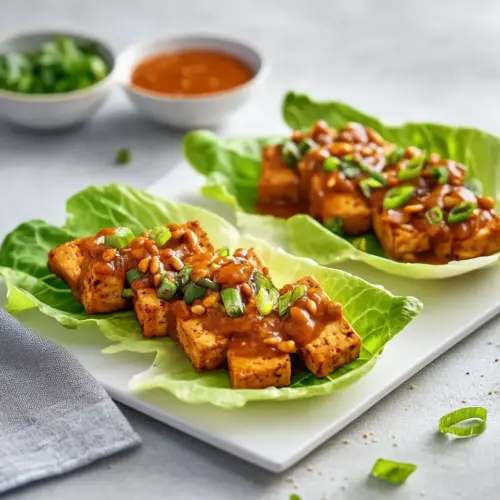
Baked Tofu Lettuce Wraps with Spicy Peanut Sauce
Baked Tofu Lettuce Wraps with Spicy Peanut Sauce deliver crispy baked tofu, creamy spicy peanut sauce, and crunchy lettuce for an easy weeknight dinner. The combination feels light yet satisfying, with toasted sesame and garlic notes. Quick to assemble and great for sharing, this recipe is perfect when you want a flavorful plant forward meal that still feels indulgent.
Equipment
- Oven
- Baking Sheet
- Parchment Paper
- Mixing Bowl
- Tongs
- Sauce bowl
- Pot for noodles
Ingredients
- 16 ounce s/450 g firm tofu, drained Press and cube to remove excess moisture, ensuring firm tofu crisps evenly when baked and absorbs marinades well for better texture.
- 1 tablespoon sesame oil Add a nutty, fragrant layer to the tofu marinade so the baked pieces brown more evenly and gain a subtle sesame aroma.
- 1 tablespoon soy sauce Provide a salty, umami backbone to the tofu seasoning that enhances savory depth and balances other flavors in the dish.
- 1 teaspoon chili garlic sauce Introduce a spicy, garlicky kick to the marinade to give the tofu a bright heat and savory complexity.
- 2 teaspoons cornstarch Bind the marinade to the tofu surface and create a slight crisp coating when baked, helping sauces cling to the cubes.
- 1/3 cup 86 g creamy peanut butter Create a creamy, rich base for the spicy peanut sauce that contributes body, nuttiness, and balancing richness to the wraps.
- 2 tablespoons soy sauce Deepen the savory-salty flavor in the peanut sauce, complementing the peanut butter and balancing sweet and acidic elements.
- 2 tablespoons sesame oil Contribute toasted, aromatic notes to the sauce and marinade, enhancing overall flavor with a warm, sesame richness.
- 1 tablespoon packed brown sugar Add a molasses-like sweetness that tempers heat and salt, helping to create a well-rounded, caramelized flavor profile.
- 1 tablespoon rice vinegar Introduce bright acidity that cuts through richness, lifting the peanut sauce and balancing the sweeter and saltier components.
- 1 tablespoon chili garlic sauce, or to taste Increase the sauce's spicy heat to taste, allowing customization of the wrap's overall warmth and flavor intensity.
- 1 garlic clove, finely minced Impart pungent, aromatic depth to the peanut sauce, brightening flavors and adding savory complexity when finely minced.
- 1/2 teaspoon finely minced or grated ginger Provide a fresh, warm, slightly peppery note that complements garlic and lifts the peanut sauce with ginger's zing.
- 2 -3 tablespoons water, as needed Adjust the sauce consistency for spreading or drizzling, thinning as needed so the sauce coats noodles and tofu smoothly.
- 4 ounce s/113 g rice vermicelli noodles, cooked according to package instructions Supply a delicate, neutral carbohydrate element that absorbs sauce, adds soft bite to the wraps, and contrasts with crisp lettuce.
- 1 head butter or bibb lettuce, leaves separated, washed and dried Offer crisp, tender leaves to hold the filling, providing a fresh, cool contrast to warm tofu, noodles, and rich sauce.
- fried shallots, optional, for topping Deliver a crunchy, savory finishing touch when sprinkled atop, adding texture and an extra layer of caramelized onion flavor.
- thinly sliced green onions, optional, for topping Lend a fresh, sharp oniony pop as a garnish, enhancing brightness and offering a crisp contrast to richer components.
- toasted sesame seeds, optional, for topping Contribute small, nutty crunch and visual contrast as a finishing garnish, highlighting sesame flavors already present.
Instructions
- Slice tofu into 1/2-inch thick slabs. Line a baking sheet with two layers of paper towels; arrange slabs of tofu in a single layer and cover with two more layers of paper towels. Place another baking sheet on top, then set a reasonably heavy weight on the pan (I used a dutch oven, you can use books or cans of vegetables evenly distributed on top of the baking pan). Let tofu drain for 20 to 30 minutes, then remove weights and paper towels.: The pressing stage yields a denser, meatier texture that bakes up crisp rather than steamy. You will notice droplets of water appearing on the paper towels as the block compacts, and the block will feel firmer to the touch when it is ready. This matters because excess moisture prevents browning, leaving the surface pale and soft rather than golden. A common mistake is skipping the weight or using too little time, which results in soggy bites; be patient and check that the towels are soaking up water periodically.
- While tofu is pressing, preheat oven to 400 degrees F. Line a baking sheet with parchment paper to keep the tofu from sticking (unfortunately foil just doesn't work as well here).: Preheating ensures the moment the tofu hits the oven it begins to firm up and dry on the surface, promoting even browning. You should smell the faint warm, toasty scent of the oven as it reaches temperature. Using parchment reduces sticking and helps the underside brown evenly. One pitfall is placing tofu onto a cold sheet or into an oven that is not fully heated, which can make pieces steam instead of roast; let the oven reach temperature before baking.
- Cut tofu slabs into strips then again into 1/2-inch cubes. Place cubes in a mixing bowl. Add soy sauce, sesame oil, and chili garlic sauce and gently toss until evenly coated. Sprinkle with cornstarch and toss until tofu is coated and no dry traces of cornstarch are visible.: When you dice and marinate the tofu , the aroma of sesame and soy will start to come forward, and the cubes will glisten slightly from the oil. The cornstarch helps create a lacy crispy layer as it bakes, sealing in moisture. You want an even dusting of cornstarch so each piece browns uniformly; clumps of cornstarch will leave powdery spots. Avoid over mixing aggressively, which can cause the cubes to crumble.
- Transfer to prepared baking sheet, arranging tofu in a single layer so that no pieces are touching.: Spacing is crucial for airflow and crisping, you should see the pieces sitting with small gaps like little islands. As they roast they will dry and take on color, and if crowded they steam and get limp instead. Place them in a single layer and give each piece its own space to brown. A frequent error is piling pieces too close together to save space, which prevents crisping and reduces the golden color you want.
- Bake for 10 minutes; flip tofu pieces using tongs or a spatula. Bake for another 10 to 15 minutes or until golden brown.: During baking you will hear faint crackles as moisture leaves and the cornstarch sets into a crust, and the kitchen will fill with nutty, toasty notes. Flip at the halfway mark to ensure both sides achieve that deep golden color. The final visual cue is even, golden brown edges and a slightly chewy interior. If you pull them too early they will be pale and soft, and if you leave them too long the exterior can get overly dry and the centers may lose tenderness.
- To make peanut sauce, in a bowl whisk together peanut butter, soy sauce, sesame oil, sugar, rice vinegar, garlic and ginger until smooth. Drizzle in water, 1 tablespoon at a time, until the sauce has a nice thick yet drizzle-able consistency (you may not need all the water depending on how thick you like it).: As you whisk, the sauce will become glossy and fragrant, releasing the tang of rice vinegar and the warmth of grated ginger . Watch the texture carefully, adding water slowly so the sauce stays creamy rather than thin. Taste for seasoning and adjust the chili garlic to control heat. A common misstep is adding too much water too fast, producing a watery sauce that won’t cling to the filling.
- Cook rice noodles according to package instructions. Drain and rinse with cold water.: Properly cooked rice vermicelli noodles should be tender but not mushy; rinsing in cold water stops the cooking and prevents clumping. You will feel their slippery texture and see them separate into delicate strands. Overcooking leads to limp, gluey noodles that soak up too much sauce, so monitor the package time closely and taste a strand before draining.
- Arrange pieces of lettuce on plates. Top with a small pile of rice noodles and pieces of baked tofu. Drizzle generously with peanut sauce, then sprinkle with green onion, fried shallots and sesame seeds as desired.: As you assemble, contrast is everything, stacking soft noodles, warm tofu , and cool lettuce . The sauce should shimmer on top and the garnishes provide a final crunchy, aromatic punctuation. Serve immediately so the lettuce remains crisp and the tofu retains its contrast. A common issue is assembling too far ahead, which can make the lettuce soggy and dull the textures you worked to create.
Notes
- Pressing tip — Use a flat, heavy weight and change the paper towels if they become saturated during pressing to keep extracting moisture effectively.
- Even coating — Toss the tofu gently when adding cornstarch so each cube is evenly dusted; this yields uniform crispness.
- Oven heat — Make sure the oven reaches 400 degrees F before baking so the surface begins to crisp immediately and the interior remains tender.
- Sauce consistency — Add water to the peanut butter sauce one tablespoon at a time, aiming for a pourable texture that still clings to the filling.
- Make ahead — You can prepare the sauce and press the tofu ahead, but bake the tofu close to serving to preserve the crisp crust.