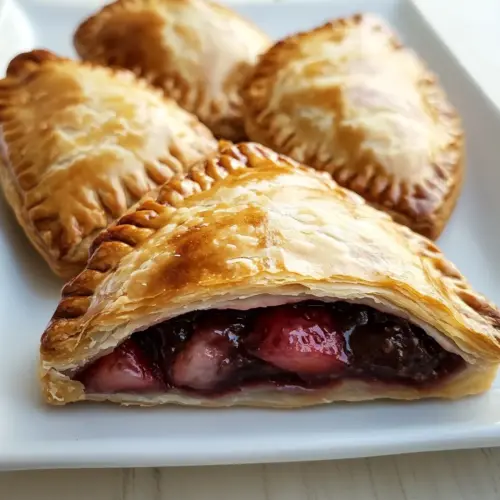
Baked Strawberry Chocolate Hazelnut Spread Hand Pies
Baked Strawberry Chocolate Hazelnut Spread Hand Pies are flaky, creamy, and fruity handheld pastries that marry juicy strawberries with rich chocolate hazelnut spread. The crust turns golden and crisp while the filling becomes lusciously soft, making these perfect for easy entertaining or a cozy brunch. Try them warm for a melty interior, they are a simple yet impressive treat to make again and again.
Equipment
- Rolling Pin
- Baking Sheet
- Parchment Paper
- Small Bowl
- Paring knife
Ingredients
- Hand Pie Dough (recipe follows) Provide a tender, flaky pastry base for the hand pies; prepared dough should be chilled and rolled to even thickness so it bakes to golden layers. Ensure seams are sealed to prevent filling leakage and allow for venting to release steam during baking.
- 1 1/4 cup (198 grams) finely diced strawberries Add bright, fresh fruit flavor and natural sweetness while contributing small juicy pockets; dice uniformly so pieces distribute evenly and release moisture predictably. Toss with a binder to keep strawberries from making the dough soggy during baking.
- 2 tablespoons (40 grams) seedless strawberry jam Contribute concentrated strawberry flavor and extra sweetness while helping to bind the fruit filling; choose a seedless jam to maintain a smooth texture without crunchy bits. Warm slightly if thick so it mixes evenly with the diced strawberries and flour.
- 1 tablespoon (8 grams) all-purpose flour Provide structure to the filling by absorbing excess juice and preventing sogginess; use a light dusting and mix thoroughly to evenly coat fruit pieces. Ensure flour is distributed so the filling sets properly when baked without becoming pasty.
- 3/4 cup (222 grams) chocolate hazelnut spread Offer rich, creamy, nutty-chocolate filling that contrasts fruity notes and adds indulgent texture to each pie; spoon or dollop into centers for balanced portions. Use a spreadable consistency so it melds with the fruit without leaking excessively while baking.
- 1 large egg (50 grams) Create an egg wash to promote glossy, golden-brown pastry and help edges adhere when beaten and brushed; beat until smooth for even application. Optionally reserve a small amount for sealing or use wholly for brushing before baking.
- 2 tablespoons (30 grams) water Thin the egg wash to a brushable consistency for smooth application and to prevent overly thick coating; combine water and egg thoroughly so the wash spreads evenly. Use chilled water to control temperature and avoid thinning too much which would reduce browning.
Instructions
- On a lightly floured surface, roll half of Hand Pie Dough into a ?-inch-thick circle. Cut 10 to 12 (4 1/2 x 3-inch) rectangles, rerolling scraps once. Roll remaining Hand Pie Dough into a ?-inch-thick circle. Cut 10 to 12 (4 x 2 1/2-inch) rectangles, rerolling scraps once.: The dough should feel cool and slightly firm under your hands, not sticky, and as you roll you will hear a soft frictional sound while the surface becomes smooth. Visually aim for even thickness across the circle so each rectangle bakes evenly. Reroll scraps only once to avoid overworking the gluten which causes toughness. A common mistake is rolling the dough too thin, which leads to fragile crusts; keep an eye on thickness and chill the dough if it becomes soft while you work.
- In a small bowl, stir together strawberries, jam, and flour.: As you stir, you will notice the fruit juices coming together with the jam into a glossy, slightly thickened mixture, and the flour will take up excess liquid so the filling holds shape. Smell the bright, fruity aroma as ingredients meld. Mix gently to avoid smashing the diced strawberries , because you want textural contrast inside the pies. If the filling looks runny, it may leak during baking; add a whisper more flour to firm it up, but do so sparingly to keep a fresh fruit character.
- On a parchment paper-lined baking sheet, place smaller rectangles 1 inch apart. Spread 1 tablespoon (18 grams) chocolate hazelnut spread on each, leaving a 1/2-inch border around edges. Top with 1 tablespoon (21 grams) strawberry mixture.: When you spread the chocolate hazelnut spread , you will feel its creamy resistance and see it gleam; keep the border clear so sealing is easy. Place a measured spoonful of the strawberry mixture atop the spread, noting how the jewel like pieces sit against the glossy chocolate. A frequent error is overfilling, which leads to leaks; using the measured amounts ensures tidy pies that bake to a golden shell without losing their filling.
- In a small bowl, whisk together egg and 2 tablespoons (30 grams) water. Brush edges of smaller rectangles with egg wash, and top with a larger rectangle, press edges firmly to seal; press edges with the tines of a fork. Freeze for 30 minutes, or refrigerate for 1 hour.: The egg wash will glisten as you brush it along the edge, creating a tacky surface that bonds dough layers. Pressing the edges should produce a faint indent and a satisfying tactile resistance; the fork tines leave a decorative pattern and improve the seal. Chilling is crucial, because chilled pies hold their shape and puff better; try not to skip the rest period, or the pies may spread and the filling may ooze. One trap is sealing while the dough is too warm, which can cause the filling to start melting and create steam pockets that burst.
- Preheat oven to 425°F (220°C).: You will sense a change in the kitchen as it warms, and preheating ensures the oven springs to high heat so the crust sets quickly, creating flake and a golden hue. Place a rack in the middle position so heat circulates evenly. If you skip preheating, the pies may bake unevenly and absorb more fat from the dough, resulting in a denser texture; always confirm your oven has reached temperature before putting the tray in.
- Brush top of dough with egg wash. Using the tip of a paring knife, make 3 small slits in top of dough.: Brushing the top gives a glossy, reflective finish that browns beautifully, and the small slits will sigh as steam escapes, preventing bursts. The surface should look smooth and wet after brushing, and the slits should be tidy, not ragged. Avoid cutting too large vents which can let filling bubble out, or leaving no vents which can trap steam and crack the crust unpredictably.
- Bake until crust is golden brown, 15 to 17 minutes. Transfer to a baking sheet, and let cool slightly. Serve warm or at room temperature.: As the pies bake you will hear a gentle crackle and smell a toasty, nutty aroma; the crust will shift from pale to a warm golden shade and edges will look crisp. Letting them cool briefly lets the filling set so it does not spill when you bite in, yet warm pies offer the most decadent texture contrast. A mistake to avoid is removing them immediately from heat to a cold surface which can shock the dough; instead, transfer to a room temperature sheet and rest a few minutes for best results.
Notes
- Chill dough and pies: Always keep the hand pie dough cold to ensure flake and prevent the butter from melting into the flour, which keeps the crust tender and layered.
- Measure fillings carefully: Use a kitchen scale or measuring spoons to portion the chocolate hazelnut spread and strawberry mixture so pies bake consistently without leaking.
- Use seedless jam: Seedless strawberry jam produces a smooth mouthfeel and avoids tiny seeds disrupting the tender texture of the filling.
- Don’t overwork scraps: Reroll pastry scraps only once to prevent developing too much gluten, which makes crusts chewy rather than flaky.
- Vent well but not excessively: Make three neat slits to let steam escape while preserving the interior moisture, avoiding messy eruptions of filling.
- Freeze for make ahead ease: Freeze assembled pies on a tray until firm, then transfer to a bag for up to one month; bake from frozen, adding a few minutes to the bake time for best results.