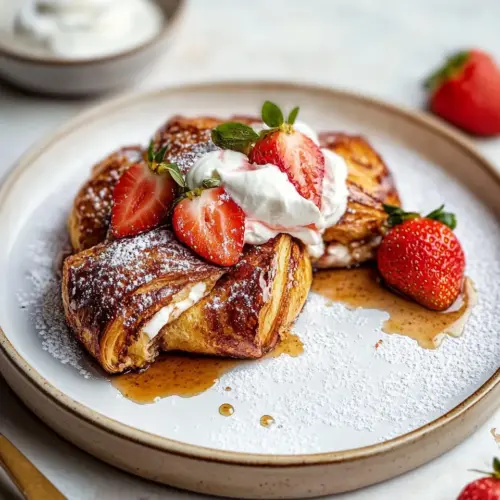
Baked Strawberry and Cream Stuffed Croissant French Toast
Baked Strawberry and Cream Stuffed Croissant French Toast is a creamy and crispy brunch showstopper that combines flaky croissants, tangy cream cheese, and bright strawberry jam. The custard soak yields a tender interior while a maple brown butter glaze caramelizes the tops, creating irresistible texture. Perfect for weekend gatherings or special breakfasts, this easy yet elegant dish is worth making for its unforgettable aroma and layered flavors.
Equipment
- Baking Sheet
- Large shallow dish
- Mixing Bowl
- Ziplock bag
- Oven
Ingredients
- 4 large eggs, beaten Beat thoroughly to create a custard base that binds and sets the baked French toast; eggs add structure, richness, and help create a tender, golden exterior when baked.
- 1 cup whole milk Use whole milk to lend creaminess and fat to the custard; it balances the eggs, contributing to a silky texture and moist interior.
- 1 tablespoon , plus 1 teaspoon vanilla extract Add vanilla extract for aromatic sweetness and depth; it brightens flavors and complements the strawberries and cream filling with warm floral notes.
- 3 tablespoons St. Germain (elderflower liquor) (optional) Incorporate St. Germain optionally to introduce delicate elderflower floral and fruity notes; it enhances complexity and pairs well with the berry and cream components.
- 1/2 teaspoon kosher salt Season with kosher salt to accentuate sweetness and balance flavors; a modest amount enhances the overall taste profile without making the custard salty.
- 6 -8 small day-old croissants Choose small day-old croissants for sturdy, slightly stale pastry that soaks up the custard without falling apart; their buttery layers provide flakiness and rich flavor.
- 8 ounces cream cheese, at room temperature Soften cream cheese at room temperature to make a smooth, spreadable filling; it brings tangy richness and creamy texture that contrasts the sweet strawberry jam.
- 1/3 cup high quality strawberry jam Use high quality strawberry jam to add concentrated strawberry flavor and sweetness; it provides a bright, fruity layer inside the croissant and melds with the cream cheese.
- 3 tablespoons melted salted butter, plus more for the pan Melt salted butter to brush or mix into the dish for lusciousness and a golden finish; the butter adds richness and helps achieve a crisp, caramelized exterior.
- 2 tablespoons brown sugar Sprinkle brown sugar to encourage caramelization and add deep, molasses-like sweetness; it helps form a caramelized crust and complements the maple syrup.
- 2 tablespoons real maple syrup Drizzle real maple syrup to infuse natural, warm sweetness and a subtle woody complexity; it ties together the flavors and can be used in the custard or for serving.
- 1 cup fresh strawberries, sliced horizontally Slice fresh strawberries horizontally to provide fresh fruit texture and bright acidity; they offer contrast to the rich cream filling and garnish the finished dish.
- whipped cream and maple syrup, for serving Top with whipped cream and maple syrup for serving to add light, airy sweetness and extra drizzle of flavor; these finishing touches enhance presentation and complement the baked layers.
Instructions
- Preheat the oven to 375° F. Grease a baking sheet with butter. In a large shallow dish, whisk together the eggs, milk, 2 tablespoons St. Germain, 1 tablespoon vanilla, and the salt. Grab the croissants and make a 1 inch slit at the top of each, move your knife to create space in the croissant, being careful not to poke through the other sides (see above photos). In a bowl, gently stir together the cream cheese and strawberry jam, leaving streaks of red and white. Spoon the mix into a ziplock bag and snip the corner off the bag. Squeeze approximately 2 tablespoons of the strawberry cream into each croissant where you created your hole. Don't stress about making it perfect. Dip each croissant into the egg mixture, allow it to sit 1 minute per side. Arrange half the croissants on the prepared baking sheet. Brush each croissant with a little leftover egg batter. Bake for 20-25 minutes or until the croissant is golden. Melt together the butter, brown sugar, and 2 tablespoons maple syrup. Spoon the butter evenly over each croissant. Bake another 10 minutes, until the croissants are caramelized on top and crisp. Toss the berries with 1 tablespoon St. Germain, 1 teaspoon vanilla, and 1 tablespoon maple. Serve the french toast warm, topped with whipped cream, berries, and maple Enjoy!: You will notice a warm, slightly sweet smell when the oven reaches temperature, and a hot, dry air that helps the tops crisp quickly. Preheating ensures the croissants start baking immediately and develop a golden exterior rather than steaming; if you skip preheating, the croissants may become soggy before browning. A common misstep is placing the tray into an oven that is still heating, which prolongs baking and prevents that immediate caramelization you want.
- In a large shallow dish, whisk together the eggs, milk, 2 tablespoons St. Germain, 1 tablespoon vanilla, and the salt.: As you whisk, the mixture should look silky and homogenous, with tiny bubbles forming on the surface from aeration; this ensures even soaking. The aroma of vanilla and elderflower will lift the custard, making it fragrant and inviting. If you under-whisk, the custard can be streaky and unevenly absorbed; overwhisking is less of an issue, but ensure the eggs and milk are fully combined for a smooth soak.
- Grab the croissants and make a 1 inch slit at the top of each, move your knife to create space in the croissant, being careful not to poke through the other sides.: You should feel the flaky layers give way under the knife, creating a pocket that will hold the filling; do this gently so the outer shell stays intact. The goal is a neat cavity rather than a full split that would leak filling. A common error is cutting too deep and piercing the bottom or sides, which allows filling to escape during baking and creates a messy presentation.
- In a bowl, gently stir together the cream cheese and strawberry jam, leaving streaks of red and white.: The visual marbling is part of the charm; when you stir gently, you get pockets of jam that burst into bright strawberry flavor while the cream cheese maintains creamy balance. The texture should be smooth with occasional jam ribbons, not completely uniform. Overmixing will lose that pretty contrast and make the filling uniformly pink, while undermixing may leave large lumps of cold cream cheese .
- Spoon the mix into a ziplock bag and snip the corner off the bag. Squeeze approximately 2 tablespoons of the strawberry cream into each croissant where you created your hole.: You will feel the pouch fill gently and see the filling bulge into the pocket, giving each croissant a sweet, creamy heart. This technique gives precise control and keeps your hands cleaner. If you overfill, the mixture can leak out during the custard dip or while baking, so aim for even portions to prevent spillage.
- Dip each croissant into the egg mixture, allow it to sit 1 minute per side.: When dipped, the custard should cling slightly to the layers and sink into the crevices; you will hear a soft glug as you lift it from the dish. This brief soak allows the interior to absorb enough to stay tender, while the exterior can still crisp in the oven. Leaving the croissants to soak too long results in a soggy interior that lacks texture; too short and they may remain dry inside.
- Arrange half the croissants on the prepared baking sheet. Brush each croissant with a little leftover egg batter.: The brushed egg will encourage an even golden sheen and additional color where the custard sits on the surface. As they start baking, you will notice the tops turn a warm amber and the layers puff slightly. A typical mistake is overcrowding the pan, which traps steam and prevents crisping; give each croissant breathing room.
- Bake for 20 to 25 minutes or until the croissant is golden.: During this bake, you will detect a toasty, buttery fragrance as the exterior browns. Look for a deep golden tone and firm edges; the centers will still be soft but not wet. Opening the oven too often lengthens bake time and can cause uneven coloring, so resist the urge to peek repeatedly.
- Melt together the butter, brown sugar, and 2 tablespoons maple syrup.: As these ingredients warm, the butter will foam slightly and the brown sugar will dissolve into a glossy syrup, filling the kitchen with a caramel like scent. This mixture creates the glaze that gives the croissants their shiny, crisp top. If the heat is too high, the sugars can burn quickly, producing a bitter note rather than a sweet caramel finish.
- Spoon the butter evenly over each croissant.: The warm glaze will sizzle softly as it hits the hot pastry, begin to caramelize, and drip into the layers, adding flavor and crunch. Spreading it evenly ensures each croissant gets that signature sticky top. Applying cold glaze will slow caramelization and may not adhere as well, so use the glaze while it is warm but not boiling.
- Bake another 10 minutes, until the croissants are caramelized on top and crisp.: In this final bake you want a deep amber finish, and you may hear a slight crackle as the sugar sets. The contrast between crunchy top and soft interior is at its peak here. Leaving them in too long will harden the glaze excessively, while underbaking keeps the surface pale and uncaramelized.
- Toss the berries with 1 tablespoon St. Germain, 1 teaspoon vanilla, and 1 tablespoon maple.: Gently coating the strawberries brings a glossy sheen and boosts their fragrance, adding a bright, juicy counterpoint to the rich croissants. The tossed berries should be glossy but not soupy, providing fresh pops of acidity. Over-macerating the berries will make them watery and dilute the overall texture contrast you want on the plate.
- Serve the french toast warm, topped with whipped cream, berries, and maple.: As you plate, the steam will rise and the aroma of warm maple syrup and butter invites immediate tasting. The final combination of warm pastry, cool whipped cream, and bright berries creates a range of temperatures and textures that make the dish memorable. A common oversight is serving at room temperature, which dulls the contrast between warm pastry and chilled toppings.
Notes
- Choose day old croissants: Slightly stale croissants are ideal because they soak custard without turning to mush. Fresh croissants can become too soft inside, so let them sit out overnight if possible.
- Warm the cream cheese: Bring the cream cheese to room temperature so it blends easily with the strawberry jam, producing a silky filling that pipes neatly into the croissants.
- Measure the glaze ingredients: Keep the butter, brown sugar, and maple syrup proportions consistent for an even caramelization, and spoon the glaze while it is warm to ensure it sticks and browns properly.
- Don’t overcrowd the pan: Give each croissant space to breathe so steam can escape and the exterior crisps rather than steams, which preserves the flaky texture.
- Make ahead option: Assemble through the filling and custard dip, then refrigerate overnight. Bake directly from the fridge the next morning, letting the oven do the final work for stress free hosting.