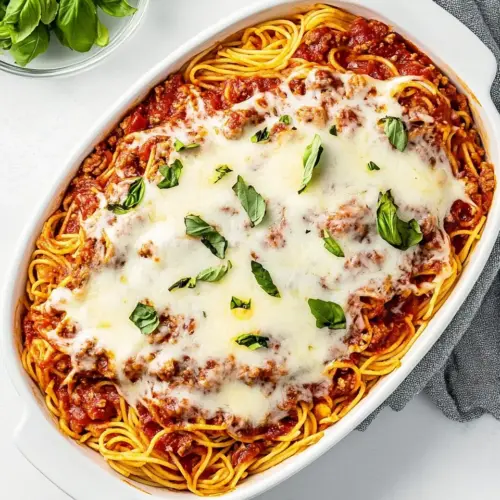
Baked Spaghetti
Baked Spaghetti is a cozy, creamy and cheesy oven baked pasta layered with savory browned meat and a rich marinara, great for an easy weeknight dinner or feeding a crowd. The combination of ricotta cheese and melting mozzarella cheese creates a comforting texture while tomatoes and herbs keep it bright, making it a must make recipe for family meals and leftovers that taste even better the next day.
Equipment
- Large Skillet
- 9x13-inch Baking Pan
- Large Pot
- Wooden Spoon
Ingredients
- 1 lb spaghetti Cook to al dente and provide the pasta base that absorbs sauce flavors; break in half if desired for easier layering in the baking dish. Allow to cool slightly before combining with the sauce mixture to prevent overcooking and clumping.
- 1 lb lean ground beef or Italian sausage Brown thoroughly and create rich savory flavor; choose lean ground beef or Italian sausage based on desired spice level and texture. Drain excess fat if needed to avoid a greasy casserole while preserving meaty depth.
- 1 tablespoon olive oil Heat to sauté aromatics and prevent sticking while adding a fruity, peppery note; use extra-virgin for best flavor. Swirl in the pan before adding onions to ensure even cooking and light browning.
- 1 yellow onion, chopped Sauté until translucent and sweet to build a flavorful base for the sauce; chop uniformly for even cooking. Add to the hot oil early to release sugars and create caramelized depth in the dish.
- 3 cloves garlic, minced Mince finely and impart pungent, aromatic warmth that complements the tomato sauce; add after the onion to avoid burning. Cook briefly until fragrant to maximize flavor without bitterness.
- 28 ounces marinara sauce Simmer to provide the primary saucy component and concentrated tomato flavor for the casserole; choose a high-quality brand for best results. Combine with browned meat and seasonings to create a cohesive, well-balanced sauce.
- 14.5 ounces diced tomatoes Stir in to add chunky tomato texture and fresh acidity that brightens the marinara; include juices for additional moisture. Use diced tomatoes to vary mouthfeel and enhance the overall tomato presence in the bake.
- 1/2 teaspoon dried basil Sprinkle to add a sweet herbal note that complements the tomatoes; use dried form for convenience and longer shelf life. Add during simmering to allow flavors to bloom into the sauce.
- 1/4 teaspoon dried oregano Measure to contribute savory, slightly minty undertones and classic Italian seasoning balance; dried oregano releases its flavor while simmering. Use sparingly to avoid overpowering the other herbs.
- 1/4 teaspoon crushed red pepper flakes Pinch to introduce gentle heat and complexity; adjust amount to taste for mild to moderate spiciness. Crush between fingers before adding to release essential oils and enhance the sauce's warmth.
- Kosher salt and black pepper, to taste Season generously to enhance all flavors and balance acidity; add slowly and taste as you go. Use kosher salt for seasoning control and freshly ground black pepper for a bright, peppery finish.
- 1 cup ricotta cheese Blend with egg and Parmesan to create a creamy, slightly tangy filling that adds richness and moisture to the casserole. Spoon or dollop this mixture between layers of pasta and sauce for creamy pockets throughout.
- 1 large egg Whisk in to bind the ricotta and add structure to the cheese mixture; it helps set the filling during baking. Lightly beat before folding into the ricotta to ensure even distribution and smooth texture.
- 1/4 cup grated Parmesan cheese Grate finely to add sharp, umami-rich saltiness that brightens the cheese mixture and overall dish. Mix into the ricotta-egg blend and reserve a little for topping before baking.
- 1 1/2 cups shredded mozzarella cheese, divided Sprinkle and layer to provide gooey, melty cheesiness and an appealing golden top; divide between the filling and final topping. Use part in the ricotta mixture and the rest as a final layer to ensure even melt and stretch.
- Extra Parmesan cheese and fresh basil, for garnish Garnish liberally to finish the dish with extra savory depth and fresh herbal aroma; grate additional Parmesan for nuttiness and scatter basil for bright, herbal contrast. Add after baking to preserve basil's freshness and enhance presentation.
Instructions
- Preheat oven to 375 degrees F.: The room begins to fill with warm, dry heat that helps the cheese brown evenly, and setting the oven early prevents waiting. You should feel the subtle warmth if you open the oven briefly, and hear a soft fan hum on convection models. A common mistake is putting a cold dish into a cold oven, which can lengthen bake times and produce uneven melting, so set the temperature before you start layering.
- Cook the spaghetti to al dente, according to package instructions. Drain and set aside. If the noodles are going to be sitting for several minutes, you can drizzle a little olive oil over them and toss so they don’t stick together.: When the pot reaches a rolling boil, the steam rises and the scent of starch fills the kitchen; cook until the strands have a slight resistance when bitten, not limp. Drain promptly to stop the cooking and toss with a touch of olive oil to prevent clumping, which keeps strands separate while you assemble. If you overcook, the pasta will become mushy in the oven, so test early and often to get the right texture.
- Place the beef or sausage in a large skillet and cook over medium heat. Break up with a wooden spoon while cooking until browned and no longer pink. Drain off excess fat and transfer to a plate that has been lined with paper towels. Set aside.: As the meat sizzles, you will hear steady popping and smell savory, browned aromas that signal the Maillard reaction, which is crucial for deep flavor. Break the meat into small pieces to maximize contact with the hot pan so it browns rather than steams. Draining excess fat prevents a greasy sauce, a common error when skipping this step.
- In the same large skillet, heat the olive oil over medium-high heat. Add the onion and cook until translucent, about 5 minutes. Add the garlic and cook for 1 minute.: The pan will shimmer as the olive oil warms, and the onion will soften and release a gentle sweetness as it turns translucent. Adding garlic after prevents burning and preserves its aromatic quality; burned garlic tastes bitter and can undermine the sauce, so watch the minute closely and reduce heat if it starts to brown too fast.
- Add the marinara sauce, tomatoes, basil, oregano, and red pepper flakes. Turn to low and simmer for 5 minutes. Season with salt and pepper, to taste. Stir the cooked beef or sausage into the sauce.: When the canned marinara sauce and diced tomatoes hit the pan, steam rises and the mixture loosens into a cohesive sauce. Lowering to a simmer allows the dried basil and oregano to rehydrate and release flavor without evaporating too quickly. Stir in the browned meat so it absorbs the seasoned sauce; failing to simmer long enough can result in a flat tasting finish, so allow those minutes for flavor melding.
- In a small bowl, combine the ricotta cheese, egg, and Parmesan cheese.: The texture should become creamy and glossy as the egg binds the ricotta cheese and Parmesan cheese . This mixture will provide a luscious layer that contrasts the tomato base. If the mix seems too runny, chilling briefly will firm it up; on the other hand, streaks of undermixed egg can lead to uneven pockets, so whisk thoroughly for an even color and texture.
- Spray a 9×13-inch baking pan with nonstick cooking spray. Place half of the cooked spaghetti noodles on the bottom of the pan. Pour half of the meat sauce over the noodles.: The pan should be warm to the touch from ambient kitchen heat, and the first layer of spaghetti creates a sturdy foundation. Spread the sauce so it seeps between strands, ensuring every bite has both pasta and sauce. A common misstep is piling too much pasta in one area, which leads to uneven baking, so distribute the strands evenly across the pan.
- Spoon the ricotta cheese mixture over the sauce and use a spatula to spread it in an even layer. Top with 3/4 cup of the shredded mozzarella cheese.: The ricotta will feel cool and creamy against the warm sauce, and spreading it creates pockets that bake into tender, custardy bites. Adding part of the mozzarella cheese now ensures melty layers inside the casserole. If you dollop without spreading, you may end up with uneven pockets, so smooth it gently for consistent slices.
- Add the remaining spaghetti and then the rest of the sauce. Top with the remaining mozzarella cheese.: Layering the second half of spaghetti and sauce builds height and ensures each piece contains both elements. The last layer of mozzarella cheese will bubble and brown into a golden crown. Avoid pressing down hard on the top layer, which can compress textures and leave the dish dense rather than light.
- Bake for 25-30 minutes or until bubbly and the cheese is melted and starting to brown. Remove from the oven and garnish with extra Parmesan cheese and fresh basil, if desired. Cut into squares and serve warm.: As it bakes, the kitchen will fill with a warm, tomato and toasted cheese aroma, and you may hear gentle bubbling from the sauce. Visual cues include a golden rim and small browned spots on the mozzarella cheese . Let it rest briefly so layers set, making slicing cleaner and preventing hot cheese from sliding off. Cutting too soon can lead to collapse and messy servings, so give it a few minutes to settle.
Notes
- Use quality canned tomatoes: Choose a good brand of diced tomatoes and marinara sauce because their concentrated flavors are the backbone of the casserole. A robust sauce reduces the need for extra seasoning, and it will meld beautifully with the browned meat.
- Brown meat thoroughly: Take time to caramelize the ground beef or sausage well, scraping up any browned bits, which add savory depth. Avoid crowding the pan, which causes steaming instead of browning.
- Control moisture: If your sauce seems watery, simmer uncovered to reduce it down until slightly thicker, so the casserole does not become soupy. This helps the top cheese brown nicely rather than just melt flat.
- Layer evenly: Distribute the spaghetti, sauce, and cheeses in even layers for consistent texture in each square. Uneven layering can create dry spots or overly saucy bites.
- Fresh garnish makes a difference: Adding torn basil and a final grate of Parmesan cheese just before serving brightens the aroma and presentation, making the dish feel freshly finished.