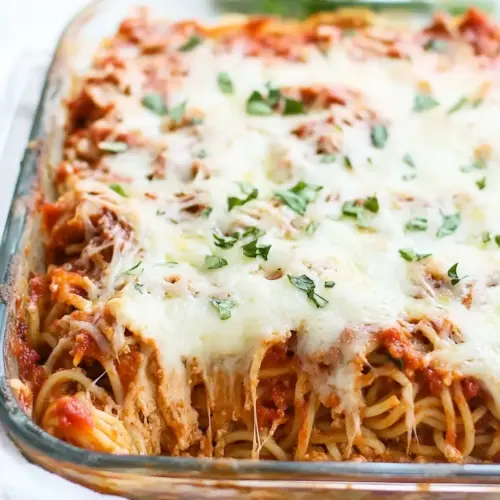
Baked Spaghetti
Baked Spaghetti is a creamy, cheesy, and comforting casserole that brings family friendly flavor to the table. This easy weeknight dinner combines al dente spaghetti, savory ground beef, a rich tomato sauce, and layers of ricotta cheese and gooey mozzarella cheese for maximum crowd pleasing appeal. It reheats well, making it a perfect choice for feeding a hungry group with minimal fuss.
Equipment
- Large Pot
- Large Skillet
- 9 X 13 baking dish
Ingredients
- 1 lbs spaghetti Cooked until al dente and tossed with sauce to provide the foundational pasta base for the casserole, delivering texture and bulk to the dish. Holds and absorbs flavors from the sauce and cheeses while maintaining a pleasant bite after baking.
- 1 pound ground beef Browned and crumbled to contribute savory depth and rich protein, creating a hearty backbone for the baked spaghetti. Adds meaty umami and a contrasting texture that balances the softness of the pasta and cheeses.
- 1 medium yellow onion, chopped Sautéed until translucent to add sweet, aromatic notes and a mild savory backbone; chopped pieces distribute flavor throughout the layers. Enhances overall complexity and pairs well with garlic and herbs for balanced taste.
- 2 cloves minced garlic Minced and lightly cooked to release pungent, aromatic compounds that brighten and deepen the sauce's flavor profile. Provides a sharp savory element that complements the onion and seasonings without overpowering.
- 1 jar, (32 ounces meatless spaghetti sauce) Simmered as the primary liquid sauce component, offering concentrated tomato flavor and herbs to coat the pasta and bind the casserole. A jarred meatless sauce contributes convenience and consistent seasoning throughout the bake.
- 1/2 teaspoons seasoned salt Sprinkled into the mixture to impart a balanced savory-salty note with subtle herbal undertones, helping to season the entire dish evenly. Works with other spices to enhance depth without overwhelming the primary flavors.
- 1 teaspoon Italian seasoning Added to provide classic Italian herbal aromatics like oregano and basil, reinforcing Mediterranean flavor cues in the sauce and filling. Blends with garlic and onion to create a familiar, cohesive seasoning profile.
- 2 eggs Beaten and folded into the ricotta mixture to act as a binder and add richness, helping the layers set and hold together when baked. Contributes a slight silkiness and structural stability to the cheesy filling.
- 1/3 cup grated Parmesan cheese Stirred into the cheese mixture to introduce a sharp, savory finish and subtle nuttiness, enhancing umami and mouthfeel. Helps balance creaminess and adds depth to each bite when melted during baking.
- 5 tablespoons butter, melted and slightly cooled Melted and cooled, then incorporated to lend a silky richness and help moisten the cheese and egg mixture for smoother texture. Provides added fat for browning and flavor without changing the overall character of the casserole.
- 16 ounces whole milk ricotta cheese Mixed with eggs and seasonings to create a creamy, tangy cheese layer that contributes moisture, body, and a slightly tangy profile. Offers smoothness and mild acidity that brightens the rich cheese blend while supplying substantial creaminess.
- 3 cups shredded mozzarella cheese Layered and melted on top to create gooey stretchiness and a golden, bubbling crust that completes the casserole. Supplies melting richness and a pleasant, cheesy finish that ties all components together.
Instructions
- In a large pot of salted water, cook spaghetti al dente, according to package directions. Meanwhile, in a large skillet, cook beef, onion, and garlic over medium-high heat until meat is no longer pink; drain. Stir in spaghetti sauce, seasoned salt, and Italian seasonings.: You should notice the water at a lively simmer and smell the faint wheat aroma of the boiling spaghetti . As the noodles soften they will bend easily but still offer a little resistance when bitten, that is the so called al dente cue that prevents mushy texture after baking. Stir occasionally so strands do not cling together, and watch the package timing because overcooking is the most common pitfall here. Drain promptly when done to stop carryover cooking, and reserve a little pasta water only if your sauce needs loosening later.
- In a large bowl, whisk the eggs, Parmesan cheese and butter. Drain cooked noodles and cool slightly; add spaghetti to the egg mixture and toss to coat.: As you brown the ground beef , listen for a steady sizzle and look for little caramelized bits forming on the pan bottom, that Maillard reaction is flavor gold. The onion should soften and become translucent, while the minced garlic turns fragrant without taking on color. If you rush the heat or crowd the pan, the meat will steam instead of browning, losing those savory notes. After browning, drain excess fat to prevent an oily final casserole and return the meat to the pan for the next step.
- Place half of the spaghetti mixture in a greased 9 x 13 baking dish. Top with half of the ricotta cheese, meat sauce and mozzarella cheese. Repeat layers.: When you add the jarred sauce it should hiss slightly and begin to meld with the browned meat. Swirl gently so the herbs and seasoned salt distribute; you will smell herbaceous notes lifting from the pan as the sauce simmers. Simmer for a few minutes to marry flavors and reduce any watery impression. A frequent mistake is adding the sauce and immediately assembling without simmering, which leaves the final dish tasting like separate elements instead of a cohesive sauce.
- Cover and bake at 350° for 30 minutes. Uncover and bake for 10 minutes longer or until cheese is melted. Serve with garlic bread and a simple salad. Store leftovers in the fridge in an airtight container.: The mixture should become a glossy, slightly thick emulsion, with a rich aroma from the melted butter and salty tang from the Parmesan cheese . Whisking fully ensures the eggs will coat the hot spaghetti evenly and create structure in the bake. If the butter is too warm it can cook the eggs into ribbons, so let it cool slightly before adding. Poorly mixed eggs will yield uneven texture in the final casserole.
- Drain cooked noodles and cool slightly; add spaghetti to the egg mixture and toss to coat: After draining, the noodles should still be warm and pliable, and when combined with the egg mixture they will take on a glossy sheen. Toss gently so each strand is coated, which prevents clumping and creates a cohesive body in the bake. If you add piping hot noodles immediately, the eggs can scramble; letting the pasta cool briefly avoids that. A common error is tossing too vigorously, which can break the noodles into short pieces.
- Place half of the spaghetti mixture in a greased 9 x 13 baking dish: As you layer, press the pasta lightly so it sits evenly, creating a stable base for the cheese and sauce. You should see a uniform bed of noodles without large air gaps, which helps even baking. Greasing the dish prevents sticking and encourages browning along the edges. Failing to distribute the pasta evenly can lead to uneven baking and spots that are dryer than others.
- Top with half of the ricotta cheese, meat sauce and mozzarella cheese: Spoon the ricotta cheese into dollops across the pasta, then spread gently, followed by ladling the meat sauce so it covers the layer, and finishing with a generous scatter of shredded mozzarella cheese . The layer sequence creates pockets of creaminess and molten cheese that contrast with the saucy meat. Visually, you want a balanced spread with cheese peeking through. Overcrowding one spot with sauce or cheese can cause soggy patches or uneven melting.
- Repeat layers: Building a second identical layer ensures that every serving has pasta, creamy ricotta, hearty meat sauce, and a stretchy top of mozzarella. The second layer should mirror the first for consistency in texture and flavor throughout the dish. Press gently between layers to remove air pockets, but avoid compacting so much that the casserole becomes dense.
- Cover and bake at 350° for 30 minutes: In the oven you will hear a gentle bubbling and begin to smell concentrated tomato and cheese aromatics. The covered bake allows heat to penetrate evenly so the interior sets without over browning the top. Check for steady bubbling around the edges as a sign the interior is hot through. A mistake here is using too high a temperature which can brown the top before the center is warm.
- Uncover and bake for 10 minutes longer or until cheese is melted: Uncovering lets the top develop a light golden color and a stretchy, melted texture on the mozzarella cheese . The final 10 minutes coax a pleasing finish and slight browning. Look for glossy melted cheese and small browned spots rather than heavy charring. Leaving it uncovered too long can dry out the top and edges.
- Serve with garlic bread and a simple salad. Store leftovers in the fridge in an airtight container: The aroma as you serve should be warm, cheesy, and inviting. Garlic bread adds crunch, while a salad brings brightness to balance the casserole. Allow the bake to rest briefly before slicing so it holds its shape. When storing, cool to room temperature and refrigerate within two hours to keep the texture and safety; reheating gently preserves creaminess. Packing warm food directly into containers can create soggy condensation.
Notes
- Swap the meatless sauce for a chunky variety if you want more texture, the chunks will give pleasant bites and a heartier mouthfeel, just watch moisture levels so the casserole is not runny.
- Use whole milk mozzarella for better melt, it gives a creamier, stretchier top compared with low moisture versions, and yields a more indulgent finish.
- Let the butter cool before whisking with eggs to avoid curdling; warm but not hot butter blends into a glossy emulsion with the eggs for even coating.
- Pre grate fresh Parmesan for pronounced nutty flavor, it seasons more effectively than pregrated powder and melts into the egg mixture smoothly.
- Prepare components ahead by cooking the sauce and boiling the pasta earlier in the day, then assemble and bake when needed to save time and reduce last minute stress.