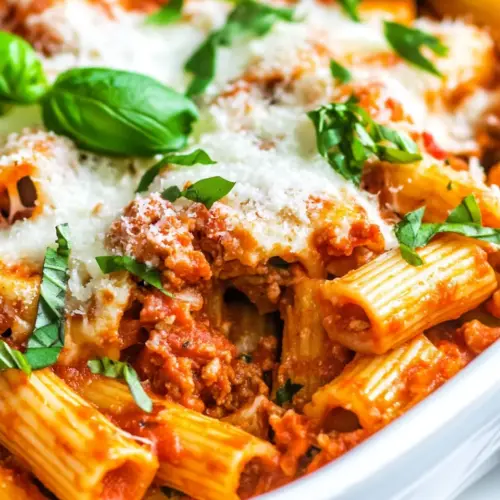
Baked Rigatoni
Baked Rigatoni is a creamy, cheesy, and easy weeknight dinner that combines tender rigatoni, savory browned Italian sausage, and bubbling mozzarella cheese. This crowd pleasing pasta bake balances rich tomato sauce with fresh basil and aromatic garlic, making it perfect for family meals or potlucks. Make it ahead and bake when ready for a reliable, comforting meal.
Equipment
- 9x13-inch Baking Dish
- Large Pot
- Large Skillet
- Colander
Ingredients
- 1 pound rigatoni, or penne noodles Cook until al dente and provide the pasta base that absorbs sauce and holds the casserole together, creating a hearty texture when baked; toss with a little oil to prevent sticking before combining with sauce and cheese.
- 1 tablespoon olive oil Heat to infuse flavor and sauté aromatics; help to brown meats and vegetables while adding a fruity, slightly bitter backbone to the sauce when warmed at the start of cooking.
- 1 cup chopped yellow onion Sauté until translucent to build a sweet, savory foundation for the sauce; release natural sugars and aromatic complexity that deepen the overall flavor of the baked dish.
- 4 cloves garlic, minced Mince finely and sauté briefly to release pungent, aromatic oils; provide a bright, savory lift and layered complexity that complements tomatoes and herbs in the sauce.
- 1 pound Italian sausage, or ground beef Brown thoroughly to develop savory, caramelized bits and rich umami; contribute bulk, meaty texture, and seasoning to the sauce, forming the protein backbone of the casserole.
- 1 (15-ounce) can crushed tomatoes Simmer to add body, acidity, and concentrated tomato flavor; create a textured sauce component that balances richness from cheese and meat while providing moisture for baking.
- 1 (26-ounce) jar marinara sauce Combine with crushed tomatoes to create a saucy base rich in herbs and seasonings; supply convenience and depth of flavor that rounds out the tomato profile for the casserole.
- 2 -4 tablespoons chopped fresh basil Chop coarsely or finely and stir in near the end of cooking to impart fresh, aromatic brightness and a sweet, peppery note that lifts the tomato sauce and contrasts the cheeses.
- 1 -2 teaspoons Italian seasoning Sprinkle during sauce preparation to add a balanced blend of dried herbs and Mediterranean flavor; enhance complexity with oregano, thyme, and rosemary notes throughout the dish.
- 1 teaspoon Kosher salt Season to taste and dissolve into the sauce to enhance all flavors; help bring out sweetness in tomatoes and savory notes in meat while ensuring the finished casserole is properly salted.
- 1/4 teaspoon ground black pepper Grind over during preparation to introduce sharp, spicy warmth and subtle earthiness; balance sweetness and acidity in the sauce while complementing the herbs and cheese.
- 2 cups grated fresh mozzarella cheese, divided Grate freshly and divide into portions to melt into the sauce and top the casserole; provide creamy, gooey texture and mild milky flavor that creates the classic baked pasta cheese pull.
Instructions
- Preheat oven. Preheat the oven to 350°F. Spray a 9×13-inch baking dish with nonstick cooking spray and set aside.: The oven should be hot and even so the mozzarella cheese bubbles and browns, giving a golden top and a hot interior. You will notice the oven steadying at a warm, drying heat of 350°F, which crisps edges without burning. If the oven temperature is uneven, rotate the dish halfway through the bake to avoid hot spots. A common mistake is placing the dish in a too cool oven, which prevents proper browning and leads to long, soggy baking times.
- Prepare pasta. Boil 1 pound rigatoni according to package instructions. Drain.: As you boil the rigatoni , the water should chatter with rolling bubbles, and you should time the pot to deliver pasta that is slightly firm to the bite. Drain when the center offers a faint resistance, because the pasta will continue to cook in the oven. Overcooking at this stage yields mushy tubes that collapse, while undercooking leaves a chalky center.
- Make sauce. In a large pot, heat 1 tablespoon olive oil over medium heat. Stir in 1 cup onion and 4 cloves garlic and sauté 3 to 5 minutes, or until onions are tender. Add in 1 pound Italian sausage or beef and cook 5 to 7 minutes, or until browned. Drain excess grease, if needed. Stir in 15 ounces crushed tomatoes, 26 ounces marinara sauce, 2-4 tablespoons fresh basil, 2 teaspoons Italian seasoning, 1 teaspoon salt, and 1/4 teaspoon pepper. Simmer 10 to 15 minutes.: When the olive oil shimmers in the pot, add the onion and sauté until it softens and smells sweet, then stir in the garlic until fragrant. Browning the Italian sausage creates dark flecks and a toasty scent, which infuses the sauce with depth. After adding the crushed tomatoes and marinara sauce , the mixture should go from bright red to a slightly darker, cohesive sauce as it simmers, smelling richer and rounder. Simmering for 10 to 15 minutes reduces acidity and concentrates flavor, yielding a sauce that clings to pasta. Watch for splattering, and skim excess grease after browning the meat to avoid a greasy finish. A frequent issue here is rushing the simmer, which leaves the tomatoes sharp and underdeveloped.
- Assemble and bake. Stir in cooked rigatoni. Spoon 1/2 of the mixture into the baking dish. Top with 1/2 of the mozzarella cheese. Spoon the remaining ziti mixture over the cheese. Top with the remaining cheese (add more if desired). Bake 20 to 25 minutes, or until cheese is bubbly.: Stir the cooked rigatoni into the sauce so each tube is glossy and coated, then spoon half the mixture into the prepared dish. The first layer should look saucy yet structured, not soupy, and a thin glisten of oil may appear. Sprinkle half the mozzarella cheese in an even layer so it melts into the pockets of pasta, then top with the remaining saucy pasta and finish with the rest of the mozzarella cheese . As it bakes, listen for gentle bubbling and watch for the cheese to transform from soft strands to browned, blistered patches. If the top is browning too quickly, tent loosely with foil to prevent burning while the center finishes heating through. A common pitfall is adding too much sauce so the dish becomes watery; aim for saucy but not soupy.
- Serve. Top with fresh basil or parsley, if desired. Serve hot.: After removing from the oven, allow the dish to rest for a few minutes so the sauce settles and slices hold together when served. The aroma should be warm and herbaceous, with the basil brightening each forkful. When plating, expect strings of mozzarella cheese and a satisfying contrast between the tender rigatoni and the slightly crisped edges. Serving immediately while still warm preserves the ideal texture; letting it sit too long will cause the cheese to firm up and become less glossy.
Notes
- Swap the meat: Use ground beef instead of Italian sausage for a milder profile, just be sure to brown it thoroughly for flavor.
- Adjust herb levels: Increase fresh basil for a brighter finish, adding some near the end of simmering to preserve its aroma.
- Cheese layering: Mix some shredded mozzarella cheese into the pasta for extra creaminess, while reserving a portion to get a bubbly top.
- Sauce thickness: Simmer longer if the sauce seems thin, it will reduce and cling better to the rigatoni.
- Make ahead method: Assemble and refrigerate up to two days, then bake covered before uncovering to brown, which makes entertaining easier.