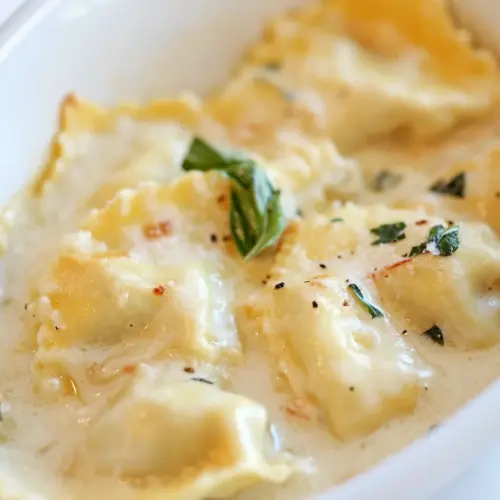
Baked Ravioli Recipe with Brown Butter Alfredo
Baked Ravioli Recipe with Brown Butter Alfredo blends creamy, nutty brown butter and glossy parmesan cheese sauce with pillowy fresh four cheese ravioli. This easy weeknight dinner delivers rich texture, a toasty aroma, and a broiled golden finish that looks and tastes indulgent. Make it when you want a fast comfort meal that feels celebratory and reliably satisfying.
Equipment
- Large Pot
- Heavy bottomed deep skillet
- Casserole Dish
Ingredients
- 1/2 cups salted butter Melted and browned to develop a nutty, aromatic base that enriches the sauce; provides fat for emulsifying the cream and carrying flavor throughout the dish. Use careful heat control to avoid burning and to achieve a deep brown color for the classic brown-butter note.
- 1 cup heavy cream Create a rich, silky liquid that forms the body of the Alfredo sauce and helps dissolve the cheese for a smooth finish. Gently heat after browning the butter to combine without curdling, maintaining a velvety texture that coats the ravioli.
- 1 1/2 cups grated parmesan cheese use the real stuff Grated finely to melt smoothly into the warm cream and butter, contributing salty, umami depth and a creamy, cohesive texture to the sauce. Use high-quality Parmigiano-Reggiano for authentic flavor and better melting performance compared to pre-shredded or lower-grade cheeses.
- salt & freshly ground black pepper to taste Season sparingly to balance and enhance the sauce, lifting the richness and rounding out flavors while avoiding oversalting given the salty cheese. Adjust pepper coarseness to add a subtle heat and aromatic contrast to the creamy components.
- 20 oz fresh four cheese ravioli I found mine in the refrigerator section Filled pasta that provides the hearty, cheesy centerpiece to the dish; offers both texture and complementary flavors when baked with the sauce. Use fresh refrigerated ravioli for tender dough and quick cooking—arrange in the baking dish so each piece is well-coated with sauce.
Instructions
- Bring a large pot of salted water to boil.: Steam and salty air will hint that you are on the right track, the water should show rolling movement and sound just before adding the ravioli . Salted water seasons the pasta internally, enhancing the filling, so do not be shy with the salt . A frequent mistake is under salting the water which leaves the pasta tasting flat, and another is adding pasta while the water is only simmering instead of boiling, which can make cooking time inconsistent.
- While water is heating, melt butter in a heavy-bottomed deep skillet over medium heat. Swirl pan occasionally to brown milk solids in the butter. Once the butter starts to turn a medium brown color, turn heat to low and immediately pour in the cream. Pan will sizzle, but as you stir it will subside. Sprinkle in cheese and continue stirring until cheese is completely melted and sauce is smooth. Taste and add in salt and lots of pepper, as desired.: You will hear a gentle sizzle as the butter melts, releasing a sweet, malty aroma. Use a heavy pan to distribute heat evenly so the milk solids caramelize instead of burning, and keep the pan moving with a swirl every so often to promote uniform browning. If the butter smokes aggressively, the heat is too high, and you risk a bitter bite.
- Add fresh ravioli to boiling water and cook according to package directions. Should be around 3 minutes or so. Drain completely and place ravioli into a buttered casserole dish. Pour alfredo sauce over top hot ravioli and stir gently to coat all ravioli in the sauce.: Watch closely as tiny brown flecks appear and the scent shifts from creamy to nutty, that is your cue to stop and lower heat. Browned milk solids deepen flavor, offering that toasty character that distinguishes this sauce, and the visual cue is a warm amber hue. Overbrowning leads to bitterness, so when you see medium brown flecks, reduce the heat promptly to preserve balance.
- Place under the broiler to brown. Remove from oven and serve immediately.: When the cream hits the hot pan you will hear a lively sizzle, and the aroma will puff up for a moment before settling. Lowering heat prevents separation, and stirring helps integrate the browned butter into a smooth base. If you pour the cream while the skillet is too hot, the sauce can split, which is hard to fix without starting over.
- Pan will sizzle, but as you stir it will subside.: The initial sizzle gives way to a gentle simmer and a glossy surface as the liquids marry; this sound is reassuring. Use a wooden spoon or heatproof spatula to scrape the pan so the browned bits incorporate into the sauce. If the sizzle continues aggressively, it means residual heat is too high and the sauce risks curdling, so drop the heat and stir until calm.
- Sprinkle in cheese and continue stirring until cheese is completely melted and sauce is smooth.: As you add the parmesan cheese , the sauce will thicken and take on a silky sheen; it should coat the back of a spoon. Adding cheese slowly prevents clumping, and steady stirring creates an even texture. A common pitfall is dumping all the cheese at once, which can lead to grainy patches; patience yields glossy, velvety sauce.
- Taste and add in salt and lots of pepper, as desired.: Sampling now lets you balance the sauce, because the parmesan cheese contains salt and the pepper gives necessary contrast to the richness. Adjust gradually and remember you can always add more. The mistake I see most is oversalting at the end without tasting the sauce first, which can be hard to remediate.
- Add fresh ravioli to boiling water and cook according to package directions.: You will notice the ravioli will bob and float when they are nearly done, and the cooking time is usually quick for fresh pasta. Gentle agitation prevents sticking and keeps the texture even throughout. Avoid letting the water go from a rolling boil to a dull simmer when the pasta is in, as inconsistent temperature can make some pieces overcooked while others remain underdone.
- Should be around 3 minutes or so.: At about three minutes you should see a tender exterior and a warm, set filling, with steam rising and a soft yielding texture when you bite into one. Time can vary with thickness and filling, so perform a taste test early to prevent mushy ravioli . Overcooking will cause the pasta to lose structure and the filling to leak, which is why testing matters.
- Drain completely and place ravioli into a buttered casserole dish.: Listen for the quiet drip as excess water leaves, and transfer the ravioli with care so the delicate skins do not tear. A light coating of melted butter in the dish helps prevent sticking and adds another layer of flavor. If you skip draining well, excess water will thin the sauce and the casserole will become watery.
- Pour alfredo sauce over top hot ravioli and stir gently to coat all ravioli in the sauce.: The warmth of the pasta will encourage the sauce to cling and gloss each piece; stir with gentle lifts to avoid crushing the filling. You should see a sheen and hear a soft sauce glide as you fold, that means the coating is even. Vigorous stirring will bruise the pasta and release filling, so be tender.
- Place under the broiler to brown.: Under the broiler, the top will take on a light golden color and a faint crisp texture, releasing a warm, toasty perfume that invites serving. Keep the dish close and watch for the first hints of color, because the broiler works quickly and can go from perfect to overcooked in seconds. If your broiler is fierce, move the rack down a notch to avoid charring.
- Remove from oven and serve immediately.: The final sound is a gentle hiss as you take the dish out, and the texture should be bubbling and glossy with a delicate bronzing on top. Serving right away preserves the contrast between the warm sauce and the tender ravioli . Letting it sit too long will allow the sauce to thicken and the top to cool, which diminishes the immediate appeal.
Notes
- Keep heat moderate when browning butter, because too high a flame will push the milk solids from browned to burnt in moments; aim for a steady medium heat and swirl the pan to distribute color evenly.
- Add the cream off high heat, pouring in when the skillet is lowered prevents the sauce from splitting, and the initial sizzle will calm into a smooth simmer as you stir.
- Introduce the cheese slowly, adding the parmesan cheese in stages ensures a glossy sauce instead of clumps, and stirring between additions helps the cheese emulsify with the cream.
- Test ravioli early, because fresh pasta often cooks quicker than the package suggests, and an early bite prevents overcooking that makes the texture mushy.
- Use a buttered casserole dish to transfer cooked ravioli, it prevents sticking and adds an extra layer of flavor while keeping the presentation neat under the broiler.
- If you must hold the dish, cover with foil after browning and set the oven to 200 degrees to keep warm without continued browning or drying.