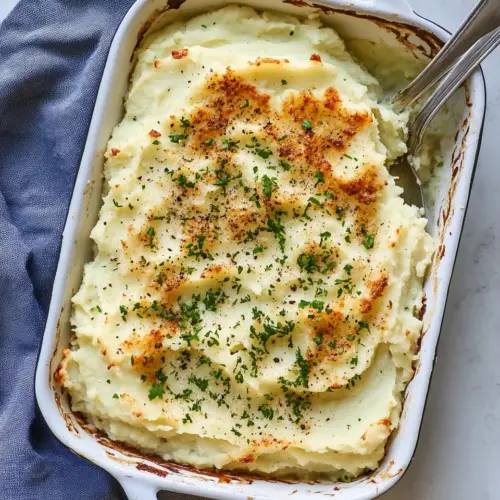
Baked Parmesan Mashed Potatoes
Baked Parmesan Mashed Potatoes is a creamy cheesy side with a golden, savory crust. Rich butter, melted mozzarella, and nutty parmesan cheese create a luscious texture perfect for an easy weeknight dinner or holiday table, offering irresistible contrast between a silky interior and crisp top. Make it when you want comfort food that feels a little elevated.
Equipment
- Pot
- Baking Dish
- Saucepan
- Potato ricer or masher
Ingredients
- 4 lbs yellow potatoes or russet potatoes, peeled and cut into 1 1/2-inch pieces Peeled and cut into 1 1/2-inch pieces to ensure even cooking and a fluffy texture when mashed; provides the starchy base and body for the dish, absorbing flavors from butter and milk.
- 1/2 cup unsalted butter, cut into 4 pieces Cut into 4 pieces so it melts evenly into the hot potatoes; contributes rich, creamy fat that smooths the mash and enhances mouthfeel and flavor depth.
- 2 garlic cloves, minced (2 tsp) Minced finely to release pungent, garlicky aroma and flavor throughout the potatoes; brightens the dish and infuses savory complexity without large pieces.
- 1 cup whole milk, then more as desired Warmed and added gradually to loosen the mashed potatoes to desired consistency; supplies creaminess and a mild dairy sweetness that balances the cheeses.
- 1 cup (2.6 oz) freshly grated parmesan cheese Freshly grated to melt smoothly and distribute salty, umami-rich notes; adds savory sharpness and salty balance that lifts the overall flavor profile.
- 1 1/2 cups (6 oz) freshly grated mozzarella cheese Freshly grated to create gooey, stretchy pockets and a melty topping; contributes milky richness and a pleasant stringy texture when baked.
- Salt Added to taste to season and balance flavors; enhances and highlights the natural potato and cheese notes, preventing blandness.
- 2 1/2 tbsp chopped fresh parsley (optional) Chopped and sprinkled as an optional garnish to add fresh herbal brightness and color; provides a mild, peppery, slightly bitter contrast to the rich casserole.
Instructions
- Preheat oven to 400 degrees. Grease a 13 by 9-inch baking dish.: Warm air fills the kitchen bringing a gentle, anticipatory heat and the sound of the oven clicking on signals that the final gratin layer will brown nicely. Preheating ensures the dish starts baking immediately, encouraging even browning of the top. Greasing the baking dish prevents sticking and makes serving simpler. A common mistake is sliding the dish into a non fully preheated oven which can yield uneven browning, so wait until the oven reaches the full temperature before baking.
- Place potatoes in a pot and cover with water until potatoes are covered by an inch or two.: You will hear the water swirl as it settles around the potatoes , and covering them by an inch or two guarantees even cooking without exposed dry spots. Starting with cold water and then bringing to heat helps the potatoes cook through uniformly. Avoid adding too much water which dilutes heat efficiency, and do not start them in hot water as that can cook the exterior too fast and leave the centers underdone.
- Bring potatoes to a boil over medium-high heat, then reduce heat to medium-low and simmer until very tender when pierced with a fork, about 15 - 25 minutes.: Expect a lively, rolling boil that softens to a gentle simmer, and you may hear the occasional soft clink from the pot. The fork test is the reliable indicator, with the potato giving easily all the way through. Overcooking can make them waterlogged and gluey, while undercooking leads to lumps, so check several pieces for consistency to avoid these mistakes.
- Meanwhile melt butter over medium heat. Add garlic and saute 30 - 60 seconds to remove harsh bite, set aside.: The butter will foam and sing softly as it warms, and then the aroma of garlic will bloom within seconds, filling the kitchen with a warm, savory perfume. Sautéing briefly tames raw sharpness and infuses the fat, which then seasons the mash more evenly. Do not allow the garlic to brown, as it will become bitter, and if that happens start over with fresh butter for the best flavor.
- Drain potatoes, return to pot and mash well or pass through a potato ricer or food mill.: The steam hiss after draining is a cue that the potatoes are hot and ready. Mashing by hand gives you control over texture while a ricer or food mill yields an ultra smooth result. Ricing removes lumps and prevents overworking, which can lead to gluey starch; if you prefer a rustic texture, mash gently to keep some body. Avoid using a high speed mixer which can over develop starch and make them gummy.
- Add butter mixture to potatoes along with, milk, mozzarella, 3/4 cup parmesan, and 2 Tbsp parsley. Stir and thin with a little more milk if desired and season with salt to taste.: You will notice the mash becoming silkier as warm butter and milk fold in, and the cheeses melt into a creamy, fragrant mass. The aroma intensifies with the cheeses releasing savory notes, and the texture should reach a spoonable, velvety stage. Add milk a splash at a time to avoid making it too loose, and taste for salt after the cheeses have been mixed since they add significant saltiness. A common error is adding cold milk which can cool the mash and prevent smooth incorporation, so warm the milk slightly first.
- Pour mixture into prepared baking dish, spread into an even layer. Sprinkle remaining 1/4 cup parmesan over the top.: As you spread the mash, you should see gentle ridges that will brown and crisp attractively in the oven. The final dusting of parmesan cheese forms the crust that transforms each spoonful with a savory crunch. Pressing the surface too flat can reduce the area that crisps, while leaving it too rough may cause uneven browning, so aim for a slightly textured surface for the best result.
- Bake in preheated oven 20 minutes, for better browning on top move closer to broiler and broil briefly (about 2 - 3 minutes) during last few minutes of cooking.: During baking you will see bubbling along the edges and a gentle golden color spreading across the surface, and the kitchen fills with an irresistible, toasty cheese aroma. Bringing the dish close to the broiler for a short period creates those coveted browned peaks, but watch closely as this can go from perfect to charred very quickly. Avoid leaving it unattended under the broiler and check every 30 seconds during broiling to prevent burning.
- Garnish with 1/2 Tbsp parsley and serve warm.: The final sprinkle of parsley offers a fresh, green contrast both visually and on the palate, cutting through the richness with a hint of brightness. Serving warm ensures the cheeses are soft and the top retains some crisp texture. Letting it sit too long will congeal the interior and dull the contrast, so plan to serve soon after baking for the best experience.
Notes
- Choose your potato wisely. Yellow potatoes give a naturally creamy texture and rich flavor, while russets create a fluffier mash. Either works, but pick based on whether you prefer a denser or lighter mouthfeel.
- Warm liquids before adding. Heating the milk slightly prevents chilling the mash and helps fats incorporate, producing a silkier finish without lumps.
- Mind the garlic timing. Sauté garlic briefly in warm butter to soften its harshness, and stop when it becomes fragrant to avoid bitterness from browning.
- Grate cheeses fresh. Freshly grated parmesan cheese and mozzarella melt better and taste brighter than prepackaged powders, improving both texture and flavor.
- Keep an eye under the broiler. Moving the dish closer to the broiler gives beautiful browning quickly, but it can burn in seconds, so watch constantly during those final moments.