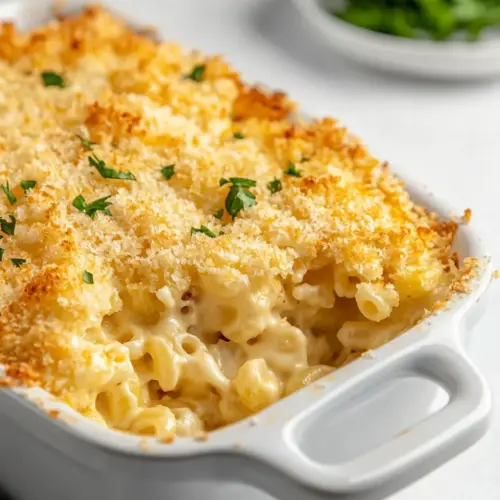
Baked Macaroni and Cheese
Baked Macaroni and Cheese is a creamy, cheesy casserole with a crispy breadcrumb topping, perfect for an easy weeknight dinner or a cozy winter gathering. The combination of Gruyere cheese and sharp cheddar cheese gives depth, while a silky roux based sauce ensures every elbow pasta bite is rich and satisfying, making it an irresistible reason to cook tonight.
Equipment
- Dutch Oven
- 9 inch baking dish
Ingredients
- 4 cups water Boil vigorously to cook pasta and form the base of the casserole; water transfers heat evenly and softens the macaroni. Maintain a rolling boil and salted water if desired to ensure al dente texture before baking.
- 8 ounces dried elbow pasta Cook until tender to provide the main body and chew of the dish; dried elbow pasta holds sauce well with its curved shape. Follow package timing but test early to prevent overcooking since it will bake further.
- 1 tbsp butter Melt gently to grease the baking dish and add a subtle buttery flavor that helps prevent sticking; butter contributes richness to the topping and layers. Soften rather than brown when incorporating into the pan so it blends smoothly with other fats.
- 2 tbsp melted butter Pour over breadcrumbs to bind and brown the topping; melted butter crisps the panko for a crunchy contrast. Ensure crumbs are evenly coated so they toast uniformly in the oven for appealing texture.
- 1/3 cup panko breadcrumbs Crisp by baking to produce a golden, crunchy topping that contrasts with the creamy interior; panko creates an airy, textured crust. Distribute evenly and mix with butter and seasonings for best results when broiled briefly at the end.
- 2 tbsp grated parmesan cheese Sprinkle sparingly to introduce sharp, nutty notes and help brown the crust; grated parmesan adds umami and saltiness. Combine with breadcrumbs and butter so it melts and crisps on top.
- 1/2 tsp dried parsley Season subtly to provide herbal color and a mild, fresh accent; dried parsley brightens the rich cheese flavors without overpowering them. Stir into the breadcrumb mixture or sprinkle on top before serving for visual appeal.
- 1/4 tsp salt Season lightly to enhance overall flavor balance and bring out the cheeses; a small amount prevents the dish from tasting flat. Add cautiously to avoid over-salting, especially since cheeses contribute salt as well.
- 3 tbsp unsalted butter Cream into the roux to supply fat for thickening and a smooth mouthfeel; unsalted butter gives control over final seasoning. Melt completely before whisking in flour to create a lump-free base for the béchamel.
- 3 tbsp plain flour Whisk into melted butter to form a roux that thickens the milk and cream into a velvety sauce; plain flour stabilizes the cheese sauce so it clings to pasta. Cook briefly to remove raw flour taste before gradually adding liquids.
- 2 cups whole milk Pour in gradually to build a creamy béchamel and provide body to the sauce; whole milk adds richness and helps dissolve the roux. Warm slightly before adding to prevent lumps and promote even thickening.
- 1 cup heavy cream Enrich heavily to create an ultra-luxurious, silky sauce; heavy cream increases creaminess and helps prevent sauce from breaking when baked. Combine with milk for a balanced texture that still sets up under heat.
- 1 tsp garlic powder Season gently to impart a savory garlic undertone without fresh garlic’s intensity; garlic powder disperses evenly throughout the sauce. Add during sauce preparation so the flavor mellows and integrates smoothly.
- 1 tsp ground black pepper Season coarsely to provide background heat and depth that complements cheeses; ground black pepper enhances savory notes and cuts richness. Adjust quantity to taste, adding gradually while cooking the sauce.
- Salt to taste Season at the end to fine-tune salt levels and balance the dish; adding to taste ensures the finished casserole isn’t overly salty. Taste the sauce before baking because cheeses and other salted components influence final seasoning.
- 1 cup Gruyere cheese Melt into the sauce for a nutty, slightly sweet, and complex melting cheese that elevates flavor; Gruyere adds stretch and depth. Shred finely and whisk in off heat if desired to achieve a smooth, homogeneous cheese sauce.
- 2 cups sharp cheddar cheese Combine into the béchamel to provide sharp, tangy flavor and classic mac and cheese character; sharp cheddar delivers bold cheese intensity and body. Grate and stir in gradually to melt evenly and prevent graininess in the sauce.
Instructions
- Preheat the oven to 400 degree F. Grease a 9 inch baking dish and keep it ready.: When the oven warms to 400 degree F you will feel the kitchen change as heat fills the space and the smell of warm air provides a reassuring backdrop. Proper preheating ensures even baking and that the top crisps in the expected time. A light coat of grease on the 9 inch baking dish prevents sticking and helps the cheese bubble away from the sides. Listen for the oven fan or the faint hum that confirms it reached temperature, and watch for the interior light to come on if you open the door. Avoid placing the dish in an oven that is still heating because it can extend bake time and alter the golden finish.
- In a large pot bring the water to boil, add elbow pasta and cook per packet instruction minus 1 minute.: A vigorous boil produces rolling bubbles and a lively sound, which shows the water is hot enough to maintain proper cooking. Cooking the elbow pasta slightly under the package time by one minute is critical so it holds structure while baking. As the pasta cooks you'll see the noodles swell and the water foam a bit from released starch, which you can skim. One common pitfall is overcrowding the pot, which causes sticking and uneven cooking, so use a large pot and enough water for free movement.
- Drain the water and add a tablespoon of butter to the cooked pasta and set aside.: After draining, the pasta will steam and release warmth; tossing with 1 tbsp butter gives shine and prevents sticking. The butter melts quickly creating a silky coating that separates the noodles so they incorporate smoothly with the sauce. If you skip this, the pasta can clump together once mixed, making it harder to get an even distribution of sauce. Make sure to drain well to avoid excess water diluting the sauce.
- To the bowl with melted butter, combine the panko breadcrumbs, parmesan cheese, parsley and salt. Keep aside.: Mixing warm melted butter with panko breadcrumbs produces a glossy, well coated crumb that browns evenly. The parmesan cheese adds savory depth and the dried parsley a hint of herbaceousness. Stir until the crumbs look evenly moistened and set them aside on a plate. If the butter is too hot it can make the crumbs soggy, so allow it to cool briefly before combining.
- In a large pot, melt the butter over medium heat. Add the flour and whisk often for a minute.: As the unsalted butter melts, you will notice a gentle foam and a nutty aroma begins to build when you add the plain flour . Whisking constantly for about a minute cooks the raw flour taste out and creates a roux base. The roux should become slightly bubbly and aromatic but not brown. A mistake here is leaving the roux unattended which can lead to scorching and a burnt flavor that carries through the sauce.
- Slowly pour the whole milk and whisk until the mixture becomes smooth. Pour the remaining milk and heavy cream.: Gradual addition of whole milk while whisking prevents lumps and encourages a glossy, smooth sauce. After the first portion integrates, adding the remaining milk and heavy cream increases richness, producing a velvety texture. You will notice the sauce thicken as you whisk, becoming silky and coating the whisk. If you pour all the liquid at once, you risk lumps that are hard to remove later.
- Add the garlic powder, pepper and salt, cook for 5 more minutes until the sauce thickens.: Adding garlic powder , ground black pepper , and a pinch of salt at this stage allows the flavors to infuse the sauce as it simmers. Cook while stirring for about five minutes and you will see the liquid reduce slightly and gain body, the surface settling into a glossy sheen. This gentle cooking builds flavor and ensures the roux fully activates. A common error is rushing and turning up the heat which can break the emulsion or cause sticking.
- Remove the pot from the heat and add the cheeses to melt and combine (reserving 1 cup of cheese to use it later).: Off heat, add the shredded Gruyere cheese and sharp cheddar cheese so they melt gently into the warm sauce without seizing. The residual heat melts them into a smooth, creamy mixture with a slightly elastic texture. Reserve 1 cup cheese to layer in the casserole for a gooey center. If the pot is too hot the cheese can become stringy or grainy, so removing from heat first prevents that.
- Combine the cooked macaroni pasta and sauce together.: When the sauce clings to the surface of the elbow pasta you will see a glossy, evenly coated mixture. Stir gently so every noodle picks up sauce, making sure you scrape the bottom to incorporate any flavorful bits. This ensures consistent flavor in each serving. Over stirring can break the pasta, so be gentle and even in your motions.
- Pour half of the macaroni and cheese mixture into the prepared baking dish. Add in a layer of reserved 1 cup of cheese on top. Pour the remaining macaroni and cheese mixture on top of the cheese layer.: Layering creates pockets of molten cheese in the center. As you add the first half, spread it evenly and then scatter the reserved 1 cup cheese so it will form a melty layer. Top with the remaining macaroni so the dish bakes with a creamy middle and a cohesive top. Make sure the layer is even to avoid dense spots; uneven layering can lead to hot and cool pockets during baking.
- Sprinkle the prepared breadcrumb topping. Bake for 20 minutes until the top is light golden in color.: The breadcrumb mixture should be sprinkled to create an even crust that toasts and crackles in the oven. In the bake you will hear a gentle bubbling and see edges become golden, while the center will appear creamy and slightly puffed. Bake for about 20 minutes and watch for a light golden hue across the top. Remove too early and the topping will be pale and soft, leave too long and breadcrumbs can overbrown quickly.
- Serve the baked mac and cheese while it is still hot.: Right out of the oven the dish will steam and release a warm, cheesy aroma that invites immediate serving. The contrast of the crisp top and molten interior is most pronounced when hot, producing that satisfying first forkful. Let it sit for a moment to set slightly so servings hold their shape. Cutting too soon can cause the portions to slump, while waiting too long cools the melted cheese.
Notes
- Choose fresh, shredded cheese: Freshly shredding both the Gruyere cheese and sharp cheddar cheese prevents anti caking agents from affecting melt and texture, giving you a silkier sauce and better mouthfeel.
- Control salt carefully: Because the cheeses contribute salt, start with unsalted butter in the roux and add salt to taste at the end so you avoid an overly salty dish.
- Don’t overcook pasta: Stop the elbow pasta one minute earlier than package instructions so it stays slightly firm and keeps its shape after baking, preserving a pleasant bite.
- Whisk for a smooth roux: When you add plain flour to melted butter, whisk constantly so the roux cooks evenly and your sauce stays lump free and glossy.
- Watch the topping in the oven: The panko breadcrumbs brown quickly near the end, so check during the last few minutes to catch the perfect golden color without burning.