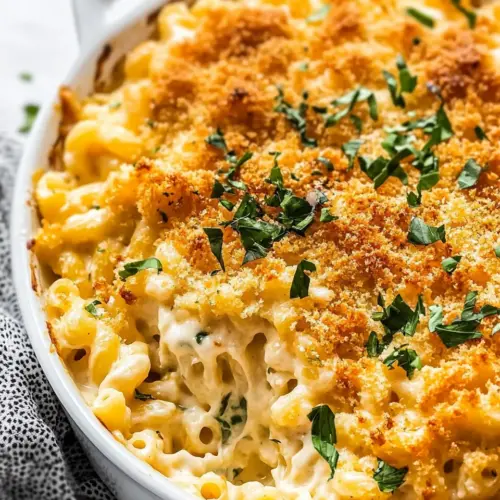
Baked Macaroni and Cheese
Baked Macaroni and Cheese is a creamy, cheesy classic with a golden bubbling top and rich, comforting flavor. This easy weeknight dinner delivers a silky sauce that clings to the pasta, offering a crispy baked finish and satisfying texture contrast. Perfect for feeding a crowd or cozy family meals, it is reliably comforting and worth making whenever you crave something warm and indulgent.
Equipment
- Large saucepan
- Whisk
- 9 x 13 inch baking dish
- Oven
Ingredients
- 1/2 cup unsalted butter Melted to create a rich, silky base for the sauce and provide a smooth mouthfeel; browning slightly can add a nutty depth. Used liberally to combine with flour and form the roux that thickens the cheese sauce.
- 6 tablespoons all-purpose flour Whisked into melted butter to form a roux that thickens the milk into a creamy béchamel; cooking briefly removes raw flour taste. Controls sauce consistency so it clings to the pasta without becoming grainy.
- 5 cups whole milk Heated and gradually added to the roux to produce a velvety bechamel; whole milk contributes body and a naturally creamy flavor. Warm milk helps prevent lumps and ensures a smooth, cohesive cheese sauce.
- 2 cups grated cheddar cheese Folded into the warm béchamel to melt into a sharp, tangy cheese sauce; cheddar provides the primary cheesy flavor profile. Grating the cheese ensures it melts evenly and gives the dish a classic mac and cheese character.
- 1/2 cup grated parmesan cheese Sprinkled into the sauce to add savory, umami-rich complexity and a hint of saltiness; parmesan enhances overall depth. Finely grated parmesan melts into the sauce to boost flavor without overpowering the cheddar.
- 2 teaspoons salt Measured to season the sauce and balance the dairy richness; helps bring out the cheese flavors when added during cooking. Dissolving salt into the hot sauce ensures even seasoning throughout the dish.
- pepper to taste Adjusted at the end to taste to provide mild heat and accentuate savory flavors; freshly cracked pepper adds aromatic top notes. Sprinkled sparingly or generously depending on preference to complement the creamy sauce.
- 1 teaspoon garlic powder Stirred into the béchamel to add gentle savory and aromatic garlic flavor; powder disperses uniformly without altering texture. Provides a mellow garlic presence that supports the cheese without overwhelming it.
- 1 teaspoon mustard powder optional Optional seasoning blended into the sauce to contribute a subtle tangy, mustard-like warmth; helps cut through richness if used. Powder form distributes evenly and elevates the savory profile without introducing moisture.
- 1/2 teaspoon nutmeg optional Optional pinch added for a warm, slightly sweet aromatic nuance; nutmeg pairs classically with creamy béchamel sauces. Used sparingly to enhance complexity and bring out the dairy flavors without being noticeable as a separate spice.
- 1 pound cooked elbow macaroni Combined with the sauce to form the hearty base of the casserole; cooked elbow macaroni provides chew and structure. Properly drained and slightly undercooked before baking ensures pasta absorbs sauce without becoming mushy.
- 11/2 cups shredded mozzarella cheese Sprinkled on top and folded into the sauce to add gooey, stretchy texture and mild milky flavor; mozzarella enhances the casserole’s meltiness. Shredded mozzarella creates pleasing strings and helps bind the topping during baking.
- 1/2 cup parmesan cheese Added as an additional savory topping to produce a golden, slightly crisp finish; parmesan contributes umami and browning. Sprinkling before baking encourages a flavorful crust that contrasts the creamy interior.
- chopped flat leaf parsley for garnish Chopped and scattered over the finished dish to add fresh color and a mild herbal brightness; parsley lightens the rich flavors. Used as a garnish to provide visual appeal and a subtle palate-cleansing note.
Instructions
- Preheat oven to 400 degrees Fahrenheit with rack in the middle of oven. Melt 1/2 cup unsalted butter in a large saucepan over medium heat. Add 6 tablespoons all-purpose flour to melted butter and stir until thickened, about 3 minutes.: The oven warming creates an even environment so the top browns uniformly, and placing the rack in the middle prevents the top from burning while the interior heats. As it warms you might notice the kitchen becoming gently warm and the oven light glowing, which is a cue it is getting close. Avoid placing the dish too close to the heat source, or you risk an overly crisp top while the middle remains cool. A common oversight is not waiting for a full preheat, which can lengthen bake time and affect texture.
- Slowly whisk in 5 cups whole milk a little at a time. The slower you add the milk the thicker the sauce will be. Stir in 2 cups grated cheddar cheese and 1/2 cup grated parmesan cheese into the sauce.: As the butter melts it will foam then settle, releasing a slightly nutty aroma when it begins to brown, though you should keep it pale for this sauce. This step prepares the fat for the roux, which is essential for thickening. Watch closely, because if the butter browns too much it will impart a toasty flavor that can be distracting. A frequent mistake is using too high heat, which can cause the butter to separate.
- Add 2 teaspoons salt, pepper to taste, 1 teaspoon garlic powder, 1 teaspoon mustard powder, and 1/2 teaspoon nutmeg to the sauce, stir until combined. Stir in 1 pound cooked elbow macaroni into the sauce and transfer to a 9 x 13 inch baking sheet.: You will notice the mixture become pasty and smooth, and the raw flour scent will dissipate as it cooks, leaving a slightly toasted smell. This forms the roux that thickens the sauce and prevents graininess. Stir continuously to cook the flour evenly, because undercooked flour tastes chalky. Many people stop too soon, so count gently to ensure about 3 minutes of gentle cooking.
- Sprinkle the top with 11/2 cups shredded mozzarella cheese, 1/2 cup parmesan cheese and bake in the oven until golden and bubbling, 20-25 minutes. Sprinkle with chopped flat leaf parsley for garnish.: Adding milk gradually creates a silky béchamel, and the whisking helps break up lumps so the sauce becomes smooth. You will see the sauce shift from thick paste to glossy liquid, and steam will rise as it warms. Pouring the milk too quickly can create lumps, while adding it slowly yields a silkier texture. If lumps form, whisk vigorously and cook a bit longer to smooth them out.
- Stir until thickened, about 3 minutes: As the sauce thickens you will notice it coat the back of a spoon and slow when stirred, creating a velvety sheen. This thickness is crucial so the sauce clings to the macaroni rather than pooling. Keep the heat moderate so the sauce does not boil violently, which can separate it. Overshooting the thickening can make it pasty, so remove from heat when it naturally coats the spoon.
- Stir in 2 cups grated cheddar cheese and 1/2 cup grated parmesan cheese into the sauce: The cheeses will melt into the warm béchamel, producing a glossy, cohesive sauce that smells rich and savory. Stirring gently encourages even melting and prevents the cheddar from becoming stringy or the parmesan from clumping. If the sauce seems grainy, lower the heat and stir slowly to integrate the cheeses. Overheating while the cheese melts can cause it to separate.
- Add 2 teaspoons salt, pepper to taste, 1 teaspoon garlic powder, 1 teaspoon mustard powder, and 1/2 teaspoon nutmeg to the sauce, stir until combined: The aromatics and seasonings bloom in the warm sauce, creating layers of flavor where the garlic powder and mustard powder lift the cheese, and the nutmeg adds warmth. Taste and adjust, because cheeses vary in saltiness. A common error is over seasoning early, so add gradually and taste as you go.
- Stir in 1 pound cooked elbow macaroni into the sauce and transfer to a 9 x 13 inch baking sheet: The pasta should be just under al dente so it finishes perfectly in the oven; when mixed you will see it evenly coated and glossy. Spreading it into the baking dish ensures even baking and a uniform top crust. If the pasta is overcooked it will fall apart during baking, so drain and shock less if needed. Crowding the pan can lead to uneven browning.
- Sprinkle the top with 11/2 cups shredded mozzarella cheese, 1/2 cup parmesan cheese and bake in the oven until golden and bubbling, 20 to 25 minutes: As it bakes the top will transform, bubbling and forming spots of deep golden brown, and you will hear a faint sizzle as moisture escapes. The aroma will intensify and a lightly crisp crust will develop, contrasting with the creamy interior. Keep an eye on color near the end, because ovens vary and you do not want excessive browning. Opening the oven frequently can lengthen bake time, so check visually through the window when possible.
- Sprinkle with chopped flat leaf parsley for garnish: The fresh parsley adds a bright herbal note and a pop of color against the golden top, making the dish look lively. Scatter it right after the bake so it stays vibrant. Adding it before baking will wilt it and mute the color, which reduces visual appeal.
Notes
- Grate your own cheese to ensure smooth melting and fuller flavor, because pre shredded options can contain stabilizers that affect texture.
- Control the heat while melting and combining ingredients to prevent the cheese from separating and to keep the sauce velvety.
- Slowly incorporate the milk into the roux to avoid lumps, whisking steadily until the sauce is glossy and uniform.
- Undercook the pasta slightly so it finishes to perfect tenderness in the oven without becoming mushy.
- Use a middle oven rack for even browning on top, which keeps the interior from overcooking while the surface crisps.