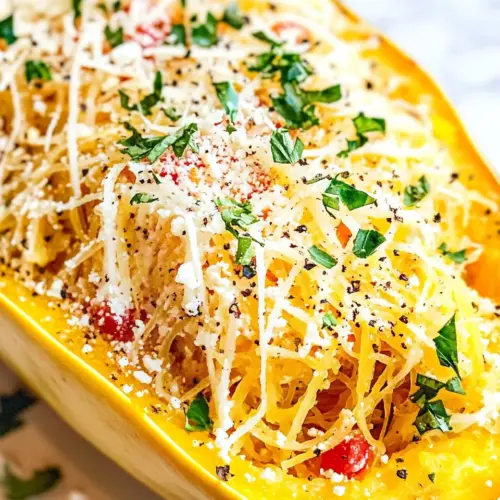
Baked feta spaghetti squash
Baked feta spaghetti squash is a creamy and slightly tangy roasted dish where tender squash strands mingle with melty feta and burst cherry tomatoes. This easy weeknight dinner delivers bright herb notes from pesto and a satisfying, comforting texture, perfect for a relaxed autumn meal. Make it when you want a simple, impressive vegetarian main that is both cozy and flavorful.
Equipment
- Baking Sheet
Ingredients
- 1 spaghetti squash Roast to develop sweet, nutty strands and act as the main vessel for the dish; halve, seed, drizzle with oil, and bake until tender so the flesh can be scraped into spaghetti-like ribbons that soak up flavors.
- Olive oil Coat to help roast and caramelize other ingredients while preventing sticking; drizzle over the squash halves and tomatoes before baking and toss with the finished strands to add a silky mouthfeel.
- Salt and pepper Season to enhance and balance flavors throughout the recipe; sprinkle on the squash and tomatoes before roasting and adjust at the end to taste for a bright, savory finish.
- 4 oz . feta cheese cut in half Crumble to add creamy, tangy richness and a salty counterpoint; place between tomatoes in the baking vessel so it softens and melts slightly, creating pockets of concentrated flavor that mingle with the squash.
- 8 oz . cherry or grape tomatoes Roast to burst and concentrate sweet juices that create a fresh sauce; scatter around the feta and squash so they pop in the oven and release liquid that helps coat the spaghetti strands.
- 3 tablespoons pesto Stir in to deliver herbaceous, oily depth and concentrated basil flavor; fold through the scraped squash and roasted tomatoes to tie ingredients together and boost savory complexity.
- 1 tablespoon minced garlic Sauté or mix in to provide aromatic sharpness and savory depth; incorporate raw or briefly warmed so garlic infuses the oil and brightens the overall flavor profile without overpowering the dish.
- Red pepper flakes Sprinkle to introduce a touch of heat and contrast; add sparingly while assembling or at the table to lift the dish with warm, chili-derived spice and a slight lingering kick.
- Everything bagel seasoning Garnish to contribute crunchy, nutty, garlicky notes and extra savory interest; finish with a light dusting for texture contrast and an umami-forward boost that complements the feta and pesto.
- Chopped fresh parsley optional, for serving Garnish to add fresh, herbal brightness and color; chop and scatter over the plated squash just before serving to lend a clean finish and aromatic lift.
Instructions
- Begin by preheating your oven to 400°F (200°C).: As the oven warms, you will notice a faint smell of heating element and the kitchen will start to feel cozy. A consistent oven temperature is key so the spaghetti squash roasts evenly and the feta cheese softens into creamy pockets. If your oven runs hot or cold, use an oven thermometer, otherwise you may end up with underdone squash or overly browned cheese. One mistake is putting the squash in before the oven is fully up to temperature, which stretches the cooking time and can dry the filling.
- Carefully slice the spaghetti squash in half lengthwise and scoop out the seeds with a spoon. Discard the seeds. Drizzle each cut side of the squash with olive oil and spread it evenly using a pastry brush. Season generously with salt and pepper. If squash is too hard to cut easily, see notes on my recommendations for an even cut.: When you slice into the squash you should hear a firm give, and the interior will reveal pale yellow flesh and a seed cavity. Removing the seeds creates a clean hollow for the feta cheese and tomato mixture to nestle in. If the squash resists the knife, that means it is very firm; consider softening it in the microwave for a few minutes to make cutting safer. A common error is trying to force a cut which risks injury, so use caution and stabilize the squash on a towel while slicing.
- Place each half of the squash cut side up on a baking sheet. Place a piece of feta cheese into each squash cavity.: As you brush the surface with olive oil , the cut flesh will glisten and the oil will help encourage caramelization along the edges. The aroma will deepen slightly as the oil meets the warm oven later. This step protects the surface from drying out and enhances browning. Avoid over oiling which can leave the cavity slick; a light, even coat is best.
- In a mixing bowl, combine the cherry tomatoes, pesto, 2 tablespoons of olive oil, and a sprinkle of red pepper flakes. Mix well to coat the tomatoes with the pesto.: The simple act of seasoning transforms the squash from bland to flavorful; you will see the tiny grains of salt and specks of pepper on the surface. Salt draws out moisture and concentrates natural sweetness, while pepper gives a subtle bite. Be mindful because the feta cheese is salty too, so moderate your seasoning if your feta cheese is very briny. A frequent mistake is under seasoning at this stage, resulting in a flat final dish.
- Spoon half of the tomato mixture into each squash cavity on top of the feta cheese. Drizzle with a bit more olive oil over the top.: The cut side up orientation helps the filling stay in place and allows the surface to roast rather than steam. As the squash heats, you will hear little crackles as moisture evaporates and see the flesh darken at the edges. If the squash wobbles on the sheet, trim a small sliver from the bottom to stabilize it before baking. Putting it cut side down will cause the inside to steam and it will not caramelize properly.
- Place the baking sheet in the preheated oven and bake for 50-65 minutes, or until the squash is tender when pierced with a fork. The feta will become golden and the tomatoes will burst. The timing will really depend on the size of the squash and heat from your oven.: Nestling the halved feta cheese into the center creates a molten core that melts and mingles with the squash as it roasts. You will notice the cheese begin to soften and develop a slightly golden rim if baked long enough. The cheese should be secured so it does not slide out when you transfer the pan. A common mistake is using crumbled feta which disperses too early rather than forming a creamy pocket.
- Remove the squash from the oven and (optionally) top with everything bagel seasoning, chopped fresh parsley or more red pepper flakes. Using a fork, shred the squash into spaghetti-like strands, mixing it with the tomatoes and cheese. Serve hot.: Tossing these together should yield tomatoes that are lustrous with oil and gently coated in the green flecks of pesto . The scent will be herb forward, with a garlicky note from the pesto . This mix creates a cohesive, flavorful filling that will burst and release juices as it roasts. Avoid overdressing the tomatoes which can prevent them from blistering and concentrating their sweetness.
- Spoon half of the tomato mixture into each squash cavity on top of the feta cheese.: When you add the tomato mixture, you will see liquid begin to nestle around the cheese and into the squash crevices. This is desirable, as those juices will mingle with the melting feta cheese and infuse the squash strands. If you heap too many tomatoes in one cavity, they may overflow and create a soggy patch on the baking sheet. Distribute evenly for the best bake.
- Drizzle with a bit more olive oil over the top.: A final slick of olive oil will help the tomatoes blister and the edges of the cheese brown gently. You should be able to see the surface glisten under the oven light. This oil also carries heat into the ingredients, promoting even roasting. Use sparingly, as excess oil can pool and dilute flavors instead of concentrating them.
- Place the baking sheet in the preheated oven and bake for 50 to 65 minutes, or until the squash is tender when pierced with a fork.: During baking, expect enticing aromas as the tomatoes begin to burst and the feta cheese softens and develops golden edges. The sound is mostly the quiet hiss of juices, and visually you will see the flesh pull away from the rind slightly. Test doneness by inserting a fork into the thickest part; it should glide in with little resistance. A frequent pitfall is assuming the lower end of the time range is sufficient for very large squash; if your squash is big, plan for the longer end and check periodically to avoid undercooking.
- Remove the squash from the oven and optionally top with everything bagel seasoning and chopped fresh parsley or more red pepper flakes.: Once out of the oven, the room will fill with a warm, savory perfume. The optional toppings add texture and a fresh finish, with the parsley offering a green lift. Shredding the flesh now will reveal silky strands that soak up the tomato juices and softened feta cheese . A mistake is shredding while the squash is still too hot to handle; let it sit a minute so you can safely use a fork. Serve hot for the best contrast of warm filling and fresh garnish.
Notes
- Boost herb flavor: Stir a little extra pesto into the tomato mixture before roasting for a more pronounced herbal profile that melds beautifully with the feta cheese.
- Adjust heat level: Increase or decrease the amount of red pepper flakes to control warmth, tasting the tomato mix before filling the squash so you can calibrate to your preference.
- Add crunch at the end: Sprinkle a small amount of everything bagel seasoning after baking to introduce textural contrast and an appealing savory punch.
- Make it garlicky: If you love garlic, fold a touch more minced garlic into the tomato and pesto mix, but distribute it well to prevent burnt bits.
- Freshen with parsley: Scatter chopped fresh parsley right before serving for color and a bright herbal note that lifts the dish.