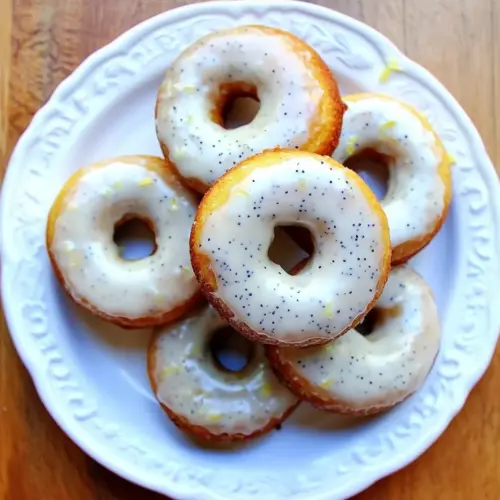
Baked Donuts with Lemon and Poppy Seeds Whole Wheat
Baked Donuts with Lemon and Poppy Seeds Whole Wheat are light, citrus forward, and slightly crunchy from poppy seeds. These easy baked donuts offer a tender crumb from whole wheat pastry flour and a glossy lemon glaze for a fresh spring treat. Perfect for quick brunches or casual gatherings, they are a simple sweet that still feels special.
Equipment
- Donut pan maker
- Electric Mixer
- Mixing Bowls
- Small Saucepan
Ingredients
- 1 egg Beat to incorporate air and provide structure; binds the batter and helps create a tender crumb when baked. Adds moisture and contributes to leavening through steam expansion, supporting a light donut texture.
- 2 tablespoons lemon juice Add bright acidity and citrus flavor while balancing sweetness; helps activate baking powder for slight lift. Imparts fresh lemon aroma and tenderizes the crumb for a moist finished donut.
- 1/2 teaspoon lemon zest Provide concentrated citrus oil and aroma to amplify lemon flavor; enhances brightness without adding extra liquid. Pair with lemon juice to create a pronounced citrus profile throughout the batter.
- 1.5 cups Splenda Sweeten without added sugar and reduce calories while maintaining bulk; integrates into wet ingredients to dissolve and distribute sweetness evenly. Support texture by contributing some bulk similar to granulated sugar in the dough.
- 1/2 cup whole-wheat pastry flour Supply whole-grain structure and nutty flavor while keeping texture light due to pastry grind; contributes fiber and a wholesome character. Combine with leavening to form the dry matrix that traps air for tender baked donuts.
- 1/2 teaspoon baking powder Leaven the batter slightly to promote rise and create a lighter texture; reacts with moisture and acids for gentle lift. Dispense evenly into dry flour to prevent clumping and ensure uniform rise during baking.
- 1 tablespoon poppy seeds Introduce a subtle crunch and nutty, slightly earthy flavor; disperses throughout the batter to provide textural contrast. Complement lemon notes and add visual interest to each donut bite.
- 2 tablespoons light sour cream Enrich the batter with a tangy creaminess and add moisture while cutting richness compared with full-fat sour cream. Help tenderize gluten for a softer crumb and contribute to overall moistness.
- 1/4 cup light sour cream Boost moisture and creaminess while offering controlled fat content; adds silkiness to the batter and balances drier ingredients. Combine with other dairy and liquids to ensure proper consistency and tender texture.
- 1/8 teaspoon vanilla Enhance overall flavor with a warm, sweet vanilla note; round out citrus and sweet elements without overpowering them. Add sparingly to avoid masking delicate lemon and poppy seed flavors.
- 1/4 cup splenda Provide additional sweetness and help adjust final sweetness level precisely; used often for glazing or batter tweaks for balance. Blend with other sweeteners to achieve the desired taste without altering texture dramatically.
- 1/8 teaspoon salt Stabilize and enhance flavor balance by emphasizing other ingredients and controlling blandness; supports chemical leaveners for consistent results. Sprinkle into dry mix to ensure even seasoning throughout the batter.
Instructions
- Spray your donut pan maker with cooking spray and preheat it.: As the pan warms, you will notice a faint metallic scent and a little steam if it is electric, which indicates it is reaching temperature. Preheating ensures the batter begins to set immediately on contact, producing a tender edge and even rise, and spraying prevents sticking so the donuts release cleanly. A typical mistake is skipping the spray or preheat, which can cause donuts to cling and break when removed.
- In a large mixing bowl, beat the egg, lemon juice, lemon zest, and the Splenda on high with an electric mixer until the mixture is light and foamy. Set aside.: As you beat, the mixture should transform into a pale, airy foam, and you may smell the lemon oils become more vibrant. This aeration traps tiny bubbles that lighten the final crumb, which is why vigorous beating matters at this stage. Avoid overbeating to a dry foam, as that can lead to collapse when folded with denser ingredients.
- In a separate medium bowl, combine the whole-wheat pastry flour, baking powder, and poppy seeds.: When you whisk these dry ingredients, you are distributing the baking powder and the poppy seeds so the rise is consistent and seeds are evenly scattered. The flour will look slightly more buff than all purpose, and the little black flecks of poppy seeds will stand out visually. Do not skip this step, since uneven leavening can create tunnels or dense pockets.
- Slowly stir the dry mixture and the sour cream into the egg mixture. Fold gently until well combined.: After adding a bit of the dry mix to the wet, the batter will look creamy and speckled with poppy seeds. The folding motion preserves air and prevents developing gluten, which keeps the donuts tender. If you stir too vigorously, you might end up with a gummy texture, so use gentle, sweeping folds until everything just disappears into a uniform batter.
- Drop a tablespoonful of the mixture into each donut spot and close the lid.: As you fill the cavities, the batter should hold shape briefly before settling, and the poppy seeds will dot the surface. Filling from a spoon or piping bag helps control portions and keeps the donuts uniform. Overfilling causes spillover and uneven cooking, while underfilling leads to tiny, shallow donuts, so aim for consistent spoonfuls.
- While the donuts cook (3-4 minutes a batch), it's time to make the glaze.: The donuts will emit a gentle, bready aroma and you may hear faint hissing as steam escapes; this is normal. Use this time to combine glaze ingredients and bring them to a simmer so they are ready to coat the hot donuts. Rushing the glaze can make it too thin or uneven, so keep a close eye on the pot.
- In a small saucepan, combine all the glaze ingredients and bring to a boil, stirring constantly.: The glaze will transform from grainy to glossy as the sweetener dissolves and the mixture heats. Stirring prevents scorching and ensures a silky finish. If the glaze is not fully dissolved, it can feel slightly gritty on the finished donut, so continue until it looks uniform and shiny.
- Boil for 1 minute and remove from heat.: You will see the glaze bubble gently and thicken a little, and a small whisk will leave a trail that fills in slowly when lifted. That brief boil stabilizes the glaze so it clings to the donuts, creating a thin shell as it cools. Boiling much longer risks over reducing and making the glaze too thick or grainy, so stopwatch it for accuracy.
- Take your cooked donuts out of the pan and dip right into the glaze, or use a spoon—either works!: When you remove the donuts, they should be warm and spring back lightly when touched. Dipping them immediately helps the glaze adhere smoothly and creates an even coating; using a spoon allows you to control coverage if you prefer a lighter finish. A common error is letting the donuts cool too long which makes the glaze less likely to stick, so dip while warm.
- DEVOUR!: The first bite should present a contrast of warm, soft interior and glossy, slightly cool glaze, with little pops from the poppy seeds . Enjoy slowly to appreciate the lemon lift and tender crumb. Be mindful that the glaze can be sticky at first, so place finished donuts on parchment as they set and avoid stacking them until the coating has slightly cooled.
Notes
- Room temperature ingredients help the batter come together smoothly and encourage even texture, so take the egg and light sour cream out of the fridge briefly before starting.
- Gentle folding preserves the air you beat into the wet mix, resulting in a lighter crumb, so avoid vigorous stirring once the flour is introduced.
- Fresh leavening matters, if your baking powder is old, the donuts will be flatter and denser, so refresh your leavening agents regularly.
- Warm glaze adhesion is best, dip the donuts while they are still warm so the coating sets smoothly and glossy without cracking.
- Consistent filling yields uniform donuts, use the same tablespoon measure or a small scoop for each cavity to cook evenly.