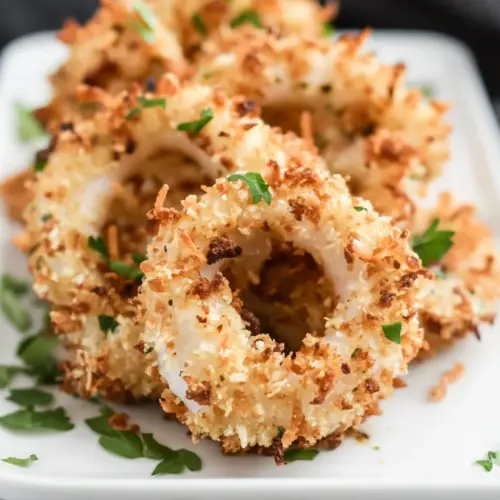
Baked Coconut Crusted Calamari
Baked Coconut Crusted Calamari is a crispy, lightly sweet seafood treat with a toasty coconut crust and a tangy, spicy yogurt dip. Tender calamari soaks in coconut milk then bakes to golden perfection for an easy weeknight dinner or summer appetizer. The result is crunchy, bright, and irresistible, a reason to make it again and again.
Equipment
- Oven
- Baking Sheet
- Mixing Bowls
Ingredients
- 1/2 cup light coconut milk Adds creamy richness and tropical flavor to the batter or dipping sauce, helping to moisten coatings and bind ingredients; use light coconut milk for a subtle sweetness without too much fat, and whisk to combine smoothly with other liquids.
- 2 teaspoons sriracha Provides spicy heat and umami complexity to the marinade or sauce, balancing the coconut and yogurt flavors; stir in small amounts and adjust to taste to achieve desired spiciness.
- pinch salt Enhances overall flavor by balancing sweetness and heat with a touch of salinity; use a small pinch to season batter or sauce so other flavors remain bright.
- 4 ounces raw squid rings Supplies tender seafood protein and the characteristic calamari texture; pat dry before coating to ensure the crust adheres and bake until opaque and firm.
- 1/2 cup coconut flour Contributes a gluten-free, slightly nutty base to the dredge that absorbs moisture and creates a light coating; press calamari gently after dipping to help the flour adhere evenly.
- 5 egg whites Acts as a lean binder that helps coatings stick without adding fat, while promoting a crisp crust when baked; beat whites lightly for even coverage over the squid rings.
- 1/2 cup + 2 tablespoons whole-wheat panko Offers whole-grain crunch and structure in the crust, contributing to texture and extra toasting during baking; combine with coconut flakes for balanced crispness.
- 1/2 cup + 2 tablespoons sweetened coconut flakes Delivers sweet, chewy texture and pronounced coconut flavor to the crust, amplifying the tropical profile; mix with panko so flakes toast without burning.
- 1/2 cup nonfat plain Greek yogurt Adds tangy creaminess and a slight tang that brightens the dipping sauce or complements the baked calamari; whisk until smooth for a cohesive sauce consistency.
- 2 teaspoons sriracha or to taste Contributes additional heat and customizable spice to the dipping sauce or drizzle, allowing for final seasoning adjustments; add gradually and taste as you go.
- pinch salt Provides a subtle seasoning boost to both batter and sauce, rounding out flavors without overpowering; sprinkle sparingly to maintain balance.
- Cilantro for garnish Garnishes the finished dish with fresh herbal aroma and bright color, adding a hint of citrusy, slightly peppery flavor when chopped and sprinkled just before serving.
Instructions
- In a medium-sized bowl, stir together the coconut milk, sriracha, and a pinch of salt. Place the squid rings into the bowl so that the coconut milk just covers them. Cover and refrigerate for at least 4 hours.: The marinade will smell faintly sweet with a bright hint of chili, and as the calamari soaks, it will take on a silken sheen. You should notice the coconut milk thinly clinging to the rings, not pooling as a heavy sauce. This step tenderizes by allowing the mildly acidic and fatty components to relax the seafood fibers, yielding a softer chew after baking. Keep the bowl covered to prevent other fridge odors from mingling, and avoid marinating much longer than recommended because the texture can become mushy. A common mistake is skimping on marinade time, which leaves the rings less flavored and slightly tougher.
- Preheat your oven to 425°F and generously spray a baking sheet with cooking spray.: When the oven reaches temperature you want a steady, dry heat that crisps the coating quickly. The baking sheet should be well oiled so the crust browns without sticking, and the initial blast of high heat encourages Maillard color on the panko and coconut flakes. You should hear a faint sizzle if the sheet was preheated; that helps set the crust. If your oven runs hot, check a minute or two early to avoid over browning. Avoid the error of placing rings too close together, which traps steam and prevents crisping.
- Pour the coconut flour into a large, shallow plate and place the egg whites into a small bowl. Pour the panko, coconut flakes, and another pinch of salt into a large, shallow plate and mix well.: The stations should be in order to create a smooth workflow: dry flour, liquid egg whites, then crumb mix. The coconut flour will feel powdery and cling lightly to the rings, while the egg whites should be slightly foamy and glossy. Mixing the panko and coconut flakes lets you get even distribution so every bite has crispness and coconut flavor. The salt in the crumb mix helps the crust taste seasoned through. A common slip is using too deep of a bowl, which makes turning rings awkward and leads to uneven coating.
- Take a squid ring out from the coconut milk, letting any excess coconut milk drip off (but don’t dry it off!) and place it into the coconut flour until it is thoroughly coated.: You want a light veil of flour that provides a tooth for the egg white to grab. The surface will look matte and slightly textured once coated. This layer prevents the egg whites from sliding off and helps build a multi layered crust. If you rub the flour in too aggressively you can compress the ring and lose a delicate texture, so be gentle. A frequent error is blotting the ring dry which removes the moisture that binds the coatings together.
- Then, place the ring into the egg whites also until it’s thoroughly coated. Finish by placing the squid in the panko/coconut mixture, lightly pressing so that the panko adheres to the ring. Place on the prepared baking sheet and repeat until all the rings are coated.: After the egg white bath the ring will glisten; that wet sheen is perfect for grabbing the crumb mix. Press the crumbs with a light touch to ensure adhesion without compressing the ring flat. Arrange rings spaced out on the sheet to promote even airflow and browning. You should be able to see a textured crust forming with visible flakes and crumbs. Avoid stacking rings or crowding them, as that traps steam and softens the crust, a common issue when trying to fit too many on one tray.
- Spray the rings with cooking spray and bake them until lightly golden brown, about 7-10 minutes. Flip the rings, spray them with cooking spray, and bake for an additional 2-4 minutes until golden brown and crispy.: As they bake you will smell the toasty coconut and the panko developing a nutty aroma; edges should take on a warm golden hue. Flipping halfway ensures both sides receive direct heat for even crispness. The rings will start to feel firmer and slightly springy when pressed gently, signaling doneness. If they remain overly soft after time is up, give them a couple more minutes while watching closely. The main pitfall is overbaking which will make the calamari rubbery rather than tender.
- While the calamari bakes, mix together the Greek yogurt, sriracha, and a pinch of salt.: The dip should be smooth and slightly tangy with a rosy tint from the sriracha . Whisking aerates the yogurt and brightens its flavor, creating a counterpoint to the toasted crust. Taste and adjust the heat to your preference, remembering the crust will be slightly sweet from the coconut flakes. If the dip tastes flat, a small extra pinch of salt usually wakes it up. A common mistake is adding too much hot sauce too early, which can overpower the delicate calamari .
- Dip the calamari in the yogurt mixture fresh from the oven, and enjoy.: The contrast of hot crispy crust against cool tangy dip is immediate; you should hear a slight crunch and taste warm toasted coconut followed by a refreshing yogurt note. Serve right away so the crust stays crisp and the textures remain distinct. If you let the rings sit, steam will soften the coating. Avoid plating the rings under cover, which traps moisture and ruins the crispness.
Notes
- Reduce Heat: If you prefer milder flavor, cut the sriracha in half in both the marinade and the dip, tasting as you go to maintain balance.
- Boost Crunch: For extra crunch, add an additional 2 tablespoons of whole wheat panko to the crumb mix so you get larger toasted fragments in the crust.
- Longer Marination: You can marinate up to 6 hours if you need extra scheduling flexibility, but do not exceed that or the texture may soften too much.
- Make Ahead Assembly: Prep the dredged rings and keep them on a tray uncovered in the fridge for up to 30 minutes before baking to help the coating set.
- Adjust Dip: If the yogurt dip seems too tangy, stir in a teaspoon of the reserved coconut milk for a touch of sweetness and creaminess.