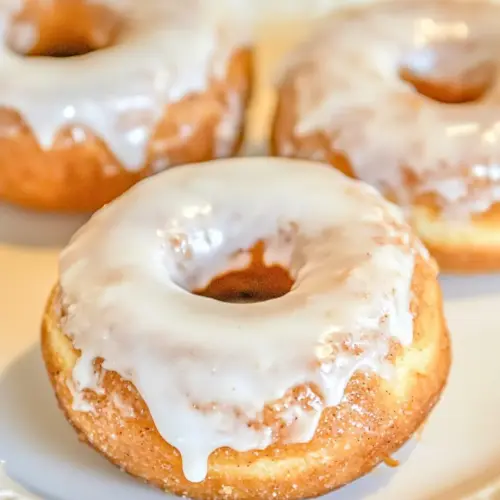
Baked Cinnamon Bun Donuts with Vanilla Cream Cheese Glaze
Baked Cinnamon Bun Donuts with Vanilla Cream Cheese Glaze are tender, lightly spiced donuts topped with a silky, tangy glaze. These easy to make treats deliver the cozy cinnamon bun flavors without long hands on time, perfect for quick breakfasts or a simple weekend bake. Soft crumb and glossy glaze make them irresistible, a great reason to bake a small batch today.
Equipment
- Donut Pan
- Mixing Bowl
- Whisk
- Pastry bag
Ingredients
- 1 cup all-purpose flour Provide structure and bulk to the dough; all-purpose flour develops gluten that gives the donuts their tender yet slightly chewy crumb when mixed and baked.
- 1/4 cup granulated sugar Add sweetness and aid in browning; granulated sugar helps tenderize the dough and balances the cinnamon flavor for a classic donut profile.
- 3 tablespoons light brown sugar, packed Contribute deep, caramel-like sweetness and moisture; packed light brown sugar enhances the cinnamon bun character and keeps the crumb soft.
- 1 teaspoon baking powder Leaven the batter gently; baking powder creates lift and lightness so the donuts rise and achieve a delicate texture when baked.
- 1 teaspoon cinnamon, add more if you like cinnamon or want a stronger ‘cinnamon bun’ taste Impart warm, aromatic spice; cinnamon provides the signature cinnamon-bun flavor and can be increased for a stronger, spiced aroma.
- 1/2 teaspoons salt, optional and to taste Enhance flavor balance and control fermentation; salt sharpens sweetness and rounds out flavors, used optionally to taste for precision.
- 6 tablespoons buttermilk Add moisture and slight tang; buttermilk tenderizes the crumb and reacts with leavening for a softer, more tender baked donut.
- 1 large egg Bind ingredients and add richness; a large egg contributes structure, moisture, and helps emulsify the batter for even texture.
- 1/2 teaspoon vanilla extract Provide aromatic sweetness; vanilla extract enhances flavor depth and complements the cinnamon and sugars in both dough and glaze.
- 1 tablespoon unsalted butter, melted Introduce fat and richness; melted unsalted butter adds tenderness, flavor, and a smooth mouthfeel to the donut batter.
- 1/2 cup + confectioners’ sugar Sweeten and thicken the glaze; confectioners’ sugar dissolves easily to create a smooth vanilla cream cheese glaze consistency.
- 1 to 2 tablespoons cream cheese, softened Contribute tang and creaminess to glaze; softened cream cheese adds richness, body, and a slightly tangy counterpoint to the sweetness.
- 1/2 teaspoon vanilla extract Enhance flavor in the glaze; vanilla extract imparts aromatic warmth and ties together the cream cheese and sugar elements.
- 1/4 teaspoon + cinnamon Add a hint of spice to the glaze; a small amount of cinnamon complements the donut’s filling and reinforces the cinnamon-bun theme.
- splash Milk, Half & Half, Cream, Heavy Cream, vegan milk Adjust glaze consistency and creaminess; a splash of milk, half & half, cream, or vegan milk thins the glaze to desired pourable texture.
Instructions
- Donuts – Pre-heat oven to 325 degrees and lightly grease or spray a Nonstick 6-Cavity Donut Pan with cooking spray. Or, use a muffin pan.: The oven preheating fills the kitchen with a faint warm smell, and you will notice the air takes on a tiny hint of anticipation. Greasing the pan ensures the donuts release cleanly, which matters because a stuck donut can tear and lose its shape. If you are using a muffin pan instead, expect slightly different edges but the same tender interior. A common mistake is not greasing the pan thoroughly, which can cause sticking. To avoid this, use an even coat of spray or rub a thin film of unsalted butter into each cavity and dust with a touch of flour, tapping out the excess. Listen for a subtle change in the oven sound as it stabilizes, and check the temperature with an oven thermometer if you suspect it runs hot or cool.
- In a large bowl, mix together flour, sugar, baking powder, cinnamon, and optional salt.: As you whisk these dry elements together, you will smell the cinnamon bloom against the all-purpose flour , and the mixture should look homogeneous with no streaks of baking powder or sugar. This step matters because even distribution of leavening ensures uniform rise, and even cinnamon throughout prevents pockets that are too spicy. A troubleshooting note, if your mixture looks clumpy, sift the all-purpose flour and baking powder or whisk longer to break up pockets. Avoid overworking or compacting the dry mix into the bowl, which can create dense spots when you add the wet ingredients.
- Add buttermilk, egg, vanilla and melted butter. Whisk to combine.: When you add the buttermilk , you will notice a light tang join the dry aromas, and the batter will start to come together into a thick, glossy mass as you beat the egg and melted butter in. The whisk should leave ribbons that briefly sit on the surface before blending back in. This combination keeps the crumb tender and provides delicate structure. A common error is overmixing, which can develop gluten and yield a chewy donut; stop whisking as soon as the streaks disappear. If your batter seems too thick, a teaspoon of milk can help, but proceed cautiously so the batter does not become runny.
- Use a pastry bag fitted with a large round tip (or a Ziploc bag with a corner cut off) to pipe the batter into a 6-donut pan. Or just be extra neat and do this with a spoon (my preference).: Piping produces neat, even donuts and helps control portion size so they cook uniformly. As you pipe, watch for the batter to mound slightly but not overflow; it should reach about three quarters of the cavity. With a spoon, aim for the same amount and smooth the tops gently. Visual cues to watch for include even, flat surfaces and consistent heights across the pan. A frequent slip is overfilling, which leads to domed or merged donuts; resist the urge to add more. If you have uneven donuts, rotate the pan halfway through baking for a more even bake.
- Bake 8 to 11 minutes, or until doughnuts spring back when touched and are set. Donuts will not be golden brown, but should be springy. Allow to cool slightly before removing from pan, about 5 minutes.: During baking, the kitchen will fill with the warm scent of cinnamon and sugar. The key visual is that these donuts stay pale rather than deep brown, so rely on the spring back test; a gentle press should bounce back, indicating set interiors. Letting them rest for about 5 minutes helps the structure stabilize so they lift cleanly from the pan. A common pitfall is removing them immediately, which can cause them to collapse, so give them that short cooling period. If a donut feels soggy in the center, it likely needs another minute or two; underbaking can leave a gummy crumb, while overbaking will dry them out.
- Vanilla Cream Cheese Glaze – While donuts are baking or cooling, make the glaze by combining powdered sugar, cream cheese, vanilla extract, cinnamon, with a small splash milk. Whisk to combine, adding the milk as necessary, until desired consistency is achieved.: The glaze comes together into a glossy, velvety sauce that should coat the back of a spoon. Softened cream cheese blends into the powdered confectioners’ sugar and the aroma of vanilla extract lifts the scent profile, making the glaze smell creamy and aromatic. Start with a minimal splash of milk and add more if you need a thinner glaze; you want it to cling but still drip slightly. One mistake is adding too much liquid at once and creating a runny glaze, so add the milk gradually. If the glaze seems too thick, a touch more milk smooths it; if too thin, add a spoonful more powdered confectioners’ sugar .
- Dip the donuts into the glaze. Donuts are best fresh, but will keep airtight at room temp for up to 3 days.: As you dip, the glaze will coat the donut and settle into tiny creases, catching the light with a glossy sheen. A gentle tap removes excess glaze and leaves a neat finish. Eating a glazed donut warm offers the contrast of a soft, slightly warm interior and a cool, creamy glaze that melts on the tongue. For storage, place them in an airtight container with layers separated by parchment to preserve texture. A common error is stacking while the glaze is not set, which can stick; allow the glaze to firm for a few minutes before stacking. If you plan to store beyond three days, freeze them individually wrapped to keep them fresh and thaw at room temperature when ready to enjoy.
Notes
- Boost the cinnamon: Increase the cinnamon in the batter and glaze for a more pronounced cinnamon bun character, but add gradually and taste as you go to avoid overwhelming other flavors.
- Swap the pan: Use a muffin pan to make regular mini cakes instead of donuts, which gives more surface for glaze and an easier unmolding process if you do not own a donut pan.
- Vary the milk: Try half and half or a richer cream in the glaze for a silkier mouthfeel, or use a plant based milk for a dairy free option while keeping the glaze smooth.
- Adjust sweetness: If you prefer less sweet treats, reduce the granulated sugar in the batter slightly and balance with the tang from the cream cheese in the glaze.
- Presentation ideas: After glazing, sprinkle a little extra cinnamon or a pinch of light brown sugar to add texture and visual appeal, which makes them look bakery worthy.