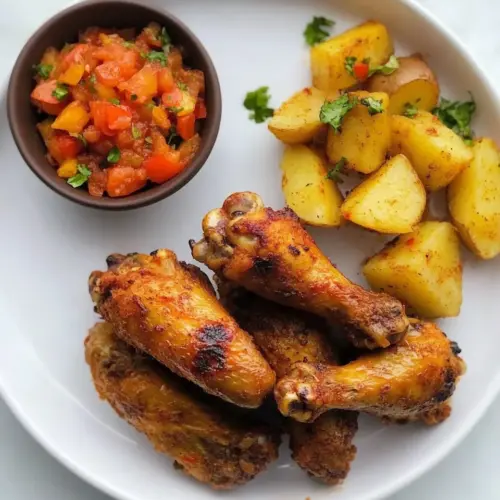
Baked Chicken Wings
Baked Chicken Wings deliver crispy skin, sticky sweet glaze, and a touch of heat for an easy weeknight dinner or party favorite. This simple combination of steak sauce, honey, and cayenne creates bold, balanced flavor with minimal effort. Perfect for casual gatherings or game day, these wings are quick to assemble and irresistibly tasty, a great reason to make them tonight.
Equipment
- Oven
- Baking Sheet
- Parchment Paper
Ingredients
- 1 1/2 lb (750 g) chicken wings, drummettes and wingettes Provide savory, meaty base and texture to the dish; use drummettes and wingettes for a mix of dark and white meat that crisps well when baked. Pat wings dry before seasoning to promote even browning and reduce steaming. Arrange in a single layer on a baking sheet to ensure consistent cooking and crispy skin.
- 2 tablespoons A1 Steak Sauce, Original Add tangy, savory-sweet complexity and umami depth to the coating; A1 Steak Sauce helps build a rich glaze that complements the chicken. Mix thoroughly with other liquids to create an even coating and brush on during the final minutes of baking for a sticky finish.
- 2 tablespoons honey Contribute sweetness and help form a glossy, caramelized glaze when heated; honey balances the tang of steak sauce and the heat from cayenne. Warm slightly before mixing if needed to combine smoothly, and apply in thin layers to avoid burning during baking.
- 1/2 teaspoons salt Season the wings to enhance natural flavors and control overall saltiness; use measured salt to avoid over-seasoning given the concentrated flavors from sauce and honey. Dissolve into wet ingredients or sprinkle evenly to ensure balanced taste across all pieces.
- 3 dashes cayenne pepper Provide focused heat and a touch of smoky spice to lift the glaze; use cayenne sparingly to achieve desired heat without overpowering other flavors. Dash evenly and taste-adjust for spice sensitivity, remembering that heat intensifies slightly when concentrated in a sticky glaze.
Instructions
- Preheat the oven to 400°F (207°C). In the meantime, add the A 1 sauce, honey, salt, and cayenne pepper to the chicken wings. Stir to combine well.: As the oven comes up to temperature you will notice the kitchen warming and the metallic hum of the preheat cycle, signals that the environment is ready for crisping. Preheating ensures the skin begins rendering fat immediately, producing a crisper surface and better browning. If you skip full preheating, the wings can cook unevenly and remain rubbery, so always wait until the oven indicates it is at the proper heat. A common mistake at this stage is placing cold wings into a lukewarm oven, which delays browning and affects texture.
- Transfer the chicken to a baking sheet lined with parchment paper, arranging them in a single layer. Spoon the remaining marinade sauce over each chicken wing.: The aroma will become a mix of sweet and tangy notes as the sauce meets the raw chicken . Combining the sauce with the wings early helps the flavors adhere, and the honey begins to coat the skin, which promotes caramelization. Gently toss to coat evenly so every piece gets seasoned. Over-mixing aggressively can tear the skin, so handle the wings with care. One mistake is undercoating, which leads to uneven flavor pockets.
- Bake the chicken wings in the oven for 30 minutes, or until the surface is crispy and browned. Remove from the oven and serve immediately with your favorite dipping sauce.: When you stir the wings the glaze should look glossy and slightly thick, clinging to the surfaces rather than pooling heavily. This visual cue tells you the coating will form a sticky, caramelized layer in the oven. Stirring also helps distribute the heat carrying spices. If the mixture seems watery, give it a minute to settle, and pat the wings dry before tossing next time to improve adhesion. Avoid leaving large puddles of sauce on the tray, which can burn.
- Transfer the chicken to a baking sheet lined with parchment paper, arranging them in a single layer: As you place each piece onto the tray you will hear a soft scrape, and seeing space between pieces is crucial so hot air can circulate. A single layer prevents steaming and ensures surfaces get direct heat for crisping. Parchment makes cleanup simpler and prevents sticking. Crowding the pan is a common error, and it leads to soggy spots where wings steam instead of roast.
- Spoon the remaining marinade sauce over each chicken wing: The glaze should be used to baste so each wing has a glossy finish that will caramelize under the heat. Apply a modest amount to avoid excess drips, and aim for an even shine across pieces. The immediate visual should be a uniform sheen that promises sticky, flavorful skin. One pitfall is over-saucing which creates a sugary mess on the tray that can char quickly.
- Bake the chicken wings in the oven for 30 minutes, or until the surface is crispy and browned: During baking you will notice the aroma deepen into roasted, slightly sweet notes, and the surface will change from pale to golden to a deeper brown. The sound is subtle, a quiet sizzle as the skin renders. This step is crucial for texture, because the sustained heat transforms the glaze into a slightly sticky crust while sealing juices inside. A common troubleshooting tip is to rotate the tray halfway through if your oven has hot spots, ensuring even browning. If the wings seem pale at 30 minutes, increase the time slightly but watch closely to prevent burning.
- Remove from the oven and serve immediately with your favorite dipping sauce: Once out of the oven the wings will offer a warm, fragrant steam and a glossy exterior that gives a slight tack when touched. Serving right away preserves the crisp contrast between skin and meat, and the flavor pops brightest when warm. If you wait too long, the skin can soften as steam accumulates, so plan plating so guests can dig in quickly. A frequent mistake is letting the wings sit on the tray too long, which leads to sogginess from leftover juices.
Notes
- Extra Heat: Increase the cayenne to taste for a bolder, spicier finish that enhances the savory notes of the steak sauce.
- Less Sweet: Reduce the honey slightly to let the tang of the steak sauce shine through if you prefer a less sugary glaze.
- Sticky Finish: Brush an extra light coat of honey in the last five minutes of baking to build a thicker, tackier glaze that clings to the skin.
- Crispier Skin: Pat the wings thoroughly dry before saucing and consider a brief increase in temperature for the final few minutes to intensify browning.
- Milder Version: Cut the cayenne in half for a gentler warmth, making these wings more approachable for all ages.