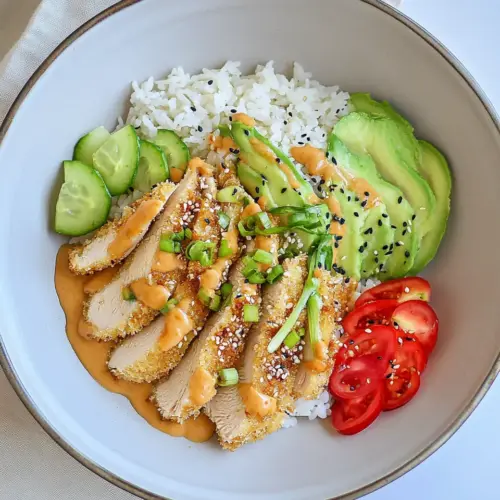
Baked Chicken Katsu
Baked Chicken Katsu is a crispy, oven baked twist on the classic katsu, delivering crunchy texture and juicy chicken with a spicy honey sriracha mayo. This easy weeknight dinner is quick to assemble and forgiving, perfect for busy nights when you want takeout style comfort at home. Try it for a simple, crowd pleasing meal that reheats well and satisfies every time.
Equipment
- Oven
- Baking Dish
- Shallow Bowl
- Large plate
- Thermometer
Ingredients
- 2 large chicken breasts cut into four filets Pounded or sliced into four thin filets to ensure quick, even baking and tender results; provides the primary protein and substantial texture for the katsu.
- 1 large egg Beaten and used as a wet binder to help the flour and panko adhere to the chicken; adds a touch of moisture and contributes to browning in the oven.
- 3 tbsp gluten-free all-purpose flour Lightly dusted over the chicken before the egg to create a dry surface for better egg adhesion; helps form the initial coating and prevents sogginess.
- 1 cup gluten-free Panko or breadcrumbs Crushed or used whole as the main crispy coating that replicates traditional katsu crunch; offers a textured exterior that becomes golden when baked.
- 1/2 tsp sea salt Sprinkled into the breadcrumb mixture or on the meat for subtle seasoning; enhances overall flavor depth and balances the savory components.
- 1/4 tsp black pepper Ground and added to the coating mix for a mild, warming bite; pairs with salt to season the chicken and highlight other flavors.
- 1/4 cup mayonnaise Whisked into a quick dipping sauce or thinned as a glaze component to add richness and creaminess; contributes a tangy, fatty backbone to the sauce.
- 1 tbsp soy sauce or liquid aminos Stirred into the sauce to contribute umami and saltiness; helps deepen the savory profile and balance sweeter elements in the dressing.
- 1 tbsp honey or pure maple syrup Blended into the sauce to provide sweetness and a glossy finish; counters the heat and salt while adding a mellow caramel note.
- 1 tbsp sriracha or more to taste Mixed into the dipping sauce for spicy heat and bright chili flavor; adjustable to taste and helps lift the overall sauce with a piquant kick.
Instructions
- Preheat the oven to 400 degrees F and lightly coat a large casserole dish or baking dish with cooking oil. As an alternative, you can line a baking sheet with parchment paper.: The air in the oven will feel warm and steady as it reaches 400 degrees F , a temperature that encourages rapid browning. You want a fully heated environment so the coating starts crisping immediately, creating a golden surface. One common mistake is placing the chicken into an oven that is still warming, which can lead to soggy crusts. If you notice any dampness on the crumbs, allow an extra minute of heat before inserting the dish so the exterior begins firming up right away.
- Slice the chicken breasts through the center to create four thinner cutlets from two boneless chicken breasts in order to get even thickness throughout the chicken filets. This is an important step, as it helps the chicken cook through evenly without becoming over-cooked and omits the need to tenderize the chicken with a meat tenderizer.: When you slice the chicken , you should feel a smooth, dense texture that flattens slightly under your knife. The visual cue is uniform thickness across each filet, which ensures even heat penetration so the center reaches proper doneness without drying. A frequent error is leaving one side thicker, causing uneven cooking. If your knife slips or the breast is uneven, gently press with your palm to even it before slicing again.
- Crack the egg into a shallow bowl and whisk it until it is well-beaten. Transfer the breadcrumbs, flour, salt and pepper to a large plate and stir it around with a fork until everything is well-combined.: The beaten egg should look glossy and slightly frothy, signaling air folded into the mixture so it adheres smoothly. The dry mixture should be evenly distributed, with flecks of sea salt and black pepper visible in the crumbs. This balance prevents pockets of unseasoned coating. A common slip is under-mixing the crumbs, which leaves uneven seasoning. If you see clumps of flour, fork them apart until the texture is uniform.
- Dredge a chicken cutlet in the beaten egg mixture, then coat it liberally in the breadcrumb mixture, making sure to get both sides. Repeat for the rest of the chicken.: As you dip, the egg should form a thin wet film that anchors the crumbs. Press the crumbs gently so they adhere, and lift the piece to let any excess fall away. You should hear a faint brush of crumbs landing, and the cutlet will feel slightly textured to the touch. A typical mistake is skimping on the egg which causes patchy breading. If the crumbs seem loose, press again and let the coated pieces rest briefly to set the bond.
- Transfer the breaded chicken cutlets to the prepared baking dish and bake for 12 to 15 minutes, or until the chicken reaches an internal temperature of 165 degrees F and the outside is nice and crispy.: During baking you will see the coating transition from pale to a warm golden brown and you may hear a faint crackle as moisture leaves the crust. The aroma becomes toasty and enticing. Use a thermometer to ensure the center hits 165 degrees F , which guarantees safety while preserving juiciness. Avoid opening the oven repeatedly, as temperature loss can slow browning. An overbaked cutlet will feel firm and dry when pressed, so err on the side of checking temperature early.
- While the chicken is baking, stir together the ingredients for the sauce in a small bowl until creamy and well-combined.: As you whisk the mayonnaise , soy sauce , honey , and sriracha , the mixture should emulsify into a glossy, smooth sauce that smells both sweet and spicy. Taste and adjust the heat or sweetness to balance the kick, and refrigerate briefly if you want the flavors to meld. A common misstep is adding too much hot sauce at once; add a little, taste, then add more so the balance stays intact.
- Serve the baked chicken katsu with your choice of sides along with the spicy honey sriracha mayo.: The final plate should present chicken with a golden crust, the sauce spooned or drizzled to one side, and sides that complement without overwhelming. When you cut the cutlet, the inside will be moist and tender and the coating will still be crisp. Avoid letting the cutlets sit too long before serving, as steam can soften the crust. If reheating leftover pieces, use the oven to revive crispness rather than the microwave.
Notes
- Use different crumbs Try corn flake crumbs for an extra crunchy texture that is gluten free friendly, they toast up and deliver a satisfyingly brittle crust.
- Adjust the heat Tweak the sriracha in the sauce to suit your guests, starting with less and adding more as needed so you maintain balance.
- Make ahead Bread the cutlets and store them in a single layer in the fridge for up to a day, then bake straight from chilled for faster service.
- Oil choice matters If you brush or spray oil before baking, use a neutral oil with a high smoke point to encourage even browning without imparting flavor.
- Serve family style Present the cutlets whole with the sauce on the side so people can slice to their preferred size and dip as they like.