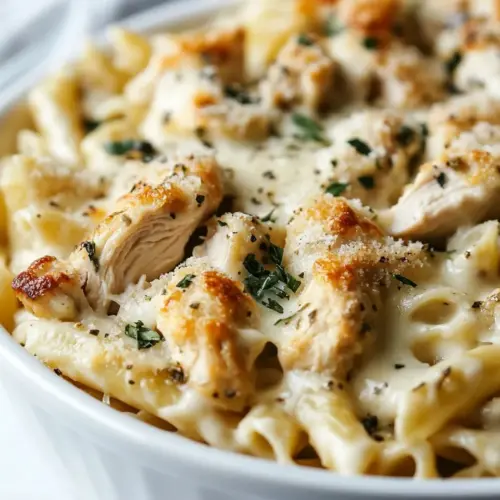
Baked Chicken Alfredo Pasta
Baked Chicken Alfredo Pasta is a creamy, cheesy, and easy weeknight dinner that brings comfort to the table. Rich cream and melted parmesan cling to every tube of penne, while shredded chicken adds savory heft. It bakes to a bubbling golden top that makes it irresistible, perfect for family meals or casual gatherings where you want a satisfying, crowd pleasing dish.
Equipment
- Saucepan
- 9×13 baking dish
- Large Pot
- Colander
Ingredients
- 2 cups cooked chicken, chopped or shredded Provide cooked chicken chopped or shredded to add hearty protein and substantial texture to the dish; distribute evenly to ensure every bite contains savory meat. Enhance flavor by using seasoned or rotisserie chicken for depth, and fold gently into the sauce to preserve moisture and prevent dryness.
- 16 ounces uncooked penne pasta Boil uncooked penne pasta until al dente to form the carb base that soaks up the creamy Alfredo sauce. Drain and toss with a little butter or oil to prevent sticking, then combine with sauce and chicken before baking for cohesive layers.
- 1/2 cup unsalted butter Melt unsalted butter to create a rich, silky fat base for the Alfredo sauce and to help emulsify the cream and cheese. Use unsalted to better control overall seasoning and brown gently if desired for a nuttier flavor without overpowering the sauce.
- 2 cups heavy whipping cream Simmer heavy whipping cream to provide the lush, velvety body of the Alfredo sauce, contributing richness and smooth mouthfeel. Heat gently to prevent scalding and allow it to reduce slightly for thicker consistency that clings to pasta.
- 4 ounces cream cheese Soften cream cheese to introduce tangy creaminess and help thicken the sauce for a stable, clingy coating on the pasta and chicken. Whisk into warm cream until fully incorporated to avoid lumps and create a uniform texture.
- 1/2 teaspoon minced garlic Mince garlic finely to impart fresh, aromatic bite that brightens the overall dish without overpowering the creamy flavors. Sauté briefly in butter or add to warm cream to release oils and mellow sharpness while infusing the sauce.
- 1 teaspoon garlic powder Season with garlic powder to layer a consistent garlic flavor throughout the sauce and complement the fresh minced garlic. Sprinkle in small amounts and taste as you go to avoid excessive pungency while enhancing savory notes.
- 1 teaspoon Italian seasoning Sprinkle Italian seasoning to contribute a balanced herbaceous profile of oregano, basil, and thyme that complements the cheese and chicken. Add during sauce preparation so the herbs release their aromas and meld into the creamy base.
- 1/4 teaspoons salt Add salt to adjust and balance flavors, enhancing the natural savory qualities of the cheese, chicken, and cream. Season incrementally and taste, remembering that cheeses already contribute saltiness, to avoid oversalting.
- 1/4 teaspoon pepper Season with pepper to introduce mild heat and a subtle earthy bite that cuts through the richness of the sauce. Grind freshly if possible and add to taste, distributing evenly for consistent background spice.
- 1 cup grated parmesan cheese Grate parmesan cheese to bring nutty, umami-rich sharpness that thickens and flavors the Alfredo sauce when melted. Stir continuously as it melts into the cream to prevent clumping and ensure a smooth, cohesive sauce.
- 2 cups mozzarella Layer shredded mozzarella to create a gooey, melty topping that adds creamy stretch and a mild, milky flavor to the baked pasta. Scatter evenly and bake until bubbly and golden for an appealing texture contrast.
- 1/4 cup parmesan Sprinkle extra parmesan to finish with concentrated umami and a slightly crisp, savory crust on top of the baked dish. Use the final dusting just before baking or broiling briefly to achieve a flavorful, golden surface.
Instructions
- Preheat the oven to 350 degrees Fahrenheit. Cook the 16 ounces uncooked penne pasta according to package directions. Drain, rinse, and set it aside.: The warm, steady oven ensures even baking and top browning. You'll notice a gentle, dry heat when you open the oven, and it helps the cheese melt into a golden layer without overcooking the interior. This step matters because starting in a correctly heated oven prevents underbaked centers. A common mistake is skipping preheat, which can extend bake time and dry out the dish.
- In a medium saucepan, over medium-high heat, add 1/2 cup unsalted butter, 2 cups heavy whipping cream, and 4 ounces cream cheese. Cook until melted. Add the 1/2 teaspoon minced garlic, 1 teaspoon garlic powder, 1 teaspoon Italian seasoning, 1/4 teaspoon salt, and 1/4 teaspoon pepper. Continue to whisk until smooth.: While boiling, the kitchen fills with a faint toasty wheat aroma, and you should stir once or twice to prevent sticking. Cook until just shy of tender, because the pasta will finish in the oven and absorb sauce. The why is simple, it prevents mushiness and keeps bite. Avoid overcooking since it will turn soft after baking, which is not the desired texture.
- Add the 1 cup grated parmesan cheese. Bring the sauce to a simmer and continue to cook for about 3-5 minutes or until it starts to thicken.: The sound of draining is sharp, and rinsing cools the pasta slightly so it will not continue to cook in residual heat. This also removes excess surface starch, making the sauce cling more evenly rather than turning gluey. A common oversight is not draining well, leaving water that dilutes the sauce.
- Add the cooked pasta back to the pot and pour the Alfredo Sauce over it. Then add in the 2 cups cooked chicken, and stir everything together.: As the butter melts you will smell a rich dairy note, and the cream will shimmer as it heats. Stir so the cream cheese softens and incorporates, which creates a luxuriously smooth base. Gentle heat keeps the dairy emulsified; too hot and it can separate or scorch. The frequent error here is overheating, which can ruin the texture.
- Add HALF of the pasta mixture to a 9×13 baking dish and top with HALF of the 2 cups mozzarella. Then, add the rest of the pasta mixture to the dish and top with the remaining mozzarella and 1/4 cup parmesan.: Watch for a uniform glossy liquid with no discernible lumps of cream cheese, and maintain a steady low simmer. The sauce should steam lightly rather than boil, which preserves its silky texture. This matters because proper melting yields a cohesive sauce that clings to pasta. If lumps form, remove from heat and whisk vigorously to smooth them out.
- Bake for 20-30 minutes until the cheese is golden and bubbly. Remove the dish from the oven and let it rest for 5 minutes before serving.: Immediately the aroma will shift to savory and herbaceous, rounding the dairy with warmth. These seasonings build layers, and stirring them in helps them bloom in the hot fat. The why is to ensure every bite carries balanced flavor; not seasoning here results in a flat sauce. Avoid adding too much salt at once because parmesan adds additional saltiness.
- Continue to whisk until smooth: The sauce will quiet down and appear glossy, with small steam wisps rising. Whisking introduces air and prevents sticking, resulting in a silkier mouthfeel. That technique matters because it prevents lumps and keeps the dairy integrated. A common slip is to stop stirring, which allows the bottom to scorch.
- Add the 1 cup grated parmesan cheese: As the parmesan blends in, the sauce deepens in savory aromatic notes and thickens incrementally. Stir gently to melt the cheese fully and develop a velvety texture. This step is essential for umami and structure; under mixing leads to grainy spots. If the cheese seems to clump, lower the heat and stir until it dissolves.
- Bring the sauce to a simmer and continue to cook for about 3 to 5 minutes or until it starts to thicken: A light simmer concentrates flavors and reduces the sauce slightly, giving it body that will cling to the pasta . You will see small bubbles at the surface and the sauce will coat the back of a spoon. This concentration matters for final texture; a sauce that is too loose will not set properly when baked. Avoid boiling strongly, which can separate the fats.
- Add the cooked pasta back to the pot and pour the Alfredo Sauce over it: The hot sauce will steam as it meets the warm pasta , and the mixture will look glossy and cohesive. Fold gently to keep the tubes intact so the penne continues to hold sauce inside. This blending is critical so each piece is coated. Over vigorous stirring can break the pasta, so be gentle.
- Then add in the 2 cups cooked chicken, and stir everything together: The shredded chicken brings savory meatiness and soaks up a little sauce, creating textural contrast. You should see flecks of white chicken distributed through the creamy pasta. Ensuring even distribution matters for consistent bites. A typical mistake is adding cold chicken straight from the fridge, which cools the sauce; warm slightly first if needed.
- Add HALF of the pasta mixture to a 9×13 baking dish and top with HALF of the 2 cups mozzarella: Layering creates pockets of melted cheese and a finished top that browns evenly. When you sprinkle the mozzarella , you will hear a soft rustle and see the white strands settle. This layering influences how the casserole bakes, giving a melty interior. Crowding the dish too tightly can impede even browning, so spread it out.
- Then, add the rest of the pasta mixture to the dish and top with the remaining mozzarella and 1/4 cup parmesan: The final sprinkle of parmesan gives a savory, slightly crisp finish as it browns. You want an even covering so the top melts uniformly and forms a pleasing golden surface. Even distribution avoids hot spots that brown too fast. Avoid piling cheese in one area which can burn while other parts remain pale.
- Bake for 20 to 30 minutes until the cheese is golden and bubbly: In the oven you will see the sauce bubble gently at the edges and the cheese turn a warm gold with darker flecks. That bubbling signals the casserole is heated through and the cheeses have melted into a cohesive top. This step is vital to set the dish and deepen flavor through gentle caramelization. A common error is overbaking, which dries the interior, so watch for golden bubbling rather than deep browning.
- Remove the dish from the oven and let it rest for 5 minutes before serving: Resting allows the creamy sauce to thicken slightly and makes scooping cleaner, with the aroma settling into the pasta. You'll notice steam softening and the top settling into a sliceable texture. This pause matters for presentation and for the sauce to cling to the pasta instead of running. Serve too soon and the casserole can be loose and messy.
Notes
- Swap pasta shapes: Try rigatoni or fusilli for different sauce capture and mouthfeel, both work well because they trap sauce inside.
- Use rotisserie chicken: Shredded rotisserie chicken is an easy shortcut that adds roasted flavor and saves time on busy nights.
- Double the cheese on top: Add an extra handful of mozzarella for an even gooier, more indulgent crust that stretches beautifully when served.
- Toast the parmesan: Sprinkle additional parmesan and broil briefly for a crisp, golden finish, watching closely to prevent burning.
- Prepare ahead: Assemble and refrigerate the casserole up to one day before baking, then add a few extra minutes to the bake time to heat through fully.