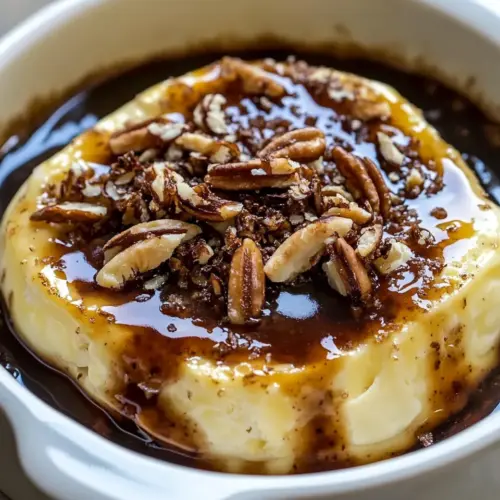
Baked Brie with Praline Sauce
Baked Brie with Praline Sauce is a creamy, crowd pleasing appetizer with a silky molten center and a sticky, nutty topping. The warm maple and brown sugar sauce with toasted pecans creates a delightful contrast to the soft brie, making it an easy party favorite or elegant starter for holiday gatherings. Make it for an easy weeknight treat or when you want a simple but impressive appetizer.
Equipment
- Baking dish or rimmed baking sheet
Ingredients
- 116 oz brie Provide a creamy, meltable center that becomes gooey when baked, offering a rich, mildly tangy base for the sweet praline sauce; pairs beautifully with the crunchy pecans and crackers for contrast. Serve warm so the cheese can be scooped easily, creating an indulgent appetizer experience for sharing.
- 8 tablespoon unsalted butter Melt smoothly to create a nutty, silky fat that helps caramelize sugars and bind the praline sauce; adds richness and a glossy finish. Use unsalted to better control overall seasoning and prevent overpowering the delicate brie.
- 2 tablespoon brown sugar Caramelize when heated to deliver deep, molasses-like sweetness and help form a sticky praline texture; balances the savory notes from the brie and black pepper. Sprinkle in gradually while cooking the butter to avoid burning and to build layered flavor.
- 1/3 cup maple syrup Sweeten and thin the sauce while adding a distinct maple flavor that complements pecans and enhances the overall dessert-like quality of the dish. Warm gently with butter and sugar to meld flavors and achieve a pourable consistency for drizzling over the baked brie.
- 1 cup pecans chopped and lightly toasted Provide toasted crunch and a warm, buttery flavor that contrasts the creamy cheese and sticky sauce; chopping increases surface area to distribute texture and flavor evenly. Lightly toasting intensifies nuttiness and prevents sogginess when combined with the syrupy praline.
- 1 teaspoon black pepper coarsely ground Add a bright, slightly spicy finish that cuts through the richness and lifts the flavor profile; coarse grinding gives pleasant bursts of peppery heat. Use sparingly and adjust to taste so it enhances rather than overwhelms the sweet elements.
- Crackers for serving Offer a crisp, dippable vehicle to scoop the warm, saucy brie, providing textural contrast and portion control for serving. Arrange an assortment nearby so guests can choose their preferred crispness and flavor pairing.
Instructions
- Place brie in the freezer for 15 minutes (this makes slicing easier). Remove any packaging and use a large sharp knife to carefully cut away the top rind off of the wheel of cheese.: The coolness firms the outer rind, making cutting and removing the top safer and neater. You will feel the wheel become more solid under your hands, and the knife should glide with a controlled resistance rather than squish. This step helps preserve the wheel shape during transfer into the oven. A common mistake is skipping this chill, which can lead to a misshapen wheel and more cheese spills when handling.
- Preheat oven to 350°F.: When you slice the top, aim for a confident, single pass to avoid ragged edges. The scent becomes more pronounced as the inner paste is exposed, a creamy aroma that hints at the melting to come. Keep the removed rind for aesthetics if you prefer, or discard it. One trap I warn about is pressing too hard, which can crush the wheel; steady pressure matters.
- Place brie in a baking dish or a rimmed baking sheet. Bake in the oven for 15 to 20 minutes, or until the top is slightly bubbly. It's okay if some of the cheese melts over the sides. Remove from oven and let rest for 15 minutes.: The oven should be fully preheated so the brie heats evenly from the start, producing a velvety interior without overbrowning the top. You might hear the oven click as it stabilizes, and a whiff of warmth will fill the kitchen. Using an oven that is not preheated can yield uneven melt and extended bake time.
- While the cheese is cooling slightly, melt the butter in a medium saucepan over medium heat. Once melted, add the brown sugar, maple syrup, pecans, and black pepper. Cook, stirring frequently, for 5 minutes. Remove from heat and let cool for another 5 to 10 minutes.: Choose a dish that cradles the wheel and catches any gentle overflow. The dish will warm and radiate heat, helping the center reach that luscious, scoopable stage. Position the wheel centrally for even baking. A frequent error is using a shallow plate that cannot contain melted cheese, leading to a sticky oven cleanup.
- If leaving in the baking dish, pour the sauce all over the baked brie. If using a serving platter, use a large spatula (or two smaller ones) and carefully transfer the brie to the dish and then pour the sauce. Serve at once with crackers and sliced fruit (if desired).: You want the top to show tiny bubbling and a glossy sheen, a sign the interior is molten. Listen for faint sounds of the cheese settling and watch for a subtle rise around the edges. Resist the urge to overbake, which causes the wheel to leak excessively and become difficult to serve. If the edges begin to run heavily, remove it promptly to rest.
- Remove from oven and let rest for 15 minutes: Resting allows the center to stabilize so you can scoop without it running off your cracker. The aroma during this pause will be warm and nutty, and the surface should cool just enough to be handleable. Rushing this step results in a soupy texture that is hard to serve cleanly.
- While the cheese is cooling slightly, melt the butter in a medium saucepan over medium heat: As the butter melts, it will give off a soft, creamy scent and begin to shimmer, signaling even heat. Use medium heat to prevent browning, preserving a smooth base for the sauce. If the butter froths aggressively, lower the heat; overheating will change the flavor.
- Once melted, add the brown sugar, maple syrup, pecans, and black pepper: Stir these in so the brown sugar dissolves and the maple syrup blends into a glossy mixture. The pecans will toast slightly in the warm sauce, releasing toasty aromas, while the black pepper lends a bright counterpoint. A common oversight is adding nuts too late, which keeps them from toasting and softens the texture.
- Cook, stirring frequently, for 5 minutes: The sauce will thicken slightly and coat the back of a spoon, taking on a syrupy sheen. You will hear gentle bubbling and smell a caramel note as sugars meld. Stirring prevents hotspots and ensures even coating on the pecans . Leaving it unattended can lead to scorching, which imparts a bitter flavor.
- Remove from heat and let cool for another 5 to 10 minutes: Cooling lets the sauce thicken just enough so it sits on top of the brie without sliding off immediately, and the temperature will be pleasant to the touch. The aroma mellows into a warm, nutty perfume. Pouring while too hot may cause the cheese to become overly runny, so patience pays off.
- If leaving in the baking dish, pour the sauce all over the baked brie: Pour slowly so the syrupy mixture pools over the top and into any natural crevices, letting the pecans sit visibly on the surface. The sauce will glisten and the contrast between glossy topping and matte rind is beautiful. Avoid pouring too aggressively, which can wash away any attractive toasted edges.
- If using a serving platter, use a large spatula (or two smaller ones) and carefully transfer the brie to the dish and then pour the sauce: Transfer with steady hands so the wheel keeps its shape; the cheese should look intact with a warm center inviting the sauce. The platter presentation makes slicing and sharing easier. A slip during transfer can ruin the look, so support the wheel from below for safety.
- Serve at once with crackers and sliced fruit: The final presentation should be warm and inviting, with crisp crackers ready to scoop a portion of the molten brie and praline topping. Listen for appreciative murmurs as guests pull their first bite. If you wait too long, the cheese firms and becomes harder to scoop, so serve promptly for best texture.
Notes
- Swap the nuts Try chopped walnuts or almonds for a different texture and flavor profile, keeping the same toasting step so they stay crisp.
- Adjust sweetness Reduce the brown sugar by a teaspoon or two if you prefer a less sweet topping, tasting as you go during sauce preparation.
- Make ahead the sauce The sauce can be made up to a few days ahead, chilled, and gently reheated before pouring, which streamlines party prep.
- Choose cracker variety Offer an assortment of crackers to accommodate different textures, from thin water crackers to hearty multigrain options that hold up to scooping.
- Control the pepper Add the black pepper gradually, tasting to maintain a balanced bite that lifts the sweetness without overpowering it.