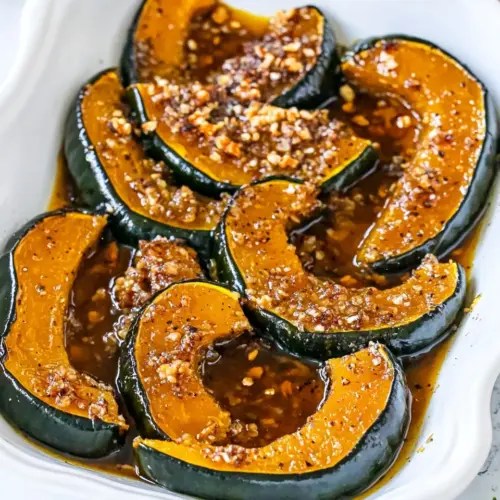
Baked Acorn Squash Slices
Baked Acorn Squash Slices deliver a creamy interior and crunchy pecan topping with caramelized notes from maple syrup and dark brown sugar. This easy, flavorful side is perfect for an easy weeknight dinner or a festive fall gathering, offering cozy textures and warm spice in every bite, making it a must-make this season.
Equipment
- Rimmed Baking Sheet
- Aluminum Foil
- Food Processor
- Pastry Brush
- Tongs
Ingredients
- 3 tablespoons extra virgin olive oil Coat the squash slices evenly to help promote browning and prevent sticking; extra virgin olive oil also adds a fruity, rich flavor that complements roasted squash. Use moderate amounts to avoid sogginess while encouraging caramelization of sugars during baking.
- 2 tablespoons maple syrup Sweeten and glaze the squash surfaces with a warm maple syrup that caramelizes in the oven; it provides a layered sweetness and subtle earthy complexity. Brush or toss with the syrup so it melds with the brown sugar and oil to create a glossy finish.
- 2 acorn squash or similar hard winter squash, such as carnival (about 1 1/2 pounds each) Provide the main body and texture to the dish by supplying tender, mildly sweet flesh when roasted; acorn or similar winter squashes offer firm slices that hold their shape. Choose squash of about the specified weight for consistent cooking times and uniform presentation.
- 1/3 cup dark brown sugar Add deep, molasses-like sweetness and help form a caramelized crust on the cut faces of the squash when baked; dark brown sugar also contributes moisture and chewiness. Sprinkle or press into the cut surfaces so it melts and browns alongside the syrup.
- 1/2 cup whole pecans Introduce crunch and nutty richness that contrasts the soft roasted squash; whole pecans can be chopped or roughly broken to distribute texture. Toasting slightly before or during baking intensifies their flavor and prevents sogginess from the glaze.
- 2 teaspoons kosher salt Season broadly to enhance the natural flavors and balance sweetness; kosher salt provides clean, even seasoning and aids in drawing out some moisture for better caramelization. Use measured teaspoons to avoid over-salting the delicate squash.
- 1 teaspoon ground black pepper Add mild heat and savory depth while highlighting the squash's sweetness; freshly ground black pepper gives aromatic warmth and subtle piquancy. Grind just before using to capture fragrance and distribute evenly over the slices.
- 1/8 teaspoon cayenne pepper Contribute a sharp, spicy kick in small amounts to lift the overall flavor profile; cayenne pepper brightens the sweetness and adds a controlled heat that complements the glaze. Use sparingly to avoid overpowering the other elements.
Instructions
- Place a rack in the upper and lower thirds of the oven and preheat the oven to 400 degrees F. Line two rimmed baking sheets with aluminum foil and lightly coat with cooking spray.: As the oven heats you will notice a dry warmth build that primes the environment for caramelization, which is essential for the dark brown sugar to melt and the edges of the acorn squash to brown. Doing this ensures even heat circulation, and the placement of the racks allows two sheets to roast simultaneously without steaming. A common mistake is rushing this step, putting the pans in too soon, which prevents proper browning and leads to pale, undercaramelized topping. If your oven has hot spots, rotate the pans halfway through the process to keep color even.
- Halve, seed, and slice the squash into 1-inch thick crescent slices, then arrange in a single layer on the prepared baking sheets.: The foil reflects heat and makes cleanup easier while the rimmed sheet prevents any sticky drips from running off. Light oiling the surface also prevents sticking and encourages the bottoms of the slices to brown. If you skip the spray, the sweet juices can glue the topping to the sheet, making it hard to remove slices cleanly. Use foil or parchment to protect the sheet and keep an eye on any bubbling sugar to avoid burning into the pan.
- In a small bowl, stir together the olive oil and maple syrup and then brush the squash slices with half of the olive oil/maple syrup mixture.: When you slice the acorn squash to about 1 inch thickness you create pieces that roast evenly; too thin and they will become mushy, too thick and they may remain undercooked. Laying them in a single layer ensures air can circulate and each slice browns rather than steams. You should hear little puffs of moisture as they begin to roast and see the edges start to dry and caramelize. A typical error is overcrowding the pan, which traps steam and yields limp slices instead of crisp edged ones.
- Add the brown sugar and pecans to a food processor fitted with a steel blade and process until the pecans are finely ground. Add the salt, black pepper, and cayenne pepper and pulse to combine. Sprinkle half of the brown sugar mixture over the top of the brushed squash slices, reserving the other half.: The glossy mixture helps the sugar and pecan crumbs adhere and jump starts the browning process. Brush evenly so every crescent gets a thin coating, which encourages an even golden finish, and reserve the remainder for after the flip. If you pour without stirring you may separate the syrup and oil, resulting in uneven coverage. Use a pastry brush in gentle strokes for control, and wipe extra glaze from the pan to avoid excessive dripping.
- Place the squash in the oven and roast for 5 minutes, until the brown sugar begins to melt. Remove from the oven and, using tongs, a fork, or very quick fingers, flip over each slice. Brush with the remaining olive oil/maple syrup mixture and sprinkle them with the remaining brown sugar mixture. Return the baking sheets to the oven and continue roasting until the squash slices are fork-tender, about 20 additional minutes. Serve warm or at room temperature.: The goal is a coarse crumb that will toast and caramelize, not a paste. The aroma will deepen quickly, and you will see the mixture hold together slightly when pinched. Pulse to maintain texture, then add the kosher salt , black pepper , and cayenne pepper and pulse a few more times to distribute seasoning. A common pitfall is over-processing, which releases oils and makes the mixture clumpy and greasy rather than crumbly, so pause often and check.
- Sprinkle half of the brown sugar mixture over the top of the brushed squash slices, reserving the other half: The first dusting begins to melt into the glaze during the initial roast and forms the base of the crunchy topping. Spread it evenly so every slice gets a taste, and keep the rest nearby for a mid roast refresh. If you mound it in one area the sugar can pool and burn, so aim for thin, consistent coverage. If any spots look sparse after sprinkling, gently tap a bit more into them to ensure even caramelization.
- Place the squash in the oven and roast for 5 minutes, until the brown sugar begins to melt: In this short burst you will see the sugar become glossy and the pecan crumbs start to soften and toast; the aroma will turn nutty and sweet. This partial roast sets the stage for flipping and finishing, allowing the underside to begin cooking without over browing the topping. Watch closely because brown sugar melts quickly and can transition to burned spots if left unchecked. If you notice smoke or dark edges, reduce the temperature slightly to protect the topping.
- Remove from the oven and, using tongs, a fork, or very quick fingers, flip over each slice: When you flip, the softened topping will transfer slightly and the exposed side will now get direct heat, which creates that desirable toasted edge and even doneness. Use tongs to keep your fingers safe from hot sugar, and try to flip each slice cleanly so the topping remains mostly on top. A frequent mistake is flipping too roughly, which can dislodge the topping or tear the flesh. If a slice breaks, reposition it flat to ensure it continues to roast evenly.
- Brush with the remaining olive oil maple syrup mixture and sprinkle them with the remaining brown sugar mixture: The second glaze refreshes the surface, encouraging a deeper caramel layer as the squash finishes roasting, and the final sprinkle creates the crunchy, toasty crust you want. Brushing now locks in moisture for the interior while the sugar crisps on the surface. Be cautious not to overapply the glaze, which can create soggy spots; a thin, even coating is best. If you see large pools of liquid form, blot them lightly with a paper towel to prevent burning.
- Return the baking sheets to the oven and continue roasting until the squash slices are fork tender, about 20 additional minutes: During this final period you should watch for a deep golden color, bubbling sugar around the edges, and a soft yield when pierced with a fork, which signals readiness. The aroma will be lush and warm, the pecans toasted, and the squash tender yet holding shape. Avoid undercooking, which leaves the center firmer than desired, and overcooking, which can make the slices collapse. If one sheet browns faster, swap positions and remove the darker sheet early to maintain balance.
- Serve warm or at room temperature: These slices are best enjoyed warm so the topping is still slightly tender and the flesh is creamy. As they cool the sugar crust firms, which is still delightful but different. A common serving misstep is leaving them in the pan to cool, which can steam the bottoms and soften the crisp edges, so transfer to a platter for presentation and texture retention.
Notes
- Adjust sweetness: If you prefer less sweet, reduce the dark brown sugar by a quarter and rely more on the maple syrup for gentle sweetness.
- Nut alternatives: If you do not have pecans, try chopped walnuts in the same measure for similar texture and a slightly earthier flavor.
- Oil choice: Use extra virgin olive oil for its fruity notes, or a neutral oil if you want a cleaner caramel flavor with less savory undertone.
- Spice level: Increase the cayenne pepper slightly for more warmth, but add in small increments to avoid overpowering the sweetness.
- Make ahead prep: Prepare the brown sugar pecan mix up to 2 days ahead and store in an airtight container to save time the day you roast the squash.