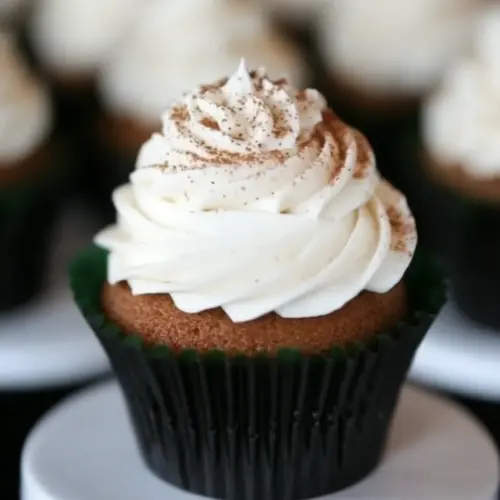
Baileys Coffee Cupcakes
Baileys Coffee Cupcakes blend creamy Baileys Irish Cream and bold espresso into a tender, easy cupcake with a light whipped frosting. These cupcakes are rich but balanced, offering a soft crumb and airy topping that make them perfect for gatherings or a cozy treat. Try them for an elegant yet approachable dessert you'll want to make again.
Equipment
- Stand mixer or hand mixer
- Mixing Bowls
- Muffin Tin
- Muffin liners
- Wire Rack
- Measuring Cups and Spoons
- Pastry bag or Ziploc bag (optional)
Ingredients
- 2 tablespoons instant espresso powder + additional espresso powder for dusting Dissolve to infuse intense coffee flavor into the batter; mix thoroughly with boiling water to bloom the espresso and ensure even distribution throughout the cupcakes. Use a portion for the batter and reserve a little for dusting the finished cupcakes to enhance aroma and presentation.
- 1/2 cup boiling water Hydrate to extract the dissolved espresso and create a concentrated coffee liquid that blends smoothly into the batter. Pour carefully over the instant espresso powder so flavors fully develop and cool slightly before combining with other wet ingredients.
- 2 cups all-purpose flour Provide as the primary structure and bulk of the cupcakes, supplying gluten that forms the crumb when mixed with liquids and leaveners. Sift or whisk to remove lumps and ensure even incorporation for a tender, uniform cake texture.
- 1 teaspoon baking powder Leaven to help the cupcakes rise by producing carbon dioxide when heated, contributing to a light, airy crumb. Measure accurately and combine with the flour to distribute evenly for consistent lift in each cupcake.
- 1/4 teaspoon baking soda React with acidic components to produce additional leavening gas and help create a soft, fine crumb in combination with baking powder. Use sparingly and ensure it is fully mixed to prevent uneven flavor or texture.
- 1/4 teaspoons salt Season to balance sweetness and enhance overall flavor, controlling taste and strengthening gluten formation slightly to affect crumb structure. Measure precisely to avoid overpowering the delicate Baileys and coffee notes.
- 1/3 cup Baileys Irish Cream Flavor and tenderize by adding moisture, richness, and the characteristic Irish cream taste to the batter; contributes alcohol-forward nuance that bakes off partially but leaves aroma. Combine with wet ingredients so the spirit infuses the cupcake without curdling dairy.
- 1 stick unsalted butter (room temperature) Cream to provide fat that tenderizes the crumb, contributes to leavening when aerated with sugar, and adds richness and moisture. Ensure room temperature to achieve smooth creaming with sugars for a light batter.
- 1/2 cup granulated sugar Aerate and sweeten by creaming with butter to incorporate air and help leaven the cupcakes while adding sweetness. Adjust creaming time to achieve a soft, ribbon-like texture for optimal volume.
- 1/2 cup packed light-brown sugar Add deeper molasses notes and moisture while aiding caramelization; creaming with butter creates a richer taste and softer texture than using granulated sugar alone. Pack lightly into measuring cup to maintain recipe balance.
- 2 large eggs Bind and enrich the batter while contributing structure and moisture; eggs also emulsify fats and liquids for a uniform batter. Beat them in at room temperature for better incorporation and a lighter cupcake crumb.
- 1 1/2 cups heavy cream Whip to create a stabilized frosting base with ample volume and lightness, forming soft peaks when beaten for a pillowy topping. Chill the bowl and beaters for best results and whip just until firm peaks form to avoid overbeating.
- 3 tablespoons powdered sugar Sweeten and stabilize the whipped cream, helping to thicken it and hold peaks while adding a smooth mouthfeel. Sift beforehand to prevent lumps and add gradually while whipping to control sweetness.
- 3 tablespoons Baileys Irish Cream Flavor and lightly sweeten the frosting while imparting additional Baileys character and moisture to the whipped cream; adds a finishing touch of liqueur aroma. Fold in gently after whipping to preserve air and ensure an even distribution.
Instructions
- Preheat oven to 350 degrees Fahrenheit. Prep 15 standard 1/2-cup-size muffin cups with liners.: You will notice the kitchen warms as the oven reaches 350 degrees Fahrenheit , that dry, warming heat prepares for even rise and browning. The liners make removal neat and signal when the edges start to pull away from the paper as they cool. A common mistake is placing liners too close together on the tray, which can reduce air circulation, so space them evenly.
- In a small bowl or mug, pour the boiling water over the espresso powder, stir, and let cool.: The sizzling scent of espresso unfurling into the boiling water will hit you first, releasing an aromatic, roasted perfume. Stir until no granules remain so the liquid is smooth and integrated. If you skip letting it cool, the hot liquid can alter the batter temperature and affect butter incorporation.
- In a medium bowl, whisk together the flour, baking powder, baking soda, and salt.: Whisking the dry ingredients distributes the baking powder and baking soda evenly, which ensures uniform lift during baking. You will see a light, homogeneous pale mixture that promises consistent texture. Avoid over-sifting which can incorporate too much air and collapse the batter later.
- Add the Baileys to the water and espresso.: As you stir the Baileys Irish Cream into the espresso liquid, a creamy sheen will appear and the aroma shifts to a softer, boozy coffee scent. This mixture becomes the flavored liquid you will alternate into the batter, so ensure it is well combined and lukewarm so it does not shock the creamed butter.
- In a large bowl or the bowl of a stand mixer fitted with the paddle attachment, beat the butter and the granulated sugar and brown sugar with a mixer on medium speed, until light yellow and fluffy, about three minutes.: The creaming step is tactile and visual, as the unsalted butter transforms from dense to airy, and the sugars dissolve slightly creating a glossy, paler mixture. This aeration traps tiny air bubbles that help the cupcakes rise. If the butter is too soft, the mixture will be greasy rather than fluffy, so keep it at room temperature.
- Add the eggs one at a time, mixing well after each addition.: When each egg is incorporated, the batter will briefly look thinner, then come back together, signaling proper emulsification. This step builds structure and richness. A common error is adding cold eggs which can cause the butter to seize, so bring eggs to room temperature first.
- Add the flour in thirds, alternating with the espresso-Baileys mixture. Continue beating until well combined.: Alternating additions prevents overmixing and keeps the batter tender, you will see the texture fluctuate between thicker and slightly looser with each addition, ending with a smooth, homogenous batter. This technique maintains airiness while ensuring liquids are evenly incorporated. Overmixing at this stage will tighten the crumb and create a denser cupcake.
- Fill the fifteen muffin cups about three-quarters full.: Filling each liner to the same level ensures uniform rise and even baking; you should see gentle domes form in the batter once in the tray. The batter will be glossy and hold shape, not runny, which helps prevent overflow. Filling unevenly leads to inconsistent bake times and look.
- Bake for about 20 - 22 minutes, until a toothpick inserted into the center of the cupcakes comes out clean.: As they bake the aroma will intensify, edges will firm, and tops will turn a warm golden brown. Use a toothpick to confirm doneness, looking for a few moist crumbs rather than wet batter. Overbaking will dry them out, so start checking at 20 minutes.
- Remove from oven, let cool for about five minutes, then remove the cupcakes to wire racks to cool completely.: The cupcakes relax as they cool, and the slight steam escaping helps keep them moist; transfer to a wire rack so air circulates and prevents soggy bottoms. Cool fully before frosting, otherwise the whipped cream will melt. A frequent misstep is rushing this step and ending with toppled or runny frosting.
- Make the frosting. In the bowl of a stand mixer fitted with the whisk attachment (or in a large bowl if you're using a hand mixer), pour in the whipping cream (the colder the whipping cream and the bowl, the better for whipping). Beat at low speed until the whipping cream begins to thicken. Add the Baileys and the powdered sugar, then turn the mixer to high and beat until the whipping cream thickens enough to form semi-stiff peaks.: When you begin whipping the chilled heavy cream , you will hear a soft whipping sound and watch the texture change from liquid to soft peaks. Starting at low speed helps create small, stable air bubbles, then increasing to high speed firms the cream. Add the Baileys Irish Cream and powdered sugar gradually to control sweetness and consistency. If the cream becomes grainy, you may have overwhipped, but a short rest and gentle folding can sometimes rescue it.
- Spread the whipped cream onto the cupcakes with a knife, or you can spoon it into a pastry bag fitted with the tip of your choice or even a Ziploc bag with the corner snipped off, then squeeze the icing onto the cupcakes.: The first touch of frosting should feel cool and airy, and the visual texture will be soft peaks or piped swirls depending on your tool. Using a pastry bag produces a neat finish, while a knife yields a more rustic look. If the frosting is too soft, chill it briefly before piping to maintain shape.
- Sprinkle a bit of espresso powder on top of each cupcake.: The final dusting of espresso powder adds an aromatic, slightly bitter counterpoint that heightens the overall flavor profile. It also creates a finished, café style look. Use a fine mesh sieve for an even dusting; clumps of powder will create spots rather than a delicate veil.
Notes
- Adjust the Baileys level Start with the listed amounts, then increase or decrease the Baileys Irish Cream in the batter or frosting to dial up or down the liquor note without affecting texture too much.
- Control espresso intensity Add a touch more or less instant espresso powder to change the coffee presence, dissolving it fully in the boiling water to keep a smooth flavor.
- Swap sugar balance Reduce the granulated sugar slightly if you prefer less sweetness, while keeping the light brown sugar for moisture and depth.
- Use piping for presentation Pipe the whipped frosting with a large star tip for a café look, or spread with a knife for a rustic charm.
- Make ahead the frosting Whip the heavy cream and chill, then rewhip briefly before using if it softens, which helps with timing for gatherings.