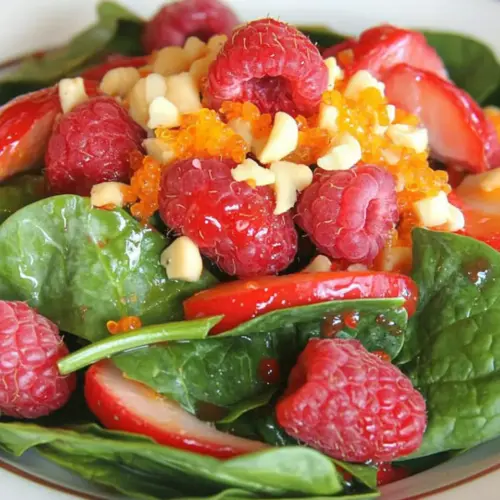
Baby Spinach and Raspberry Salad
Baby Spinach and Raspberry Salad is a bright, easy salad that pairs tender leafy baby spinach with juicy fresh raspberries, citrus segments, and a light white balsamic vinaigrette. This refreshing salad delivers crisp textures and herbaceous aroma, perfect for spring lunches or an easy weeknight dinner. Make it for a colorful side that feels elegant and satisfying.
Equipment
- Mixing Bowl
- Whisk
- Jar with Lid
- Knife
- Cutting Board
- Citrus segmenting knife or paring knife
Ingredients
- 1/4 cup white balsamic vinegar Adds bright acidity and a mild sweetness to dressings; balances oil and enhances other flavors in vinaigrettes. Commonly used to tenderize and brighten leafy salads and fruit components, creating a refreshing base for the dressing.
- 1 teaspoon honey Provides subtle floral sweetness and helps bind and mellow the vinegar’s sharpness. Frequently used in small amounts to round out dressings and add a faint, natural sweet note.
- 1 tablespoon fresh parsley, chopped Offers fresh, slightly peppery herbaceousness that lifts the overall flavor profile; adds visual flecks and a green aroma. Chopped parsley also contributes light freshness that complements both vegetables and fruit in the salad.
- 1 tablespoon fresh tarragon, chopped Contributes distinct anise-like, slightly sweet herbal notes that add complexity to dressings and salads. Chopped tarragon pairs well with citrus and berries, bringing depth and an aromatic finish.
- 1 tablespoon fresh chives, chopped Supplies mild onion-like, slightly garlicky flavor in delicate amounts; enhances savory depth without overpowering. Chopped chives add color and a tender, fresh bite when sprinkled over the salad.
- 1 tablespoon fresh basil, chopped Delivers sweet, aromatic, peppery notes and a basil-forward freshness that complements tomatoes, citrus, and berries. Chopped basil brightens the salad and integrates particularly well with other fresh herbs used in the dressing.
- 1 medium garlic clove minced Imparts pungent, savory, slightly spicy flavor that deepens the dressing and pairs well with herbs and citrus. Minced garlic provides aromatic intensity and a savory backbone when emulsified with vinegar and oil.
- 1/2 small shallot, minced Adds a delicate mild onion flavor with subtle sweetness that blends smoothly into dressings; soft texture when minced helps distribute flavor evenly. Minced shallot offers a gentler onion profile than raw onion, enhancing overall balance.
- 1/4 cup canola oil Acts as the neutral-bodied fat that carries and melds flavors while providing mouthfeel and sheen to the salad. Canola oil creates a smooth vinaigrette that coats greens and helps herbs and seasonings adhere.
- 1/4 cups sunflower seeds or pine nuts Contributes toasty crunch and nutty flavor when toasted or raw; offers texture contrast to tender greens and fruit. Sunflower seeds or pine nuts also add richness and a pleasant bite that enhances each forkful.
- 8 cups baby spinach Provides tender, leafy texture and a mild, slightly sweet spinach flavor that forms the salad’s base. Baby spinach also absorbs dressings well and pairs harmoniously with fruit, herbs, and crunchy toppings.
- 1 cup fresh raspberries Adds juicy sweetness, bright tartness, and delicate texture; serves as the primary fruit element that complements greens and citrus. Fresh raspberries also contribute color and a burst of flavor in every bite.
- 2 medium oranges, peeled, membranes removed, segmented Supplies juicy, segmented citrus brightness and sweet-tart flavor that complements berries and herbs. Peeled and membrane-removed orange segments add refreshing acidity and a succulent textural contrast.
- 1 medium red bell pepper, cored, seeded and cut into 2-inch strips Introduces crisp, sweet, slightly vegetal crunch and vibrant color; adds both texture and mild peppery sweetness. Red bell pepper strips provide refreshing juiciness and visual appeal to the salad.
- 1 medium carrot, peeled and coarsely grated Provides sweet earthiness and fine texture when coarsely grated; integrates easily into the salad for subtle crunch. Grated carrot contributes color, natural sweetness, and a tender, crisp mouthfeel.
Instructions
- Whisk together dressing ingredients or add all to a jar and shake well.: Close your eyes for a second and smell the bright vinegar and the sweet floral notes of honey , they should be the first impression when you whisk. As you whisk, watch the oil lighten and the dressing become glossy, a sign that the emulsion is forming. If using a jar, give it a vigorous shake until you hear the liquid slosh and the dressing looks combined. Why this matters, emulsifying helps the dressing cling to the baby spinach and herbs so every leaf gets flavor. A common mistake is rushing the mixing, which leaves the dressing separated on the plate, so whisk or shake until cohesive. If the dressing tastes too sharp, a tiny extra pinch of honey will round it out. For texture, finely mince the garlic and shallot so they meld rather than stand out as large pieces. Smell again after mixing, the aromas of parsley , tarragon , and basil should peek through, signaling balance.
- Place the spinach in a bowl and add all additional salad ingredients. Toss with desired amount of dressing, plate and serve.: As you add the baby spinach , the bowl should look voluminous and vibrant, the deep green serving as a backdrop for fruit and vegetables. Sprinkle in the fresh raspberries , orange segments, the strips of red bell pepper , grated carrot , and the sunflower seeds or pine nuts so the colors layer across the surface. Gently lift and fold instead of stirring aggressively, because the raspberries bruise easily, and you want whole berries for visual impact and texture variation. The sound here is quiet, just the soft rustle of leaves and the faint clink of seeds; if you hear mush or too much liquid, you likely overhandled the fruit. Why this technique, folding preserves the structure of delicate ingredients while still distributing them evenly. A frequent error is piling everything in and tossing roughly, which crushes berries and wilts the greens, so use a light hand and layered additions.
- Toss with desired amount of dressing, plate and serve.: When you add the vinaigrette, drizzle it in a steady stream and then use two large spoons to fold the salad so each leaf gets a light coating without becoming drenched. Visually, you want a shimmer on the leaves, not a pool of liquid at the bottom of the bowl. The tactile cue is slightly tacky leaves that hold the dressing, which indicates proper coverage. Taste a small forkful to check seasoning, and remember you can always add a little more white balsamic vinegar or honey to tune acidity and sweetness. One common mistake is over dressing, which makes the salad soggy and mutes the fresh flavors, so start with less and add more if needed. Serve immediately on shallow plates to showcase the colorful ingredients and encourage guests to enjoy the contrast of textures and temperatures. The final aroma should be herb forward with a citrus lift and a subtle nuttiness from the seeds or nuts.
Notes
- Add a touch of creamy cheese I love a little sprinkle of goat cheese in this salad, it melts slightly against the warm vinaigrette and adds tangy richness without overwhelming the fruit.
- Swap seeds for toasted nuts If you prefer a buttery note, use toasted pine nuts instead of sunflower seeds for a softer crunch and a richer aroma.
- Herb emphasis Increase the amount of chopped basil and parsley to make the salad more fragrant and herb driven, which pairs particularly well with citrus segments.
- Mellow the garlic If raw garlic is too assertive, mince it fine and let it sit in the vinegar for a few minutes to soften its bite before adding oil.
- Make it travel friendly Keep the dressing separate and toss at the last minute when you need the salad to stay crisp during transport.