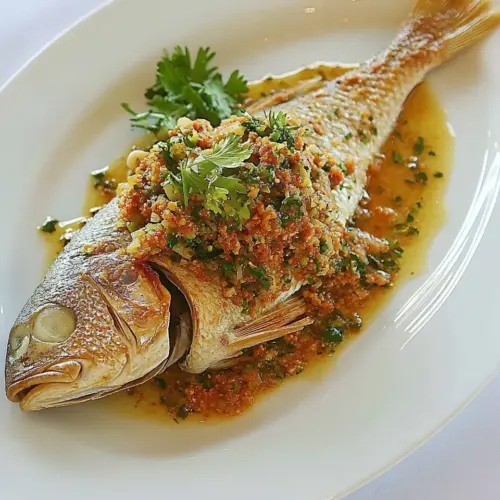
Baby Snapper with Harissa and Samke Hara Sauce
Baby Snapper with Harissa and Samke Hara Sauce is a vibrant, easy weeknight dinner that combines crispy roasted fish with a creamy tahini and chili paste. The sauce is smoky, nutty, and a little spicy, making each bite layered and memorable. Perfect for summer gatherings or quiet dinners, it’s an approachable seafood recipe that delivers impressive flavor and texture.
Equipment
- Oven
- Food Processor
Ingredients
- 1 medium sized snapper scaled and cleaned Scale and clean thoroughly to ensure safe, debris-free flesh; provides the main protein and centerpiece of the dish. Roast or grill to develop crispy skin and moist, flaky texture that carries the sauce flavors and spices.
- 2 tablespoons tahini Blend into a smooth creamy paste to add rich, nutty depth and a subtle bitterness; helps emulsify sauces for a silky mouthfeel. Balance its thickness with water or lemon juice so it integrates evenly into the harissa and samke hara components.
- 2 tablespoons lemon juice Squeeze fresh for bright acidity to cut through the richness and lift the overall flavor profile. Use in marinades and dressings to tenderize flesh and balance the heat from chiles and harissa.
- 1/4 tablespoon harissa see below Stir into the harissa mixture sparingly to provide concentrated chili flavor and aromatic warmth; adjust amount for desired heat level. Combine thoroughly so its spice, smokiness, and seasoning enhance the sauce without overpowering other elements.
- 2 tablespoons pistachios crushed Crush coarsely to introduce crunchy texture and a toasty, slightly sweet nuttiness that complements tahini and herbs. Sprinkle over the finished dish to provide contrast in mouthfeel and a visually appealing garnish.
- 2 tablespoons cold water Add cold to thin and loosen thick pastes or sauces while maintaining emulsion and creaminess; helps achieve desired consistency. Use gradually to avoid over-thinning and preserve the sauce's body and coating ability.
- 2 cloves garlic mashed Mash to release pungent, aromatic oils that build savory depth and complexity in marinades and sauces. Integrate well so garlic melts into the sauce, contributing umami and a slightly sweet roasted flavor when cooked.
- 1/2 red capsicum Slice or dice to add fresh vegetal sweetness and mild peppery notes; contributes color and crunchy texture in salsas or salads. Roast or combine with other capsicums for a layered, smoky pepper profile that pairs with fish.
- 1/2 bunch coriander chopped Chop finely to introduce a fresh, citrusy herbiness that brightens the sauce and garnishes the fish. Scatter over the finished dish to add aroma, color, and a lively counterpoint to spicy and nutty elements.
- 200 grams roast capsicum Puree or chop for a smoky, sweet pepper base that enriches sauces with deep roasted flavor and smooth texture. Incorporate into harissa or samke hara to provide body and mellow sweetness balancing the chilies.
- 100 grams dried chillies Use dried as a concentrated source of heat and smoky flavor after rehydration or grinding; provides depth to chili pastes. Control quantity carefully to manage spice level and to layer complexity without overwhelming the dish.
- 200 grams fresh birdseye chillies stems removed Remove stems and chop to contribute intense, fresh chili heat and sharp, fruity notes that define harissa character. Process into a paste or finely chop to evenly distribute spiciness through the sauce while preserving vibrant color.
- 4 cloves garlic Crush or mince to build aromatic backbone and savory pungency; pairs especially well with chiles and tahini. Sauté briefly to mellow harshness or add raw for a brighter, sharper garlicky presence in sauces.
- 1 tablespoon ground cumin Measure and toast lightly to awaken fragrant, warm, and slightly citrusy notes that underpin many North African spice blends. Grind fresh or use pre-ground to add earthy, aromatic complexity to the harissa and spice rubs.
- 1 tablespoon ground coriander Incorporate ground to contribute lemony, floral, and slightly sweet undertones that complement cumin and chiles. Use in measured amounts to enhance overall spice balance without introducing bitterness.
- 1 tablespoon ea salt Dissolve into spice mix and sauces to season at the core level and elevate all components; ensures even savory balance. Use precise amounts to avoid over-salting and to harmonize with acidic and spicy elements.
- 200 ml olive oil Whisk in as the primary fat to create a glossy, flavorful emulsion and carry fat-soluble aromatics throughout the sauce. Use high-quality extra virgin olive oil for fruit-forward notes and a smooth mouth-coating finish.
Instructions
- Bake the fish in the oven at 180°C (355 F) for 15 minutes.: The oven will fill with a faint sea scented steam as the snapper warms, and the skin will tighten and start to show translucent patches where it crisps, that visual cue tells you the flesh underneath is cooking. You should hear only a quiet settling sound from the oven, not loud crackling, which can mean the oven is too hot. Why this matters, the gentle heat cooks the fish through while preserving moisture, keeping the flesh flaky and tender. If your fish feels firm to the touch and the juices run clear, it is done. A common mistake is overbaking, which yields dry flakes. To avoid that, check the fish a few minutes before the end time and look for slight give when pressed near the bone.
- To make the sauce, mix the tahini with water, add garlic and lemon juice. This should make a thick paste.: As you stir, the tahini will loosen and become glossy, and the scent of bright lemon juice will pop, cutting the sesame richness. The texture should feel dense but spreadable, clinging to your spoon rather than running off, that stickiness indicates proper emulsion. This step matters because the tahini base tames the heat and gives the sauce body. Watch out for over thinning with too much water, which can make the sauce weak tasting. If it becomes too thin, add a touch more tahini or chill the mixture briefly to firm it up.
- Add remaining ingredients and mix.: When you add the chopped coriander , crushed pistachios , and roasted capsicum, aromas will layer, moving from nutty and citrusy to smoky. The sauce should look cohesive, with flecks of green and little nutty fragments appearing through the paste. Texture is key here, you want some grain and bite from the nuts against the silky base. This mixing step unifies flavors, making the sauce more than the sum of parts. Avoid rushing the blend in one high speed burst, which can overheat and alter flavors; pulse gently to combine.
- Remove the fish from the oven and put on plate, spoon sauce over the top and serve.: When you lift the snapper from the oven the skin will glisten and the kitchen will smell of roasted fish and a savory tang. Plate it carefully, using a spatula to preserve the crust and then spoon the sauce so it pools slightly around the fillet. The contrast of hot fish and cool sauce creates an appealing mouthfeel. This finishing move matters because presentation and temperature affect perception of flavor. A common error is pouring too much sauce, which can drown delicate fish notes; start with modest amounts and offer extra at the table.
- Drain water from dried chilies and place in a food processor with all the ingredients except olive oil.: As the dried chillies rehydrate slightly, they release a deeper, roasted aroma; when you add them and the additional garlic , ground cumin , and ground coriander into the processor, you will notice a punchy, earthy scent. Processing them without oil first ensures the solids break down evenly, preventing separation later. This technique matters because it creates a uniform paste base for the harissa component. A pitfall to avoid is skipping the draining or not removing seeds when necessary, which can introduce bitterness or grit into the final paste.
- Add the oil while the processor is running until the mixture has formed a paste.: Adding the olive oil slowly will produce a glossy, cohesive paste, and you will hear the processor tone change as the mixture smooths out. The paste should hold together, coating the blade and sides instead of appearing curdled. This slow emulsion brings silkiness and carries fat soluble flavors so they coat the fish. Overpouring oil too fast can make the paste greasy and overly loose; drizzle steadily until you reach a thick, spreadable texture.
- For smoother consistency, add more oil.: Each addition of oil mellows the heat and refines the texture, producing a sauce that spreads like a lacquer, and the aroma will shift toward a rich, fruity olive oil perfume. Smoother sauce coats the snapper more uniformly and reads as a luxurious finish. This matters if you prefer a velvety mouthfeel. Resist the temptation to overblend at high speed, which can warm the paste and slightly blunt the fresh notes; pulse and taste as you go.
Notes
- Make the sauce ahead: Harissa and the tahini sauce both develop flavor after resting, so prepare them a day in advance, store in an airtight container, and bring to room temperature before serving.
- Control the heat: If you prefer milder spice, reduce the fresh birdseye chillies or remove seeds from the dried chillies, tasting as you blend to reach a comfortable level.
- Texture tuning: For a chunkier sauce leave the pistachios and roasted capsicum slightly coarse; for a silkier finish, blend longer and add olive oil slowly until glossy.
- Roast the garlic: If raw garlic seems too sharp, roast the cloves briefly before blending to gain a sweeter, softer garlic note that integrates smoothly.
- Storage tips: Store leftover sauce in the fridge for up to a month, covered with a thin film of oil to preserve freshness and color.