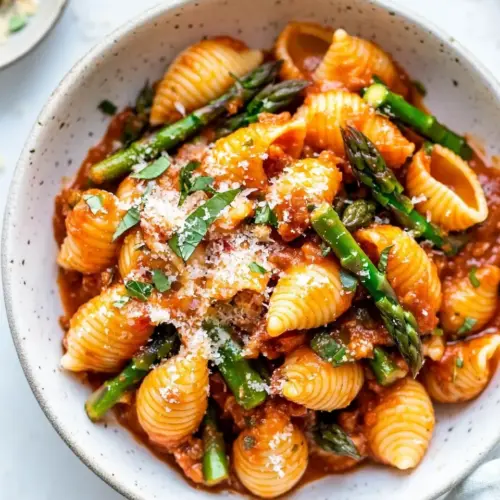
Baby Pasta Shells with Asparagus and Marinara Sauce
Baby Pasta Shells with Asparagus and Marinara Sauce combines tender baby pasta shells, crisp asparagus, and a bright marinara sauce for a creamy yet fresh weeknight meal. The little shells trap sauce beautifully while a sprinkle of Pecorino Romano adds savory depth. This easy weeknight dinner is quick to prepare and perfect for spring produce, a satisfying reason to make it tonight.
Equipment
- Large Pot
- Medium Saucepan
- Colander
- Knife
Ingredients
- 8 ounce baby pasta shells, or small gluten free pasta Cook and tenderize the baby pasta shells until al dente, providing the primary carbohydrate base and the nooks that trap sauce and cheese for flavorful bites. Use the small size to ensure quick cooking suitable for weeknight meals and for easy eating by children or picky guests. Drain but reserve a bit of pasta water to adjust sauce consistency when combining.
- 1 bunch thin asparagus, tough ends removed Trim and tenderize the thin asparagus by removing tough ends, contributing a fresh, crisp-green vegetable element and a subtle grassy flavor that balances the tomato sauce. Slice or keep spears whole depending on presentation, and blanch or sauté briefly to preserve color and nutrient-rich texture. Season lightly so it complements rather than overpowers the dish.
- 1 1/2 cups quick marinara sauce, or jarred Heat and meld the quick marinara sauce to coat the pasta and infuse the dish with concentrated tomato, herb, and garlic flavors that form the sauce backbone. Choose a jarred or homemade variety to control sweetness and acidity, and simmer briefly with reserved pasta water to reach a cohesive, silky consistency. Adjust seasoning and herbs to taste before combining with pasta and asparagus.
- 1/4 cup Pecorino Romano Grate and finish with Pecorino Romano to add a salty, tangy, umami-rich element that brightens the sauce and enhances overall depth. Use sparingly when mixing with hot pasta so it melts slightly and creates a savory coating without clumping. Offer extra at the table for those who prefer added richness.
- salt and fresh pepper to taste Season and balance with salt and fresh pepper to taste, enhancing the natural flavors of the pasta, asparagus, and marinara while controlling the dish's overall seasoning. Add salt incrementally, especially if using salted pasta water or salty cheese, and finish with freshly ground pepper to provide aromatic heat and complexity.
Instructions
- Boil about 4 inches of water in a large pot, when boiling add asparagus and cook about 2 to 3 minutes, or until tender crisp.: The water should roar when it reaches a rolling boil, and when you drop in the asparagus you will hear a steady, lively bubble. After about 2 to 3 minutes the stalks will turn vivid green and yield to a gentle fork test, still offering a firm bite. This brief blanch preserves texture and color, which keeps the finished dish bright and uplifting. Be careful not to overcook, because limp asparagus loses its charm and becomes mushy, which will flatten the contrast with the pasta. If your stalks are thicker, give them an extra minute, but test frequently so you do not overshoot.
- Drain and chop into small bite sized pieces.: Right after draining, you should notice steam rising and the asparagus smelling fresh and green, with a hint of sweetness. Chop into even, bite sized pieces so each shell picks up a little vegetable on the fork. Uniform pieces ensure even distribution and pleasant mouthfeel. A common slip here is cutting inconsistent sizes, which leads to some undercooked and some limp pieces on the plate; aim for consistency and use a sharp knife for clean cuts.
- Meanwhile, bring a large pot of salted water to a boil (you can use the same pot from the asparagus not to dirty too many dishes). Cook pasta according to package directions for al dente.: Salting the water is the first seasoning step that goes deep into the baby pasta shells , so it is worth doing well. When the water returns to a lively boil, add the pasta and stir so the shells do not stick. Cook to al dente so the shells hold their shape and texture when tossed with sauce. You want a slight resistance when bitten, not a soft collapse. Overcooking will make the shells absorb too much sauce and become gummy; if in doubt, pull one a minute early and taste.
- While pasta is cooking, in a medium saucepan heat 1-1/2 cups marinara sauce.: Warm the marinara sauce gently until it shimmers and gives off a bright tomato aroma, but avoid a vigorous boil which can reduce it too quickly. Heating the sauce lets the flavors open and meld with the reserved pasta water later. Stir occasionally so it heats evenly and you get a uniform temperature that will cling to the pasta. A common misstep is overheating and evaporating too much liquid, which makes the sauce thick and less glossy; keep the heat moderate and attentive.
- Drain pasta and RESERVE a cup of the pasta water.: After draining the shells, you will notice a starchy water left behind, slightly cloudy and warm, which is pure gold for adjusting sauce texture. Reserve about 1 cup; this starchy liquid helps bind the marinara sauce to the pasta without needing extra oil or butter. If you toss the pasta straight into sauce without the water, the sauce can sit on top rather than cling, making the dish feel dryer. Keep the water nearby so you can loosen the sauce as needed.
- Return pasta back to the pot and toss with marinara, asparagus, grated cheese, salt and pepper and a 1/4 cup of the pasta water or as needed to loosen the sauce.: At this point you will smell the union of tomato and cheese, and the texture will begin to change from separate parts into a cohesive plate. Adding about 1/4 cup of the reserved water at first is a gentle way to create a silky emulsion; add more if the sauce needs loosening. Toss until every baby pasta shell is glossy and coated, and the asparagus is evenly distributed. Taste and adjust with salt and fresh cracked pepper . One pitfall is adding too much water at once which dilutes the flavor, so add gradually and keep tasting as you go.
- Divide between four bowls and top with fresh pepper and more grated cheese if desired.: When plating, notice the steam lifting and the fragrant scent of tomato and cheese. Serve immediately so the shells keep their texture and the sauce remains warm and silky. A final flourish of freshly grated Pecorino Romano enhances aroma and adds a savory finish. Avoid letting the dish stand too long or the pasta will absorb more sauce and lose its ideal texture; serve right away for the best experience.
Notes
- Choose resilient pasta: Pick baby pasta shells or a sturdy gluten free version so the pasta holds al dente during tossing and serving.
- Trim asparagus uniformly: Remove only the tough ends so each spear cooks evenly and offers a consistent bite across the dish.
- Control sauce texture: Use reserved pasta water in small amounts to create a silky emulsion without watering down the tomato flavor.
- Heat sauce gently: Warm the marinara sauce until it is aromatic, avoid boiling which can reduce brightness and increase saltiness.
- Finish with fresh cheese: Add the Pecorino Romano at the last minute so it melts into the sauce and lifts flavor without becoming grainy.