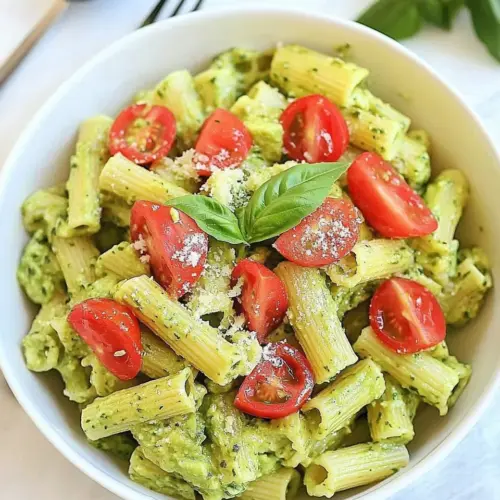
Avocado Goat Cheese Pasta
Avocado Goat Cheese Pasta is a creamy, tangy, and easy weeknight dinner that comes together in minutes. Silky avocado blends with tangy goat cheese, bright lemon, and fresh basil to coat whole wheat penne pasta, finished with juicy grape tomatoes. It’s a quick, satisfying meal you will want to make again and again.
Equipment
- Large Pot
- Colander
- Food Processor
- Large Bowl
Ingredients
- 10 ounces penne pasta we use DeLallo whole wheat Cooked to al dente, provides the primary carbohydrate base and texture for the pasta dish; absorbs the creamy avocado-goat cheese sauce while holding shape and offering a satisfying bite.
- 2 large avocados peeled and pit removed Ripe and mashed, creates the creamy, rich foundation for the sauce with healthy fats and a buttery mouthfeel; blends smoothly with lemon and garlic to coat the pasta and contribute fresh green color.
- 2 ounces goat cheese Soft and crumbled, contributes tangy, slightly acidic creaminess that brightens the sauce and balances the avocado’s richness; melts into the warm pasta for a lusciously smooth consistency.
- 2 cloves garlic Minced finely, adds pungent depth and savory aroma that enhances the overall flavor profile; lightly sautéed or raw, garlic provides sharpness that complements the creamy elements.
- Juice of 1 lemon Freshly squeezed, injects bright acidity that cuts through the richness and enhances other flavors; lemon juice also helps prevent avocado browning and lifts the overall dish.
- 1/4 cup basil leaves Torn or chopped, supplies herbaceous, slightly sweet notes that bring freshness and aromatic complexity; basil also adds a contrasting green flavor that pairs well with tomato and cheese.
- Salt and black pepper to taste Seasoned to taste, balances and enhances all other flavors by enhancing sweetness, acidity, and savory notes; black pepper adds a subtle heat that provides final seasoning contrast.
- 1 cup grape tomatoes cut in half Halved and tossed in, offers juicy bursts of sweetness and acidity that add texture contrast and fresh flavor; grape tomatoes also contribute color and a light, refreshing counterpoint to the creamy sauce.
Instructions
- Bring a large pot of water to a boil. Salt the water and cook pasta until al dente, about 8-10 minutes.: The moment the water hits a roaring boil you should see rolling movement across the surface and hear a steady bubbling, which signals it is ready for penne pasta . Salting the water is important because the pasta absorbs flavor as it hydrates, and I add a generous pinch to make the doughy center flavorful. A common mistake is under salting, which leads to bland pasta, so taste a tiny bit of the water for seasoning confidence. Use a wide pot so the pasta cooks evenly without sticking.
- While the pasta is cooking, make the sauce. In a food processor, add avocados, goat cheese, garlic, lemon juice, and basil. Pulse until smooth and creamy. Season with salt and black pepper, to taste.: You will see the penne pasta swell and the center change from chalky to translucent when it is nearly done. Stir once or twice to prevent clumping, and check at the lower end of the time range by biting into a piece for a slight resistance at the core. Avoid overcooking, because mushy pasta will not hold the creamy avocado sauce; if it goes too soft, it will become gummy and lose texture.
- Drain the pasta and pour into a large bowl. Add the avocado goat cheese sauce to the pasta and stir until pasta is well coated. Add the tomatoes and serve.: In your food processor the mixture transforms quickly, releasing a fresh herbal aroma and a smooth, pale green texture when the avocados , goat cheese , garlic , lemon juice, and basil are pulsed together. Expect a soft, thick ribbon when you stop processing, and stop before it becomes watery, because too much processing can change the mouthfeel. A common error is adding too much liquid, so rely on the natural creaminess of the avocados rather than extra water.
- Pulse until smooth and creamy: Watch for a glossy, uniform texture and a fragrant lift from the basil . The sound changes as the blades work through the ingredients; when it turns from coarse to silky, you know it is nearly there. If the sauce seems grainy, scrape the sides and pulse a few more times to ensure everything is fully incorporated. Over processing could warm the sauce slightly, which may alter the fresh flavor, so pulse in short bursts.
- Season with salt and black pepper to taste: Right after blending, the sauce requires tasting because the goat cheese already contributes saltiness. Add salt slowly and a few cracks of black pepper , then taste with a bit of cold pasta or a plain spoon to gauge balance. The common mistake here is oversalting, so err on the side of caution and adjust after tossing with the pasta .
- Drain the pasta and pour into a large bowl: When you drain the penne pasta , reserve a small cup of the cooking water if you think the sauce needs thinning. The hot pasta should have a steamy sheen and a firm bite; immediately transferring it to a bowl keeps it warm and ready to accept the sauce. Avoid rinsing, because rinsing removes surface starches that help the sauce cling, which would make the finished dish less cohesive.
- Add the avocado goat cheese sauce to the pasta and stir until pasta is well coated: The first stir should be gentle, folding the sauce into the hot penne pasta so each tube gets a glossy coating. If the sauce seems too thick, add reserved cooking water a tablespoon at a time to loosen it until it coats but does not pool. A common pitfall is over thinning, which will make the dish watery and reduce flavor intensity, so aim for a silky cling rather than a thin glaze.
- Add the tomatoes and serve: Fold in the halved grape tomatoes last so they retain their shape and bright burst of flavor, adding contrast against the creamy sauce. Serve immediately while the pasta is warm, so the texture is inviting and the flavors are lively. Waiting too long can cause the avocado to darken slightly and the dish to lose its fresh brightness, so plate promptly for the best presentation.
Notes
- Pick ripe avocados but avoid overripe fruit, which can taste sour and create a loose, unappealing texture. Look for slight give when pressed, not mushy skin.
- Salt the pasta water generously so the penne pasta absorbs seasoning while cooking, which prevents a bland final dish.
- Pulse don’t puree in the food processor to keep the sauce cool and maintain a fresh herb aroma from the basil.
- Reserve pasta water before draining to loosen the sauce if needed, adding it sparingly so you keep a creamy texture.
- Serve at once to enjoy the vivid color and the contrast between warm pasta and cool sauce; delays can dull the flavors.