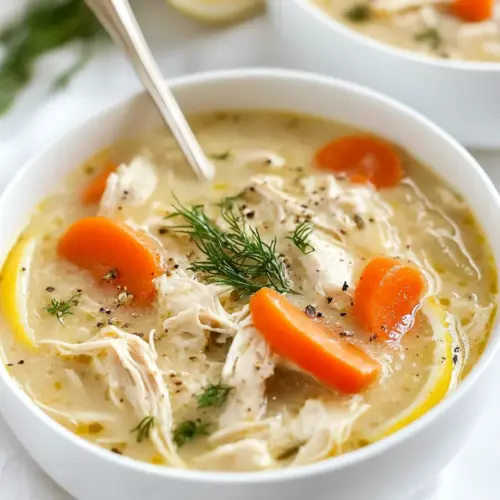
Avgolemono Soup
Avgolemono Soup is a creamy lemon chicken soup with tender rice and a silky egg yolk finish, perfect for an easy weeknight dinner. Bright citrus balances savory broth and shredded chicken, creating a comforting yet fresh bowl that reheats beautifully. Make it for cold evenings when you want something simple, nourishing, and irresistibly smooth.
Equipment
- large pot such as a Dutch oven
Ingredients
- 1 tbsp avocado oil Adds a neutral, high-smoke-point fat for sautéing aromatics and sealing flavor; helps soften onions and carrots while contributing a light, clean mouthfeel to the broth.
- 1 medium-sized yellow onion chopped Provides a sweet, savory base when softened and chopped; releases sugars and aromatic compounds that build depth and balance the soup’s bright lemon notes.
- 1 cup carrot chopped (about 1 medium-sized carrot) Contributes natural sweetness, texture, and body when chopped and simmered; caramelizes slightly during sauté for additional flavor complexity in the broth.
- 2 stalks celery chopped Introduces subtle vegetal crunch and aromatic depth when chopped and sautéed; balances sweetness from carrots and adds background savory notes to the soup.
- 3 large cloves garlic minced Imparts pungent aromatic flavor when minced; browns slightly during sauté to deepen overall savory character and enhance taste complexity.
- 1.25 lbs boneless skinless chicken breasts 2 large breasts Supplies lean protein and body to the soup; cooks in the simmering broth to tenderize, release savory juices, and provide hearty texture and nourishment.
- 8 cups low-sodium chicken broth Forms the liquid base and primary source of savory flavor; simmers with aromatics, chicken, and rice to create a cohesive, flavorful broth.
- 1/2 cup fresh lemon juice Delivers bright acidity and citrus aroma for classic avgolemono tang; balances richness from egg yolks and broth while lifting overall flavor.
- 1 bay leaf Adds subtle herbal complexity and aromatic depth while simmering; removes easily to avoid overpowering while infusing a faint, savory note.
- 2/3 cup uncooked rice Provides starch to thicken and add comforting body; cooks in the simmering broth to become tender and help create a silky mouthfeel.
- 3 egg yolks Enriches the soup with creamy texture and emulsifying power when tempered into the broth with lemon; helps thicken and give a luxurious finish.
- 2 sprigs fresh dill chopped Offers fresh, herbaceous flavor when chopped and stirred in at the end; brightens the soup with a delicate, slightly anise-like note complementary to lemon.
- 1 tsp sea salt to taste Enhances and balances overall seasoning; dissolves into the broth to bring out other flavors and ensure a well-seasoned final dish.
- 1/4 tsp black pepper to taste Contributes gentle heat and background spice; cracked or freshly ground into the soup to lift flavors and round out the seasoning profile.
Instructions
- Heat the avocado oil in a large thick-bottomed pot such as a Dutch oven over medium-high heat on the stove top. Add the chopped yellow onion and cook, stirring occasionally, until the onion begins to soften, about 3 to 5 minutes.: The first thing you will notice is a faint shimmer on the surface of the oil as it warms, signaling it is ready. As the oil becomes glossy, add the chopped onion so it hits the pan with a soft sizzle. Stir occasionally so the onion softens evenly and releases sweet, savory aromas, not caramelized burnt bits. The sound will shift from a sharp sizzle to a gentler bubble as moisture escapes. This step matters because a gently softened onion forms the aromatic base that flavors the whole broth. A common mistake is letting the pan get too hot, which browns the onion and darkens the soup, so keep the heat at medium high and adjust if you see rapid browning.
- Stir in the chopped carrots, celery, and garlic and cook for another 2 to 3 minutes to soften the veggies.: When you add the carrot and celery , the pan will hiss briefly, then settle into a rhythmic gentle bubbling. The vegetables should become tender and fragrant without losing shape, and the garlic should be added so it warms and becomes aromatic but does not brown. The scent will deepen into a warm, savory mix that hints at sweetness from the carrot . This technique builds layered flavor and prevents raw vegetal notes in the finished soup. Avoid overcooking the garlic, which can become bitter if it turns brown.
- Place the chicken breasts on top of the vegetable medley and sprinkle with sea salt and black pepper.: Laying the chicken on top lets it receive gentle heat and absorb aromas from the vegetables. As the salt hits the meat, it starts to pull flavors toward the surface, helping the broth season evenly as the chicken poaches. You will see the edges of the meat change from translucent to opaque as it warms. The reason for this careful placement is to poach the chicken gently so it stays tender and shreddable, not chewy. If you crowd the pot or let the liquid boil too hard, the meat can become tough.
- Pour in the chicken broth into the pot and add the bay leaves. Cover the pot and bring it to a full boil.: Pouring in the warm or room temperature chicken broth will animate the pot, and steam will rise quickly when you cover it. A full boil is visible as rolling bubbles across the surface; this is the cue to reduce heat soon after. Adding the bay leaf infuses subtle herbal notes while the liquid comes up to temperature. This step is crucial to extract savory flavor from both the vegetables and the meat. A common misstep is letting it boil aggressively for too long, which can overcook the chicken and cloud the broth.
- Reduce the heat to medium-low and cook for 15 minutes to poach the chicken, or until the chicken is cooked through. Remove the chicken breasts from the pot and place them on a cutting board. Ladle a small amount (about 1/2 cup) of the broth into a small bowl and set it aside. This hot broth will be used to temper the egg yolks.: As the pot simmers gently, you will see the chicken color shift to opaque and firm slightly. Use a thermometer if you like, aiming for an internal temperature that indicates doneness, or peek by slicing one piece to ensure no pink remains. When you transfer the meat to the cutting board, the broth will look clear and fragrant; ladling a small portion into a bowl gives you hot liquid to temper the yolks, which prevents curdling. If you skip tempering, the yolks can scramble when added directly, so take this step seriously to keep the soup silky.
- Pour the uncooked white rice into the pot, cover, and return the soup to a boil. Reduce to low heat and continue cooking for 15 minutes.: Adding the rice to the hot broth will change the surface, with tiny clouds forming as starch begins to release. Bring it back to a gentle boil, then lower to a steady low simmer so the grains cook through without breaking apart. You will notice the broth thicken subtly as the rice swells and releases starch. This contributes body and comfort to the soup. Over stirring can make the rice release too much starch and turn the texture past tender to mushy, so stir sparingly during this period.
- While the rice is cooking in the soup, transfer two egg yolks to a small bowl and whisk them together. Pour the reserved broth into the bowl with the egg yolks along with the fresh lemon juice and mix well to temper the yolks. Pour the egg mixture into the pot with the rest of the soup and stir well. Continue cooking the soup with the egg-lemon mixture until the rice is fully cooked and the 15 minutes is up.: The tempered yolks and lemon will froth slightly when combined with the hot broth, creating a glossy emulsion. Whisking briskly as you add the hot liquid builds a smooth, lump free mixture that, once stirred into the pot, thickens the broth into a silky coating. You will notice the aroma brighten instantly with citrus, and the liquid will sheen under the light. This step matters because it creates the signature velvety texture; rushing it or adding hot liquid too fast risks scrambling the yolks. If you see small cooked bits forming, remove some liquid and whisk vigorously to rescue the emulsion.
- Use two forks to shred the chicken and add the chicken back into the pot with the soup once it is all shredded.: Shredding the chicken with forks gives you tender, irregular pieces that integrate beautifully into the soup. The meat absorbs the lemoned broth and contributes savory bites throughout each spoonful. After shredding, fold the pieces back into the simmering pot so they warm through and soak up flavor. This technique keeps the chicken moist and ensures every mouthful has protein and texture. A common error is shredding too coarsely, leaving large chunks that feel heavy rather than integrated.
- Taste the soup for flavor and add sea salt, black pepper, or more lemon juice to taste.: This is the moment to fine tune. Take a small spoonful and let it cool for a beat so you can detect the balance of savory, salty, and acidic notes. Add salt in small increments, grind in fresh black pepper if you want warmth, or introduce a touch more lemon if the soup needs brightness. Because flavors meld as the soup rests, err on the side of modest seasoning and adjust again after a few minutes. Oversalting is hard to correct, so proceed cautiously.
- Remove the bay leaves and discard. Stir in the fresh chopped dill.: Pulling out the bay leaf prevents an unpleasant leathery texture in the final bowl. Stirring in the chopped dill at the end preserves its bright color and fresh aroma, adding a lift that complements the lemon . The dill will flutter into the hot liquid and release a clean herbal note. If you add it too early, the delicate oils will fade, so reserve it for the finish.
- Serve soup in big bowls with crusty bread or a side salad.: Ladle the glossy soup into warm bowls and notice how the surface reflects light, signaling the silky emulsion you created. The scent of lemon and herbs should be immediate, and each spoonful will offer tender chicken and plump grains of rice . Offering crusty bread or a simple salad gives contrasting texture and makes a satisfying meal. Avoid letting the soup sit too long before serving, because the rice will continue to absorb liquid and can thicken the broth.
Notes
- Use rotisserie chicken as a time saver, substituting about 4 cups of pre shredded cooked meat. This speeds prep and still gives you tender pieces, but skip the poaching step and add the shredded chicken toward the end to warm through.
- Swap rice for orzo if you prefer a smaller pasta shape; cook it in the broth until al dente and proceed with tempering. Orzo will thicken the broth more quickly, so monitor texture to avoid over thickening.
- Increase lemon for brighter flavor by adding up to an extra tablespoon of fresh lemon juice, tasting as you go. Adding too much can dominate the bowl, so adjust gradually and balance with a touch more salt if needed.
- Make it heartier by stirring in cooked white beans at the end for extra protein and creaminess without changing the core technique. Use gentle heat to warm beans through so they keep their shape.
- Finish with herbs variations such as parsley or mint in place of some of the dill for a different herbaceous note. Add them at the end to preserve freshness and color.
- Adjust texture by cooking the rice a touch less for a firmer bite or a touch more for a porridge like finish. Remember the rice continues to absorb liquid as it cools, so slightly undercooking helps maintain balance.