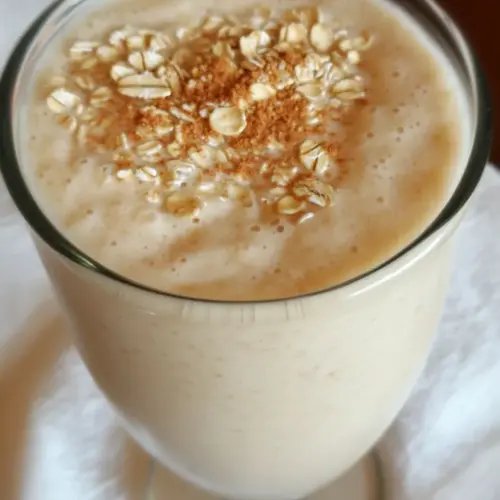
Avena Healthy Oatmeal Shake
Avena Healthy Oatmeal Shake is a creamy, comforting breakfast shake that blends cooked oats with milk, cinnamon, and a touch of sugar for an easy and satisfying start to your day. This smooth, lightly spiced drink is ideal for busy mornings and works as a quick, wholesome treat for any season, making it perfect for easy weeknight breakfasts or on the go mornings.
Equipment
- Small pot
- Blender
Ingredients
- 1/2 cup quick oats Provide bulk and soluble fiber to thicken the shake and support digestion; blend quickly to avoid a gritty texture. Soak briefly in warm water if a smoother consistency is preferred, and adjust blending time based on desired creaminess.
- 2 cups water Hydrate and create the liquid base that helps oats soften and meld flavors while keeping the shake light. Heat partially before blending if a warmer, more porridge-like profile is desired, or use cold to maintain a refreshing drink.
- 1 cup fat free milk Contribute creaminess and a mild dairy flavor while adding protein and calcium without extra fat. Use fat free milk to keep calories lower while preserving a velvety mouthfeel and helping ingredients emulsify smoothly.
- 1 cup ice Chill and add volume without extra calories while ensuring a cold, refreshing texture that thickens the shake. Crush or add whole depending on how icy or smooth a final consistency is wanted.
- 3 tbsp sugar Add sweetness and balance flavors, dissolving into the liquid to counteract bitterness or blandness from plain oats. Adjust amount to taste or substitute with a lower-calorie sweetener if reducing sugar is desired.
- 2 tsp ground cinnamon Provide warm, aromatic flavor and subtle sweetness while enhancing perceived sweetness without extra sugar. Sprinkle in moderation and mix thoroughly to avoid clumping and ensure even distribution throughout the shake.
Instructions
- Cook oats and water in a small pot for about a minute or two, stirring often until it becomes thick and bubbly.: The kitchen will fill with a warm, toasty scent as the 1/2 cup quick oats hydrate and release starch, creating a slightly glossy, thick mixture. You should hear a gentle bubbling and see the pot surface tighten as moisture reduces, which signals the oats have softened properly. This brief cooking develops flavor and helps the oats integrate smoothly in the blender, creating a creamier final texture. A common mistake is leaving the pot unattended, which can lead to uneven cooking or scorching, so stir frequently to keep the bottom from sticking. Visually watch for a plump, cohesive mass that is not dry, and you will be ready for the next step.
- Remove from heat and let it cool a few minutes.: Cooling briefly lets steam escape and prevents hot splashes in the blender, while the oat mixture settles into a more cohesive body. You will notice the surface calm down and a faint cloud of steam dissipate, and the aroma will shift from sharp to gently toasted. This rest helps preserve the texture so the ice you add later does not melt too quickly, which would water down the shake. Avoid blending while the oats are piping hot because that can thin the drink and create excess steam pressure in the blender. Aim for warm rather than scorching, and check the bowl with the back of a spoon to confirm the temperature is comfortable to handle.
- In a blender add milk, sugar, cinnamon. Add oats and ice.: When you add the 1 cup fat free milk , 3 tbsp sugar , and 2 tsp ground cinnamon into the blender first, you give the sweet and spiced elements a chance to dissolve and distribute evenly during blending. Pouring these ingredients before the oats ensures the cinnamon does not clump and the sugar starts to incorporate into the liquid, which improves the final smoothness and flavor integration. You will see the cinnamon suspend in the liquid initially, and as you pulse the blender it will form delicate swirls. A pitfall to avoid is adding dry spices directly on top of frozen ice, which can stick and not blend evenly; adding them into the milk helps prevent that.
- Blend on high until very smooth.: Adding the warm, slightly thickened oats and the 1 cup ice is where texture is determined. The contrast between warm oats and cold ice helps the oats break down faster when blended, producing a velvety result. As you pour the oat mixture in you may hear a soft hiss as it meets the cooler blender jar, and when the ice joins the sound becomes more robust as blades engage. Be careful not to overload the jar, and ensure the lid is secure to avoid splatter. A common error is adding too much ice which can dilute flavor, so use the specified amount for balanced consistency.
- Chill in refrigerator or pour in a glass over ice. Enjoy! Makes 4 cups.: On high speed the blades will crush ice and fully emulsify the oat matrix with the milk and sweetener, creating a glossy, homogeneous shake. You should see a creamy vortex and hear a steady, powerful motor tone, with no large ice clunks left. The smell will be a warm cinnamon note backed by oat sweetness, and the texture should look uniformly smooth as it pours. If you notice gritty particles, blend longer in short bursts to avoid overheating, and scrape down the sides once to reincorporate any stubborn bits. Over blending can warm the shake and slightly thin it, so stop when the mixture flows like a thick milkshake.
- Use GF oats to make this gluten-free.: After blending you can either chill the shake to let flavors meld and the temperature even out, or serve immediately over fresh ice for a frosty drink. Chilling deepens the cinnamon aroma and firms the texture a touch, while pouring over ice highlights the refreshing quality. When refrigerating, transfer to a covered container to keep the top from forming a skin. A typical mistake is leaving it uncovered which can absorb fridge odors. Serve in tall glasses and watch the surface sparkle with tiny air bubbles, then sip and note the creamy mouthfeel and balanced sweetness that make this such a satisfying breakfast or snack.
- Use GF oats to make this gluten free: If you need a gluten free version, substituting certified gluten free oats ensures the dish is safe for those with sensitivities, while preserving the same texture and flavor. Certified oats reduce cross contamination risk, and when cooked the oats behave identically, releasing starch and aroma. Be mindful to check packaging for certification, and avoid bulk bins unless clearly labeled gluten free. A common oversight is assuming old oats are safe, so always verify labeling to protect guests with celiac disease or strong intolerance.
Notes
- Reduce sugar if you prefer less sweetness; start by cutting the 3 tbsp sugar in half then adjust after tasting so the cinnamon still sings but the drink feels lighter.
- Use warm milk instead of cold for a cozy, latte like version; gently heat the 1 cup fat free milk before blending to enhance the toasted oat aroma and create a warmer sip.
- Serve chilled over ice during hot months; blend with the 1 cup ice and pour immediately to emphasize refreshment and a slushy texture.
- Make it thicker by reducing the 2 cups water used to cook the oats slightly, which yields a denser oat base and a more spoonable shake quality.
- Try less ice if you want a creamier mouthfeel; using half the 1 cup ice produces a silkier texture while maintaining chill.