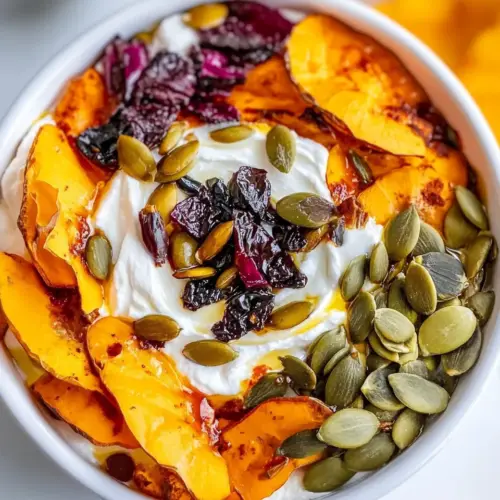
Autumn Whipped Ricotta Dip
Autumn Whipped Ricotta Dip is a creamy, airy spread studded with caramelized sweet potato, tart dried cranberries, and crunchy pumpkin seeds. The whipped ricotta cheese and 2% cottage cheese base is light yet satisfying, perfect for easy fall entertaining and weeknight grazing. Make ahead friendly and visually stunning, this dip is a smart choice when you want seasonal flavor and simple assembly.
Equipment
- Oven
- Baking Sheet
- Parchment Paper
- Small Saucepan
- Food Processor
Ingredients
- 2 tablespoons olive oil Drizzle to provide a fruity, peppery fat that helps roast and sauté other components while adding depth to the dip's flavor; use for cooking sweet potato and for finishing if desired.
- 2 sprigs rosemary Infuse to lend resinous, piney aromatics when lightly bruised and cooked with oil; tie flavor together and can be removed before blending for a subtle herbal note.
- 1 1/2 cups sweet potato, chopped 1/4 inch dice Roast or sauté until tender to bring natural sweetness and creamy texture; add body and autumn character to the whipped ricotta when incorporated.
- 3/4 teaspoon kosher salt, divided Season judiciously to enhance overall flavors and to help balance sweetness and acidity; divide between cooking and finishing to control seasoning levels.
- Fresh black pepper Grind freshly to add bright, sharp heat and complexity; use to taste to lift flavors without overpowering the delicate dairy.
- 1/2 cups shallot, chopped small Sweat gently to develop sweet, mild onion notes that meld into the mixture; use small chop to ensure even cooking and distribution in the dip.
- 1/3 cup dried cranberries Scatter for concentrated bursts of sweet-tart flavor and chewy texture; soak briefly if desired to plump and distribute fruitiness through the dip.
- 1/4 cup balsamic vinegar Reduce to a syrupy glaze or drizzle to introduce tangy-sweet acidity that balances richness; cook down slightly to concentrate flavor before using.
- 2 cups part-skim ricotta cheese Whip until airy to form a creamy, luxurious base that carries other flavors and contributes body and mild tang to the dip.
- 1 cup 2% cottage cheese Blend smooth to add subtle tang, creaminess, and protein while thinning the ricotta for lighter texture; helps achieve a whipped, scoopable consistency.
- 1 clove garlic Mince finely to contribute pungent, aromatic savory notes; incorporate sparingly when blending to avoid overpowering the mild cheeses.
- 1/4 cup pumpkin seeds, toasted Toast to develop nutty aroma and crunchy texture for garnish; sprinkle on top to add contrast and enhance visual appeal.
- Endive, thinly sliced raw golden beets using a mandolin, orange cauliflower and carrots make for the perfect crudites here Slice thinly to serve as crisp, decorative dippers that offer fresh, bitter, and crunchy contrast to the creamy dip; include a variety of vegetables for color and texture.
Instructions
- Preheat oven to 425°F and prepare a baking sheet with parchment paper.: When you preheat to the specified temperature, you should feel the kitchen warm slightly and the oven will be ready to brown the sweet potato quickly, encouraging caramelization rather than steaming. Use parchment so the pieces release easily and cleanup is easier. A common mistake is not letting the oven fully preheat, which can lead to uneven roasting and pieces that are soft but not caramelized; wait until the oven reaches temperature for the best crisp edges. You may hear gentle popping as sugars in the sweet potato begin to caramelize, and their aroma will become sweet and slightly nutty as they brown.
- Heat oil in a small saucepan over medium heat and add rosemary once hot. Rosemary will sizzle until it is finished cooking, about 2-3 minutes. Remove rosemary from oil & reserve on a paper towel lined dish. Save the pan with rosemary oil inside.: As the oil warms, you will see it shimmer slightly; add the rosemary and listen for an eager sizzle that tells you the herb is releasing fragrant oils. Frying the herb briefly infuses flavor into the oil and yields crisped leaves to use as a garnish. Keep the heat moderate to avoid burning the herb, which would turn bitter; if the rosemary darkens too quickly, lower the heat. Transfer the fried leaves to a paper towel to drain and reserve the infused oil in the pan for later steps; the oil will smell herbaceous and slightly resinous.
- Toss sweet potato in 1 tablespoon of the rosemary oil, 1/4 teaspoon salt & fresh cracked black pepper. Roast until caramelized and tender, 15 to 20 minutes.: The sweet potato should be evenly coated so each cube develops a glossy surface that browns in the oven. The salt and pepper begin flavoring the flesh while the rosemary oil helps create a golden, slightly caramelized exterior. Spread the cubes in a single layer so they roast rather than steam; crowded pieces will stew and lose their crisp edges. You want to see a golden brown color develop and smell the caramelized sweetness when you pull a tray from the oven.
- In the same reserved saucepan with remaining rosemary oil, sauté shallot on medium-low until aromatic; 3-4 minutes. Add cranberries & balsamic; lower heat & simmer until balsamic reduces to a syrupy consistency, 7-10 minutes.: As you roast, check for deepening color and tender centers by piercing a cube with a fork; the inside should be soft and the exterior browned. The Maillard reaction creates those nutty notes you are aiming for, and the contrast between tender interior and slightly crisped edges is key. Avoid underroasting, which leaves the sweet potato starchy and lacking flavor, or overroasting, which can make pieces dry and cracker like. Remove when you can smell sweet, toasted sugars and see browned facets on many cubes.
- Make whipped ricotta: Add ricotta cheese, cottage cheese, garlic, 1 tablespoon water, 1/2 teaspoon salt & fresh cracked black pepper to a food processor. Blend until airy & smooth.: The pan should still carry the herby oil which will coax sweetness from the chopped shallot . Cook gently until the shallot becomes translucent and soft, not brown, and the kitchen will fill with a warm, slightly sweet onion aroma. Lower heat if the shallot begins to toast too quickly, as a burned shallot tastes bitter. This step builds the gentle savory foundation for the next stage with the dried cranberries and balsamic vinegar .
- Transfer whipped ricotta to a shallow dish & top with roasted sweet potatoes, cranberries, pumpkin seeds & fried rosemary leaves. Serve with crudites and baguette.: When you add the dried cranberries and balsamic vinegar , the mixture will bubble, and the vinegar will steam and then thicken. Simmering concentrates acidity and sweetness into a glossy reduction that will cling to the cranberries. Stir occasionally so the fruit rehydrates and the sugars do not scorch. If the reduction thickens too fast, reduce the heat and add a splash of water to control it; over reduced balsamic can become overly sweet or sticky. You want a syrup that has body, bright acidity, and a candied fruit character.
- Make whipped ricotta: Add ricotta cheese, cottage cheese, garlic, 1 tablespoon water, 1/2 teaspoon salt & fresh cracked black pepper to a food processor. : As the ingredients combine and the blade runs, you will watch texture shift from lumpy to cloud like, and the sound will change to a steady hum. The small amount of water helps the mixture whip lighter, while the garlic and kosher salt season the base. Scrape down the bowl if pockets of curd remain to ensure a uniformly smooth texture; underprocessed ricotta leads to a grainy mouthfeel. The finished whipped base should look glossy, hold soft peaks, and spread easily without being runny.
- Blend until airy & smooth.: During processing you will smell the dairy soften and the garlic mellow, and the mixture will lighten in color and density. This aeration is essential because it makes the dip feel lighter on the palate and allows the toppings to nestle on top. If the blend seems too loose, chill briefly to firm up; if too thick, a touch more water can help. Avoid over blending to the point where the mixture becomes too loose and loses structure.
- Transfer whipped ricotta to a shallow dish & top with roasted sweet potatoes, cranberries, pumpkin seeds & fried rosemary leaves.: When plating, you want a shallow dish so guests can scoop easily and toppings are visible. Arrange the warm roasted sweet potato and glossy reduced dried cranberries over the white whipped base, sprinkle toasted pumpkin seeds and finish with the fried rosemary leaves for aroma and texture. The contrast of warm toppings on cool whipped dairy is pleasing; if everything is piping hot the texture can feel heavy, so aim for warm rather than hot. A common error is piling too many toppings on one spot, which can make scooping messy; distribute them evenly so every bite has variety.
- Serve with crudites and baguette.: Offer thinly sliced endive , golden beets , orange cauliflower , carrots , and slices of baguette for dipping and spreading. The crunch of raw vegetables and the chew of toasted bread both complement the whipped base and the roasted bits, and guests will enjoy mixing textures. If the bread is stale or the crudites are too watery, the overall experience suffers, so choose sturdy dippers. Present the platter so there is space for people to gather and take from multiple points.
Notes
- Make ahead: You can roast the sweet potato and prepare the balsamic cranberry mixture a day in advance, storing them separately in the refrigerator to preserve texture and finish fresh on serving day.
- Whipping technique: Start with cold ricotta cheese and pulse in short bursts so you achieve an airy texture without making the mixture too loose; chill briefly if it loosens too much.
- Toasting seeds: Toast pumpkin seeds over medium heat until they turn a shade darker and release a nutty aroma, then cool fully before topping to retain crunch.
- Balancing sweetness: Taste the reduced balsamic vinegar and dried cranberries before topping, you want brightness without overpowering the dairy base; add a pinch more salt if needed to balance.
- Serving temperature: Serve the whipped base cool to slightly chilled and the toppings warm to create a pleasing contrast; avoid serving everything either ice cold or piping hot.