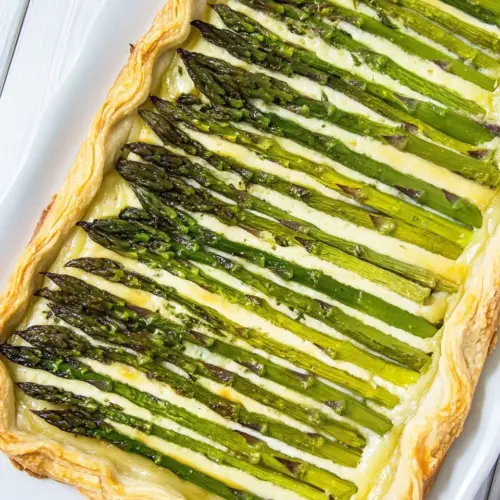
Asparagus Tart
Asparagus Tart is a flaky springtime favorite with a creamy seasoned cream cheese base, tender roasted Asparagus tips, and optional nutty Gruyere cheese. This easy, elegant tart works as an appetizer, brunch centerpiece, or light dinner, offering crisp pastry and bright vegetable flavor for an effortless weeknight or weekend treat.
Equipment
- half sheet pan
- Offset Spatula
Ingredients
- 2 teaspoons olive oil Lightly coat a skillet to prevent sticking and to gently sauté asparagus or brush the pastry before baking; olive oil also adds subtle richness and helps develop a golden crust when heated.
- 12 ounces (340 g) Asparagus tips tough ends trimmed Trimmed and ready for cooking, asparagus tips add a tender, slightly sweet vegetal flavor and a pleasant crunch; they provide the primary fresh vegetable component and visual appeal to the tart.
- 1/4 teaspoon salt Enhance overall balance by seasoning for depth and to bring out natural asparagus flavors; salt also helps draw out moisture from the filling for better texture.
- 1/4 teaspoon ground black pepper Season with a small amount to introduce mild heat and aromatic complexity; ground black pepper brightens the savory elements and complements the cheese.
- 1/2 cup (50 g) Gruyere cheese shredded, optional. Sub with vegetarian cheese if needed. Provide creamy, nutty richness and a meltable topping when shredded; Gruyere melts smoothly for a golden, flavorful layer and can be substituted with vegetarian cheese if needed.
- 1 medium egg beaten with a teaspoon of water for an egg wash Create a glossy, golden finish when brushed onto pastry edges and help seal seams; the beaten egg mixed with water also encourages attractive browning during baking.
- 4 ounces (113 g) cream cheese softened Contribute a smooth, tangy base for the filling and help bind other ingredients; softened cream cheese adds creamy body and a mild acidity that balances the asparagus and cheese.
- 1/2 teaspoon garlic powder Add concentrated savory garlic flavor without altering texture, distributing evenly through the cream cheese; garlic powder enhances umami notes subtly.
- 1/4 teaspoon salt Further refine seasoning to ensure balanced taste throughout the filling and finished tart; this additional pinch of salt works with the cream cheese for proper seasoning.
- 1/4 teaspoon ground black pepper Complement black pepper for a subtle spicy note and aromatic lift; this measure keeps the filling well-seasoned without overpowering the delicate vegetables.
- 1 Sheet Puff Pastry thawed if frozen Provide a flaky, buttery foundation that puffs and browns to encase the filling; thawed puff pastry delivers structure, crisp layers, and an attractive presentation when baked.
Instructions
- Preheat the oven to 400°F/205°C. Line a baking sheet with parchment paper and set aside.: You should feel the immediate change in the kitchen as the oven warms and a subtle dry heat begins to build. Heating to 400°F/205°C is key because it gives the Puff Pastry a rapid blast of heat, creating steam that lifts the layers into crisp, airy flakes. The parchment paper prevents sticking and helps the underside brown evenly, while the lined baking sheet distributes heat for consistent color. A common mistake is preheating to a lower temperature, which leaves the pastry heavy and underpuffed. Make sure the oven actually reaches temperature by waiting for the indicator before sliding the tart in.
- Drizzle olive oil over the asparagus, and season with salt and pepper.: As you toss the spears in the small pool of olive oil , you should see them glisten and smell a faint fruity aroma. The oil encourages gentle caramelization at the tips and helps the seasoning cling to every spear. The light sprinkle of salt and black pepper sharpens their vegetal sweetness. Avoid using too much oil, which can weigh down the pastry; just enough to lightly coat each spear is perfect. If you skip seasoning, the asparagus can taste flat against the rich filling.
- To make the cream cheese mixture, in a bowl combine the cream cheese with garlic powder, salt, and pepper. Give it a quick mix so that everything is well combined.: When you work the softened cream cheese with the dry seasonings, use a spatula to fold until the texture is silky and uniform. The garlic powder releases a faint savory perfume as it blends, and the salt heightens the tang. This mixture should spread smoothly, no lumps visible, which ensures an even base under the asparagus. A common error is using cold cream cheese, which creates an uneven, clumpy layer; allow it to soften at room temperature first.
- Unfold the thawed puff pastry on a lightly floured surface and roll into a 10 inch x 14-inch rectangle. Transfer to the prepared baking sheet, then using a sharp knife score the edges leaving a 1-inch border. Then using a fork, prick the puff pastry sheet.: The act of unfolding and gently rolling the Puff Pastry should feel cool and slightly resistant beneath your hands, and the flour dusting prevents sticking. Scoring a 1 inch border creates a raised edge as the interior puffs, forming a shallow well for the filling. Pricking the interior with a fork allows trapped steam to escape in a controlled way so the center does not balloon excessively; you want a flat canvas rather than a dome. Overworking the dough or applying too much flour will warm the layers and reduce puff.
- Spread the cream cheese filling over the puff pastry sheet inside the border, then sprinkle with gruyere cheese.: Smooth the seasoned cream cheese into an even layer, noticing how it creates a cool, satiny surface against the warm kitchen air. The spread should stop at the scored border so the edge can rise and brown independently. When you scatter the shredded Gruyere cheese , watch how it nestles into the softened filling and promises pockets of melted, nutty flavor. A heavy hand with the cheese can weigh down the pastry or add too much salt, so aim for an even dusting. If the filling is applied unevenly, some areas may remain underbaked or soggy.
- Top the cheese with the asparagus spears arranging them to be parallel with each other. Brush the border/edges with an egg wash.: Lay each Asparagus tip across the tart in neat rows, noticing the contrast of vivid green against the pale filling. The arrangement matters visually and ensures even cooking because similarly sized spears will bake at the same rate. Brushing the scored border with the beaten egg mixed with water gives the crust that shiny, browned finish that tempts people to take the first slice. Avoid piling spears atop each other; overlapping creates uneven baking and can trap moisture under the pastry.
- Bake for 20-25 minutes or until the puff pastry is puffed and lightly browned.: As the tart bakes you will hear a gentle sizzle and then a faint crisping as the pastry rises. The oven will reward you with a golden border and a slightly bubbling edge where the cheese has begun to melt into the filling. Time can vary by oven, so watch for the visual cues more than the clock. A common issue is opening the oven too often, which collapses the pastry; resist peeking until the last few minutes. If the border browns too quickly, tent loosely with foil to prevent overbrowning while the center finishes.
- Remove from the oven, cut into 6-8 squares, and serve warm or at room temperature.: When you pull the tart from the oven, the aroma is rich with toasted butter and savory cheese, and the asparagus remains bright. Allow it to rest briefly so the filling sets and the pastry retains its structure. Slicing into squares reveals layers of flake and a creamy interior, and serving warm highlights melty cheese, while room temperature emphasizes the crispness of the pastry. Cut with a sharp knife to avoid tearing the crust. If you serve it too hot, the filling can be runny, so let it cool a touch before plating.
Notes
- Yield and serving The recipe yields about 6 to 8 servings, depending on how large you slice each square. For a grazing board or appetizer portion, cut smaller pieces; for a light lunch, serve larger slices alongside a simple salad.
- Puff pastry choice Opt for all butter Puff Pastry when possible, it gives superior flavor and flakiness. For vegan diets, choose a vegan labeled pastry and a plant based cream cheese substitute, keeping measurements the same.
- Thawing guidance Thaw frozen Puff Pastry in the refrigerator overnight for the best texture. If you are short on time, thaw in the fridge for a few hours rather than at room temperature to keep the layers firm.
- Cheese swaps If you cannot access Gruyere cheese, try a similarly nutty melting cheese or a softer option like strained ricotta for a different, but still delightful, mouthfeel. Adjust salt accordingly.
- Vegetable variations Thinly sliced mushrooms or halved cherry tomatoes can be used in place of or alongside Asparagus tips for variety. Choose vegetables that have similar moisture profiles to avoid soggy pastry.
- Storage and reheating Store the cooled tart covered in the refrigerator for up to 3 days. Reheat in an oven at 350°F/180°C until crisp, about 15 minutes for a whole tart or 5 to 8 minutes for slices. Avoid microwaving to preserve the pastry crispness.