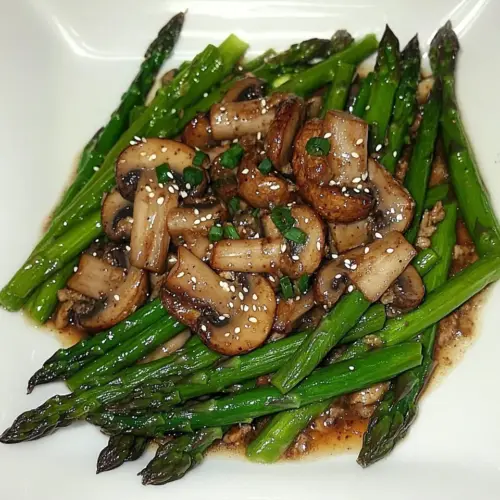
Asparagus Stir Fry and Ginger Mushrooms
Asparagus Stir Fry and Ginger Mushrooms delivers crisp, vibrant asparagus and earthy mushrooms tossed with fragrant ginger and garlic for a quick springtime side or light main. This easy weeknight dinner is savory, fast, and perfect with rice, offering glossy, caramelized edges and bright green stalks. Make it when you want bold flavor without fuss.
Equipment
- Wok or large skillet
- Spatula
Ingredients
- 1 pound trimmed and cut in 2 inches pieces asparagus Add tender, crisp asparagus pieces to provide a fresh, green backbone and pleasant textural contrast in the stir fry. Cook briefly over high heat to retain vibrant color and slight snap while absorbing surrounding flavors. Season lightly as asparagus carries dressings and aromatics well.
- 2 tablespoons thinly sliced leeks Use thinly sliced leeks to contribute a subtle oniony-sweet background flavor and gentle aromatic lift. Sauté briefly to soften and release natural sugars that meld with oil and soy, enhancing overall savory depth. Incorporate early to allow their delicate layers to perfume the dish without overpowering.
- 2 tablespoons olive oil Heat olive oil to serve as the cooking medium that helps transfer heat, prevent sticking, and carry fat-soluble flavors throughout the vegetables. Add at the start to coat pan and promote even browning while melding with aromatics like garlic and ginger. Choose a moderate amount to balance richness without making the dish greasy.
- 6 large sliced 1/8 inch thick mushrooms Sear sliced mushrooms to provide umami richness, meaty texture, and earthy depth that complements the asparagus. Cook until browned and their moisture reduces to concentrate flavor and allow caramelization. Add mid-cook so mushrooms develop color while absorbing soy and aromatics.
- 2 minced garlic cloves Sauté minced garlic to deliver pungent, aromatic brightness that quickly infuses the oil and vegetables with savory notes. Add towards the end of high-heat cooking to avoid burning and to preserve its sharp, fragrant character. Use sparingly to support other flavors without dominating the palate.
- 1 tablespoon fresh minced ginger Stir in fresh minced ginger to impart warm, zesty heat and a lively, slightly peppery aroma that lifts the stir fry. Cook briefly to release its essential oils and maintain a bright, gingery bite that pairs well with soy and garlic. Balance quantity to add freshness without overwhelming.
- 1 tablespoon soy sauce Drizzle soy sauce to introduce salty depth, savory umami, and a savory glaze that ties the ingredients together. Add near the end to season and deglaze the pan, allowing it to coat vegetables and concentrate flavors. Use measured amount to enhance taste while avoiding excess saltiness.
Instructions
- In a large wok or skillet heat the olive oil over high heat. When hot but not smoking add the asparagus, leek and mushrooms. Stir occasionally for 3 minutes. Add the garlic and the ginger and cook for another 2 minutes.: As the oil warms you should see a light shimmer across the surface and a faint ripple when you tilt the pan, signals that the pan is hot enough to sear. The aroma will be faintly nutty when the oil is ready, and this step is crucial because a properly hot pan creates immediate contact browning on the asparagus and mushrooms , locking in texture and flavor. If the oil smokes, reduce the heat slightly to avoid bitter burnt notes. A common mistake is starting with a cool pan which leads to steamed vegetables instead of crisp sears.
- Add the soy sauce, salt and pepper to taste and cook for another 1 minute.: As soon as the vegetables hit the oil you will hear an energetic sizzle, a sign that moisture is hitting a very hot surface and evaporation is happening quickly. Arrange the pieces so they have contact with the pan; overcrowding will trap steam and prevent browning, so give them space or work in batches if needed. The leeks will begin to soften and the mushrooms will start releasing juices, and you should notice the pan darken slightly as the mushrooms caramelize. Avoid stirring constantly, which keeps heat from concentrating; instead let pieces sit briefly before moving them to encourage caramelized spots.
- Serve immediately.: During these three minutes listen for a steady, bright sizzle and watch for edges to turn golden brown. The asparagus should become tender crisp, still vibrant green, while the mushrooms develop a deeper color and a richer aroma. Use a spatula to flip pieces occasionally so all sides get contact without crowding. A frequent pitfall here is overcooking; if you find the asparagus getting floppy, lower the heat slightly and finish more quickly.
- Add the garlic and the ginger and cook for another 2 minutes: The moment you add minced garlic and minced ginger the kitchen will fill with a bright, pungent fragrance. These aromatics release volatile oils rapidly, so cooking them briefly infuses the dish without risking bitterness. Keep the heat high enough to sizzle but monitor closely, as small bits of garlic can burn in an instant, leading to acrid notes. Stir to distribute the aromatics evenly so every bite has that peppery ginger lift and warm garlic backbone.
- Add the soy sauce, salt and pepper to taste and cook for another 1 minute: When you introduce the soy sauce the pan will hiss gently as liquid hits hot oil, and a glossy sheen will form on the vegetables. This finishing minute lets the sauce reduce slightly, concentrating flavors and allowing it to cling to the pieces. Season sparingly at first, taste, and adjust; soy contributes saltiness so add table salt cautiously. A common mistake is oversalting before tasting, which can overwhelm the natural sweetness of the asparagus.
- Serve immediately: Serve while the vegetables remain warm and texturally lively, transferring them to plates so carryover heat does not over soften the asparagus . You will notice an aromatic steam as you lift the lid or plate, and the dish presents with glossy, slightly caramelized edges and vibrant green stalks. Waiting too long allows the vegetables to lose their crispness and bright color, so plate quickly and enjoy at once.
Notes
- Boost umami: If you want deeper savor, stir in a small spoon of mushroom soaking liquid or a splash more soy sauce at the end, tasting carefully to avoid over salting. This intensifies the savory backbone without changing the core technique.
- Add texture: Toasted sesame seeds or chopped roasted nuts sprinkled right before serving lend crunch and a toasty aroma, creating a pleasing contrast to the tender asparagus and soft mushrooms.
- Swap aromatics: If you prefer a different flavor profile, substitute thinly sliced green onions for the leeks or use grated rather than minced ginger for a silkier distribution of heat.
- Make it saucier: For a glossier, more saucy finish, mix a teaspoon of cornstarch with two tablespoons of water, add it with the soy sauce, and cook briefly until the sauce coats the vegetables.
- Serve warm: Plate the dish immediately and avoid holding it too long, since carryover heat can soften the crisp edges and dull the vibrant green color of the asparagus.